France opens new judicial inquiry into Jamal Khashoggi killing
French authorities have opened a new judicial inquiry into the killing of Saudi journalist Jamal Khashoggi, bringing renewed legal attention to a c...
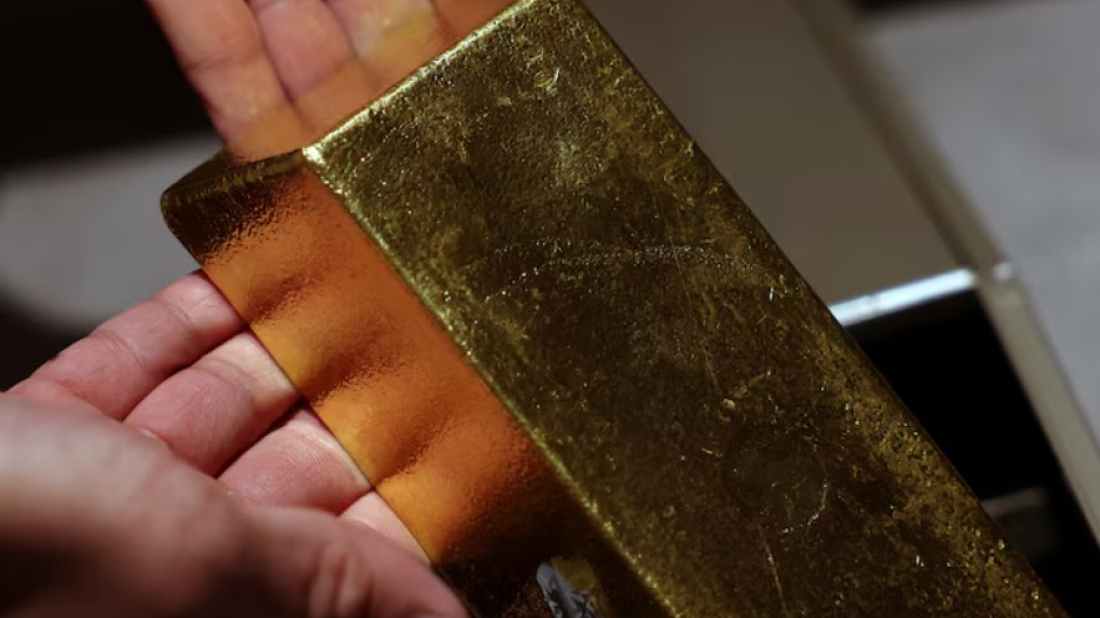
Gold prices rose above $4,000 an ounce for the first time on Wednesday, fuelled by investor demand for safe-haven assets amid rising geopolitical tensions and expectations of U.S. interest rate cuts.
Spot gold climbed 0.9% to $4,017.16 per ounce by 0442 GMT, with U.S. gold futures for December delivery up 0.9% at $4,040. The precious metal has surged 53% so far in 2025, after gaining 27% in 2024, making it one of the year’s top-performing assets.
Analysts cited a confluence of drivers behind the rally, including fears over global political instability, a weak dollar, sustained central bank buying and strong inflows into gold-backed exchange-traded funds.
"There’s so much faith in this trade right now that the market will look for the next big round number which is 5,000," said Tai Wong, an independent metals trader. He added that debt concerns, reserve diversification and a weakening dollar were likely to continue supporting gold in the medium term.
The U.S. government shutdown, now in its seventh day, has delayed key economic data, further clouding the outlook and reinforcing bets on lower interest rates. Traders are now pricing in a 25-basis-point rate cut at the Federal Reserve’s October meeting, with another expected in December.
Tim Waterer, chief market analyst at KCM Trade, said, “Rising uncertainty levels tend to fuel gains in the gold price and we are seeing this theme play out again.”
Political developments abroad are also influencing sentiment. In Japan, the weekend election of Sanae Takaichi and expectations of increased deficit spending have added to safe-haven demand, said Kyle Rodda of Capital.com.
Other precious metals also rose. Spot silver increased 1.3% to $48.44 per ounce, platinum rose 2.4% to $1,657.33, and palladium gained 2.3% to $1,368.68.
Both Goldman Sachs and UBS have raised their gold price forecasts for 2026, citing sustained central bank purchases and further monetary easing.

Iran’s Foreign Minister Abbas Araghchi said Tehran has “no trust” in the United States and will only consider negotiations if Washington shows seriousness. His remarks came as talks on Iran’s nuclear programme continued, with Trump and Xi also opposing Iran acquiring nuclear weapons.
The second semi-final of the 70th Eurovision Song Contest 2026 takes place tonight in a rain-soaked Vienna, with the final 10 places in Saturday’s grand final still up for grabs.
U.S. President Donald Trump said Washington could destroy Iran’s infrastructure “in two days,” while Tehran warned the U.S. would face growing economic costs from the conflict. The remarks came as Hezbollah reported new attacks on Israeli forces despite an extended Lebanon ceasefire.
Foreign ministers from the expanded BRICS bloc gathered in New Delhi on Thursday (14 May) for a crucial two-day meeting overshadowed by the ongoing Iran war, internal tensions within the grouping and mounting fears over global energy supplies.
Russia and Ukraine exchanged prisoners of war as well as the bodies of fallen soldiers, on Friday (15 May). The swap came as Ukranian officials said Moscow had carried out its largest aerial attack over 48 hours since the conflict started.
Negotiations between Samsung Electronics and its workforce on Wednesday have broken down, officials said, raising fresh concerns over potential disruption to South Korea’s export-heavy economy.
By the time American shoppers began noticing higher prices on everything from trainers to televisions, the world's two largest economies were already deep in a trade war that left the world wondering how it would end.
The Strait of Hormuz remains a vital maritime chokepoint and serves as the primary artery linking the Persian Gulf to international energy markets. With approximately 20% of global oil and gas shipments transiting this waterway, it is the backbone of energy security for Asia, Europe, and beyond.
China’s exports grew faster than expected in April, as overseas buyers moved quickly to secure supplies amid fears that the conflict involving Iran could drive up global energy and transport costs.
Asian stocks surged to record highs on 7 May as investors priced in growing hopes of a potential Middle East peace deal, while oil prices eased and the U.S. dollar weakened amid shifting global risk sentiment.
You can download the AnewZ application from Play Store and the App Store.
What is your opinion on this topic?
Leave the first comment