France opens new judicial inquiry into Jamal Khashoggi killing
French authorities have opened a new judicial inquiry into the killing of Saudi journalist Jamal Khashoggi, bringing renewed legal attention to a c...
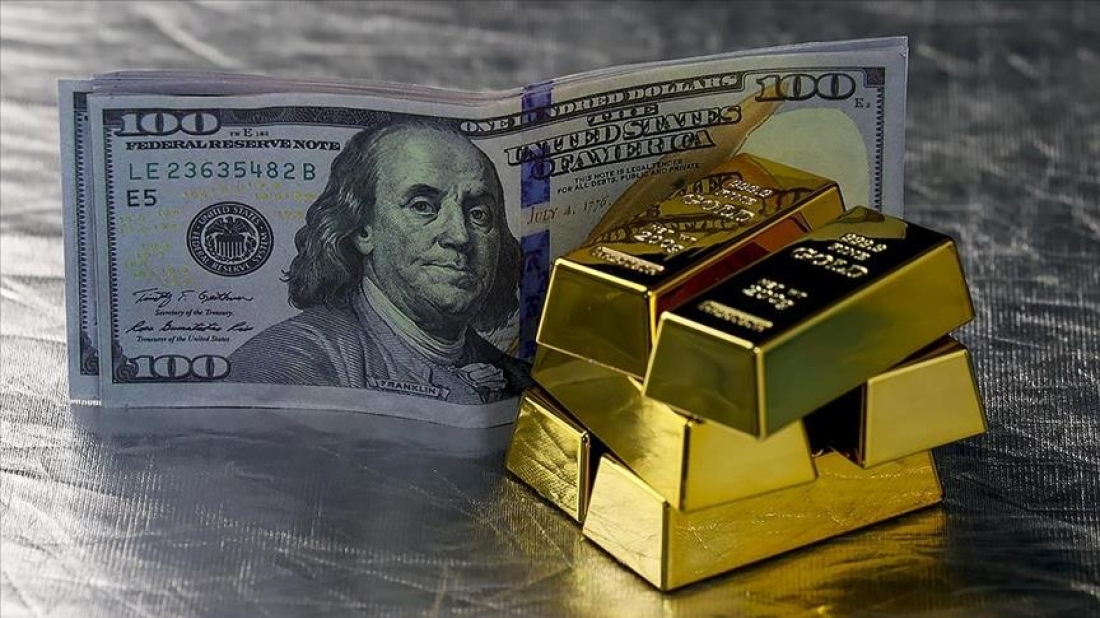
The price of gold surged sharply on Wednesday, reaching a new record of $3,530.08 per ounce. Analysts say the rise is driven by expectations of a U.S. Federal Reserve (Fed) rate cut in September and concerns over the central bank’s independence.
By 17:30 GMT, gold stood at $3,528.80 per ounce and currently trades around $3,526.80.
Gold had already hit record levels earlier this year, surpassing $3,500 amid global trade tensions sparked by U.S. tariffs. The “safe-haven” metal has gained more than 33% so far this year.
Prices had stabilised around $3,400 as trade fears eased, but renewed expectations of a Fed rate cut for the September meeting have lifted demand once again.
The Fed is set to announce its interest rate decision later this month. Money markets assign an 88% probability of a rate cut, with two cuts expected by the end of the year. Inflation in July fell below expectations and employment growth slowed, prompting markets to anticipate a 25 basis-point reduction in September. The current policy rate stands at 4.25%-4.5%.
At the Jackson Hole symposium in mid-August, Fed Chair Jerome Powell signalled a possible rate cut, saying the central bank’s policy stance “may warrant adjustment” given shifting risks.
In addition, President Donald Trump’s move to remove Fed Governor Lisa Cook has added to gold’s appeal, raising concerns over the Fed’s independence.

Iran’s Foreign Minister Abbas Araghchi said Tehran has “no trust” in the United States and will only consider negotiations if Washington shows seriousness. His remarks came as talks on Iran’s nuclear programme continued, with Trump and Xi also opposing Iran acquiring nuclear weapons.
The second semi-final of the 70th Eurovision Song Contest 2026 takes place tonight in a rain-soaked Vienna, with the final 10 places in Saturday’s grand final still up for grabs.
U.S. President Donald Trump said Washington could destroy Iran’s infrastructure “in two days,” while Tehran warned the U.S. would face growing economic costs from the conflict. The remarks came as Hezbollah reported new attacks on Israeli forces despite an extended Lebanon ceasefire.
Foreign ministers from the expanded BRICS bloc gathered in New Delhi on Thursday (14 May) for a crucial two-day meeting overshadowed by the ongoing Iran war, internal tensions within the grouping and mounting fears over global energy supplies.
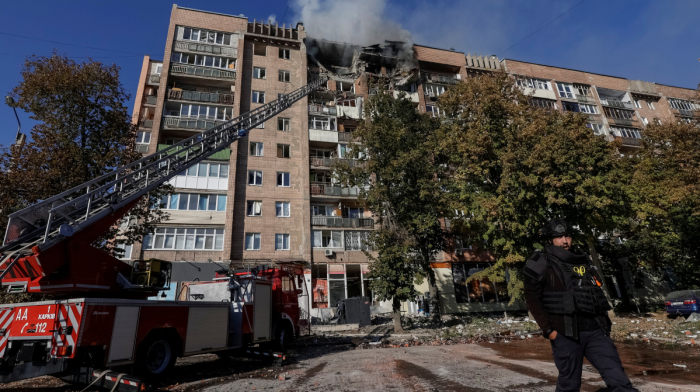
Russia and Ukraine exchanged prisoners of war as well as the bodies of fallen soldiers, on Friday (15 May). The swap came as Ukranian officials said Moscow had carried out its largest aerial attack over 48 hours since the conflict started.
Negotiations between Samsung Electronics and its workforce on Wednesday have broken down, officials said, raising fresh concerns over potential disruption to South Korea’s export-heavy economy.
By the time American shoppers began noticing higher prices on everything from trainers to televisions, the world's two largest economies were already deep in a trade war that left the world wondering how it would end.
The Strait of Hormuz remains a vital maritime chokepoint and serves as the primary artery linking the Persian Gulf to international energy markets. With approximately 20% of global oil and gas shipments transiting this waterway, it is the backbone of energy security for Asia, Europe, and beyond.
China’s exports grew faster than expected in April, as overseas buyers moved quickly to secure supplies amid fears that the conflict involving Iran could drive up global energy and transport costs.
Asian stocks surged to record highs on 7 May as investors priced in growing hopes of a potential Middle East peace deal, while oil prices eased and the U.S. dollar weakened amid shifting global risk sentiment.
You can download the AnewZ application from Play Store and the App Store.
What is your opinion on this topic?
Leave the first comment