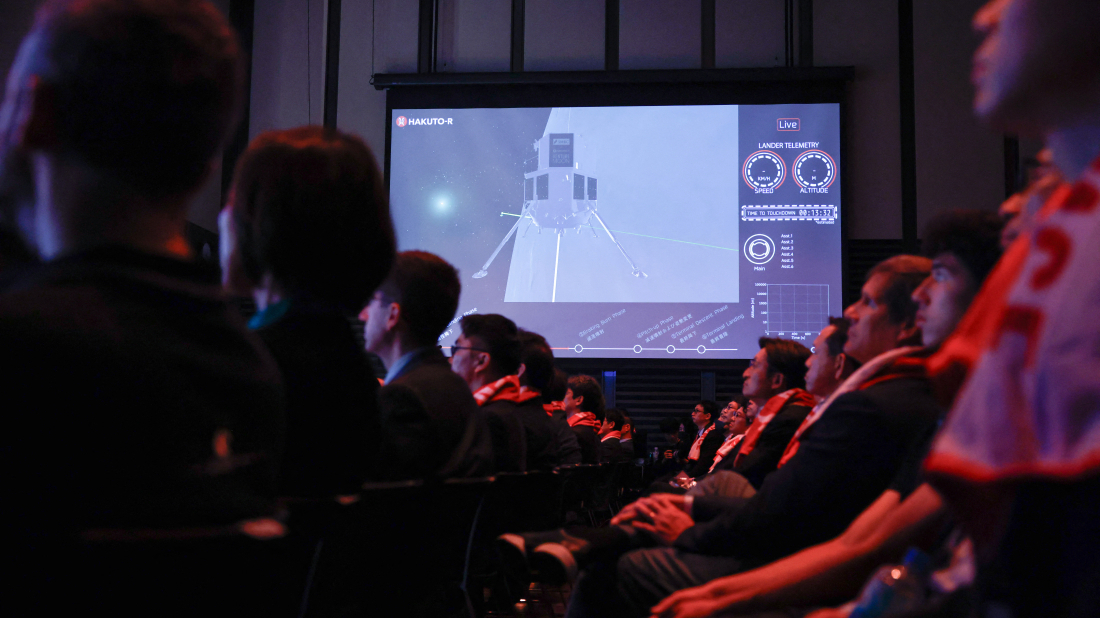
A Japanese space company has blamed a malfunctioning laser range finder for the crash of its moon lander earlier this month, marking the second failed lunar landing attempt for ispace in just over two years.
The company’s uncrewed lander, named Resilience, was attempting to touch down near the moon’s Mare Frigoris, or 'Sea of Cold', when contact was lost during its final descent. Officials revealed Tuesday that the laser navigation tool responsible for gauging altitude was delayed in activating, causing the spacecraft to misjudge its altitude and crash at a speed of 42 metres per second (138 feet per second).
Images of the wreckage, captured by NASA’s Lunar Reconnaissance Orbiter last week, confirmed the crash site.
“Unfortunately, the laser range finder failed to operate properly at the critical moment,” said ispace CEO Takeshi Hakamada.
“We acknowledge the issue and are moving forward with necessary improvements.”
In 2023, ispace lost its first lander to a software error that also occurred during the final landing phase. Despite the back-to-back losses, Hakamada said the company remains committed to its lunar programme and confirmed plans for a third mission in 2027 and a fourth mission in development. These future landings are being planned in cooperation with NASA and will undergo enhanced testing protocols.
The setbacks come as part of a broader international effort to enable commercial lunar missions. Of the seven attempts by private companies to land on the moon in recent years, only one—Texas-based Firefly Aerospace’s Blue Ghost lander in March 2025—has succeeded. Blue Ghost had launched aboard the same SpaceX rocket as Resilience back in January.
Outside of the private sector, only five countries have successfully landed spacecraft on the moon: the U.S., Soviet Union, China, India and Japan. However, the U.S. remains the only nation to have landed astronauts there, a feat last achieved more than 50 years ago during NASA’s Apollo programme.
Ispace says it will now invest an additional 1.5 billion yen (approximately $10 million) to upgrade its lander systems. The company also confirmed that external experts will join its failure review board, and that it will deepen collaboration with the Japan Aerospace Exploration Agency (JAXA).
“We haven’t stepped down in the face of setbacks,” said Hakamada. “We are firmly committed to taking the next step toward the future of lunar exploration.”



















What is your opinion on this topic?
Leave the first comment