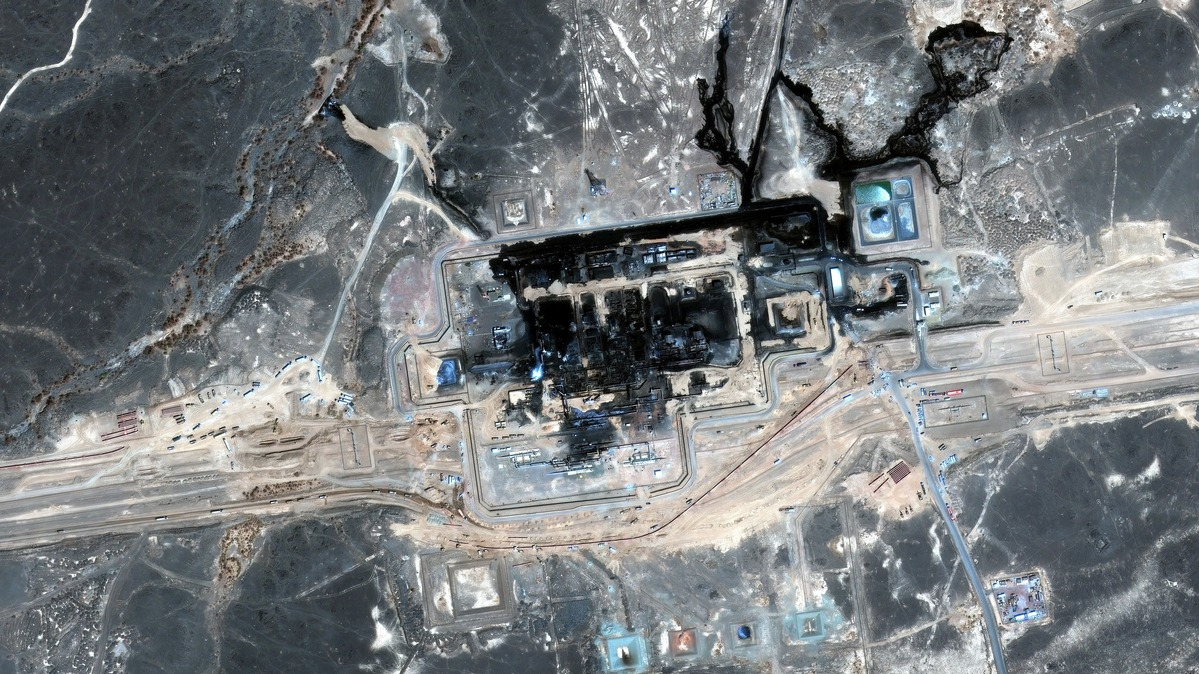
A drone attack that forced Saudi Arabia to shut its East-West Pipeline on 13 September exposed how much the Kingdom still depends on the Strait of Hormuz, even with a major alternative route in place.
The pipeline, which normally carries oil from Saudi Arabia's Persian Gulf coast to the Yanbu terminal on the Red Sea, was built specifically to let the kingdom bypass Hormuz.
The strait is one of the world's most important oil chokepoints, carrying more than a quarter of global seaborne oil trade in 2024.
When the attack halted loadings at Yanbu, Saudi Arabia had to reverse course: it increased exports from its eastern Gulf terminals and shipped more crude through the very strait the pipeline exists to avoid.
Reuters reported no visible loadings from Yanbu since September 16.
A capacity figure that doesn't quite add up
The episode underscores a gap in Saudi Arabia's export flexibility. According to the U.S. Energy Information Administration (EIA), the pipeline's normal capacity is five million barrels per day, with a temporary ceiling of seven million when needed.
But Saudi Aramco's own first-quarter 2026 presentation states the pipeline reached a maximum of seven million barrels per day, raising the question of whether that figure is now closer to a sustained operating level than an emergency surge capacity.
Before the attack, the pipeline was moving four to five million barrels per day, equivalent to roughly four to five per cent of global oil supply, Reuters reported.
The drone attack is the latest escalation in a widening regional conflict. Houthi forces, who control the most populous parts of Yemen, have intensified strikes on Saudi Arabia since the U.S. and Israel struck Iran in late February, a front that has already drawn in outside military support, including Britain's deployment of its Sky Sabre air defence system to the kingdom earlier this year.
Alternative routes, partial insulation
Running roughly 1,200 kilometres from the Abqaiq processing centre to Yanbu, the East-West Pipeline is one of several routes Saudi Arabia uses to move crude without transiting Hormuz, alongside options via the SUMED pipeline and Suez Canal, and via Bab el-Mandeb.
The EIA has noted that Saudi Arabia leaned more heavily on the pipeline in 2024 to avoid disruptions around Bab el-Mandeb, and again in August 2026 to reduce reliance on Hormuz.
But none of these alternative routes typically run at full capacity, meaning they offer only partial insulation when one path comes under attack.
That's the pattern the September disruption laid bare: when the pipeline went offline, Saudi Arabia's fallback wasn't another bypass, it was the strait itself.
With Yanbu loadings still not visibly resumed as of 16 September, the kingdom's oil exports are, for now, more exposed to Hormuz than the pipeline was designed to allow.
Read more:

















What is your opinion on this topic?
Leave the first comment