Nearly 130,000 people have been forced from their homes in Yemen in recent weeks as fighting intensifies along the country’s west coast, according to the International Organization for Migration (IOM).
IOM figures show 129,438 people, or about 21,573 households, have been displaced across seven governorates. The total has risen by more than 11,000 in just three days, highlighting the rapidly worsening humanitarian crisis.
“Nearly 130,000 people have been forced from their homes in just a few weeks. Many have already moved more than once to find safety,” said Othman Belbeisi, IOM regional director for the Middle East and North Africa.
“The numbers keep climbing. On 18 September we recorded 118,086 displaced people. Three days later, the figure has risen by 11,352.”
Ta’iz bears the heaviest burden
Ta’iz has received the largest number of displaced people, with 73,494, followed by Lahj with 33,828.
Aden is hosting a further 8,946 people and Al Hodeidah 8,244, while smaller numbers have arrived in Abyan, Hadramawt and Ma’rib.
Some districts have seen particularly large numbers of arrivals. Jabal Habashi in Ta’iz is now home to more than 23,000 displaced people, while almost 21,500 have arrived in Al Madaribah Wa Al Aarah in Lahj.
The figures follow a sharp rise in displacement during September. IOM had recorded 118,086 displaced people by 18 September, up from just over 85,000 a week earlier.
Families arrive with little
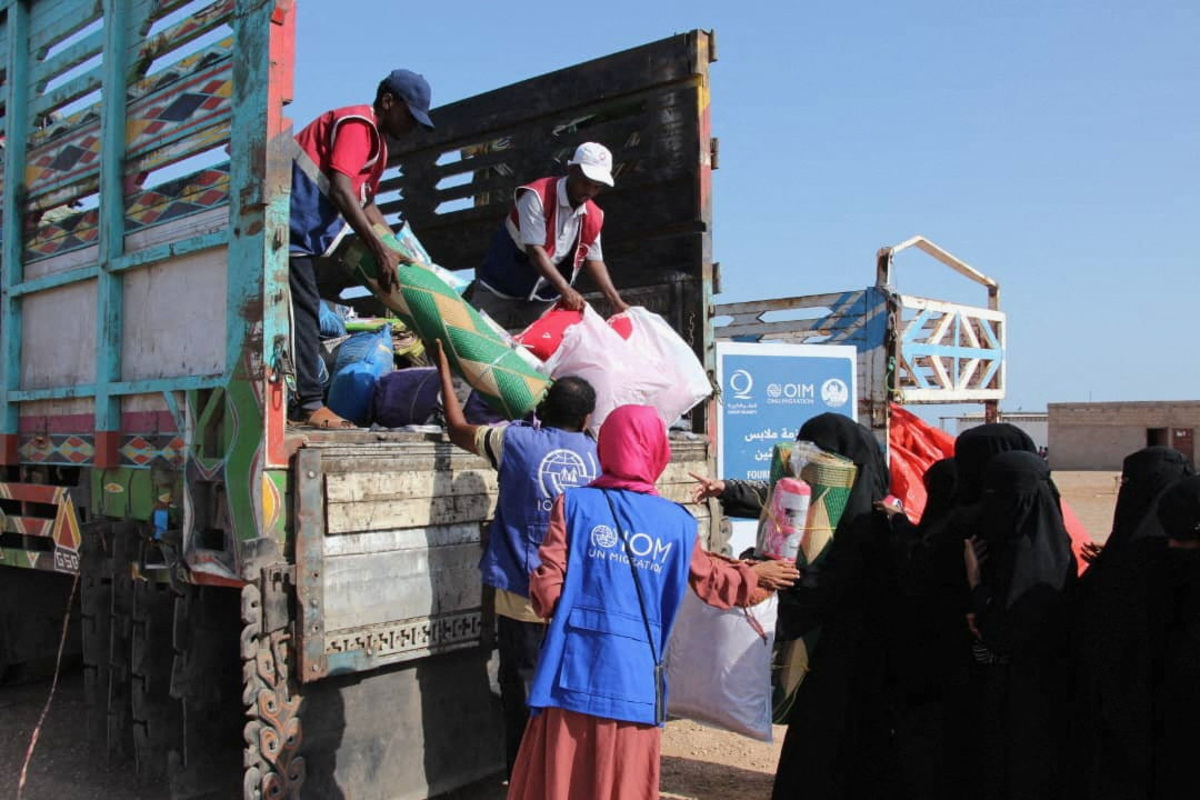
For many families, fleeing has meant leaving behind homes, livelihoods and possessions they were unable to carry with them.
“These are families who have lost their homes and their income,” Belbeisi said. “They are arriving in towns that were already struggling. Host communities are sharing the little they have, but they cannot do it alone.”
IOM said many families have already been displaced more than once, adding to the pressure on communities already struggling with limited resources before the latest escalation.
The organisation is calling for immediate support for both displaced families and the communities receiving them.
Dangerous crossings to Djibouti
The crisis is also pushing some Yemenis to leave the country altogether.
As of 20 September, 3,106 people had crossed the Red Sea from Yemen to Djibouti, according to IOM figures. The organisation is providing emergency assistance to arrivals and has appealed for additional support.
Earlier this month, IOM reported that more than 2,000 people had reached Djibouti after fleeing the fighting, with many arriving along the coast near Obock.
Crossing the Red Sea poses another danger for families already fleeing violence. Meanwhile, damaged infrastructure and disrupted communications are making humanitarian operations increasingly difficult.
Humanitarian needs grow
The latest escalation is concentrated along Yemen’s west coast, particularly around Ta’iz and Al Hodeidah, where fighting has intensified since early September.
IOM says the violence has triggered large-scale displacement and raised concerns about civilian protection and humanitarian access.
Yemen has endured more than a decade of conflict, economic hardship and displacement. This latest wave is putting further pressure on families and host communities already facing limited access to essential services.
For aid agencies, the immediate challenge is reaching displaced people as fighting continues and patterns of displacement change rapidly.
Read more:














What is your opinion on this topic?
Leave the first comment