Uzbekistan is stepping up investment in Karakalpakstan, with billions of dollars in projects spanning renewable energy, AI, agriculture, mining, transport and healthcare as the region seeks to create jobs and develop higher-value industries.
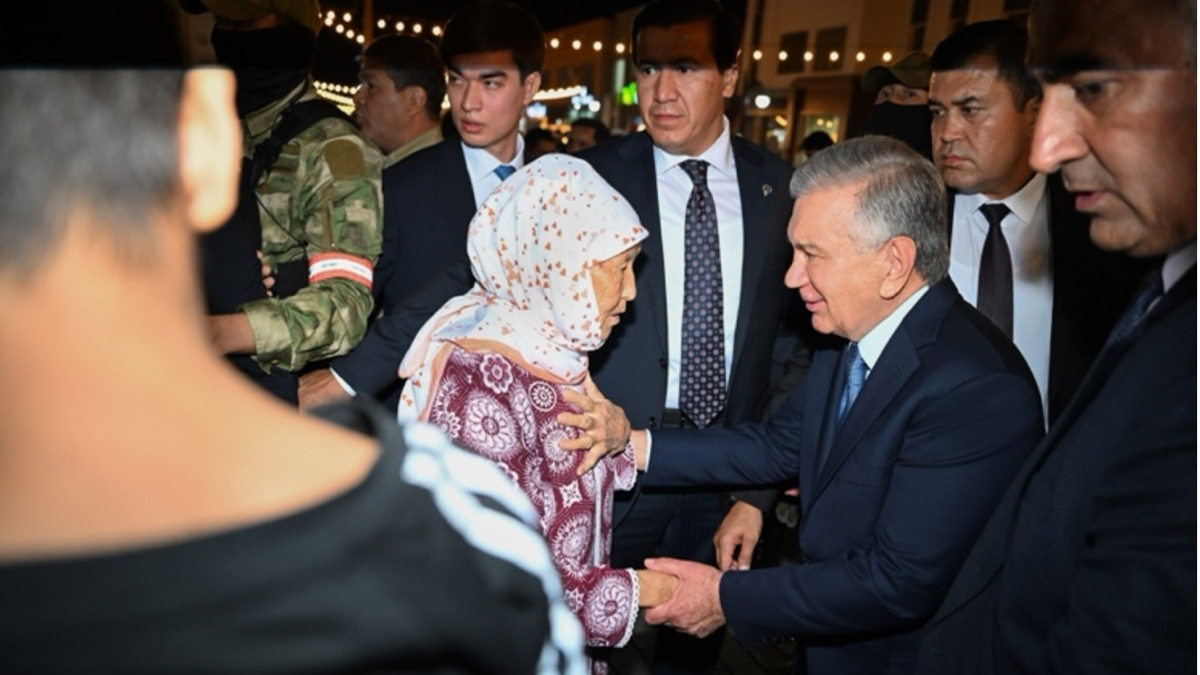
During President Shavkat Mirziyoyev’s visit to the region, authorities announced new projects and outlined longer-term plans to harness Karakalpakstan’s natural resources, improve infrastructure and create jobs.
Karakalpakstan is an autonomous republic covering north-western Uzbekistan. With an area of approximately 166,000 square kilometres, the region makes up about one-third of Uzbekistan’s territory and has an estimated population of two million.
The name Karakalpakstan derives from the words “kara”, meaning black, and “kalpak”, meaning hat.
$8bn AI and data centre zone
Six projects worth a combined $8 billion are planned for a special zone dedicated to artificial intelligence and data centres. The Kungrad–Karaozak–Takhiatash area is being developed as a “green industrial corridor” and “intelligent economy triangle”.
The projects will require a stable electricity supply of one gigawatt. The region aims to create 1,500 high-paying jobs in AI and cloud technologies within three years and increase annual exports in the sector to $600 million by 2029.
3.3GW of new wind power
Renewable energy is another major part of the investment programme. A 1.5GW wind farm worth $2.6 billion is being developed in Kungrad, together with 1,500 kilometres of high-voltage transmission lines and three 500kV substations.
By 2030, Karakalpakstan plans to have 3.3GW of wind power capacity, increase the share of green energy to 76 per centand develop 400MW of energy-storage capacity.
300 square kilometres of climate-adapted orchards
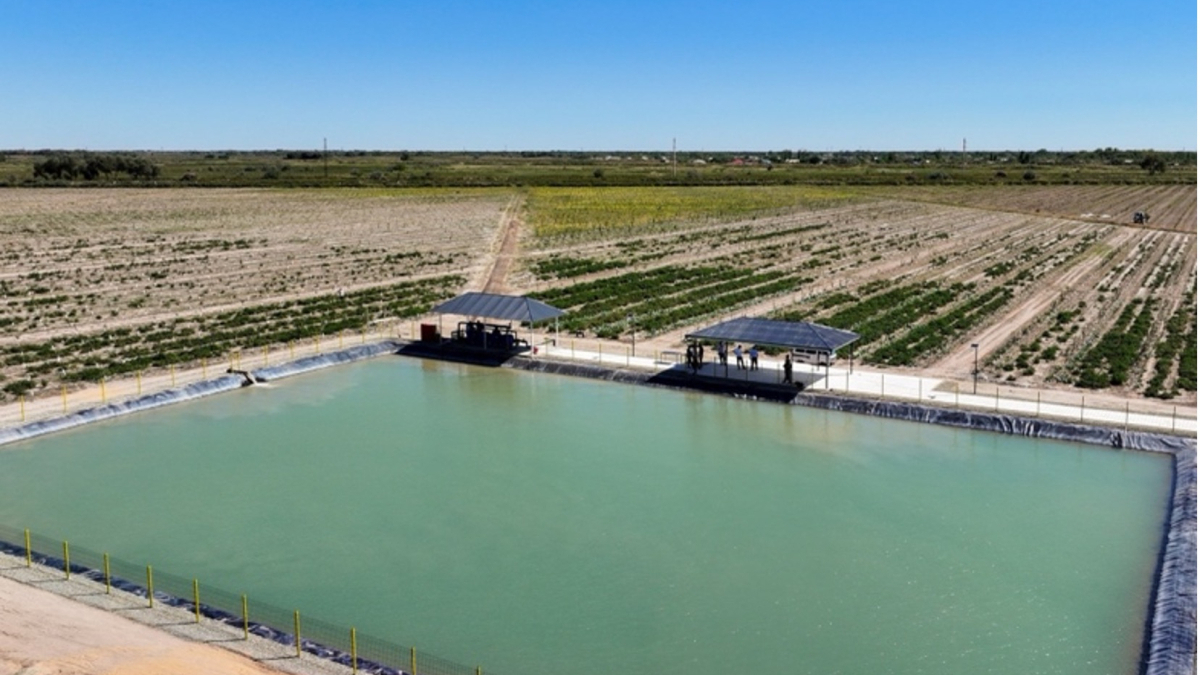
Agriculture projects are being designed around Karakalpakstan’s saline soils and water constraints. A three-year programme will establish salt-tolerant plum and late-apricot orchards across 30,000 hectares (300 square kilometres), with work on the first 100 square kilometres starting this year.
The goal is to create jobs for 20,000 people and raise fruit exports to at least $500 million within three years. Processing facilities, adapted seedlings, irrigation systems and agricultural expertise will be developed alongside the plantations.
New melon production and export hub
From next spring, 100 square kilometres of land near Nukus will be used for melon production. Uzbekistan plans to bring in varieties and agricultural specialists from Spain, the U.S., the Netherlands and China.
A new holding company will process and export the melons, while Nukus District Technical College will receive a laboratory and testing site and become a centre for sharing melon-growing expertise.
Gold mining and mineral processing
Karakalpakstan is also looking to expand geological exploration and shift from raw-resource extraction towards processing. Geological work has so far covered only 20 per cent of the region.
A gold-mining and processing cluster is planned, with a target of creating 1,000 jobs. The plan follows the discovery of four tonnes of gold at the Urusoy deposit by a Chinese investor after a $33 million investment.
Digital currency and AI infrastructure
Karakalpakstan is also attracting investment in emerging digital industries. In Kungrad and Takhiatash, Chinese partners are developing projects related to digital currency and AI data centres worth a combined $2.281 billion.
A separate data centre is planned in Takhtakupyr, strengthening the region’s wider push to build digital infrastructure alongside its renewable-energy capacity.
$2.6bn industrial and energy projects
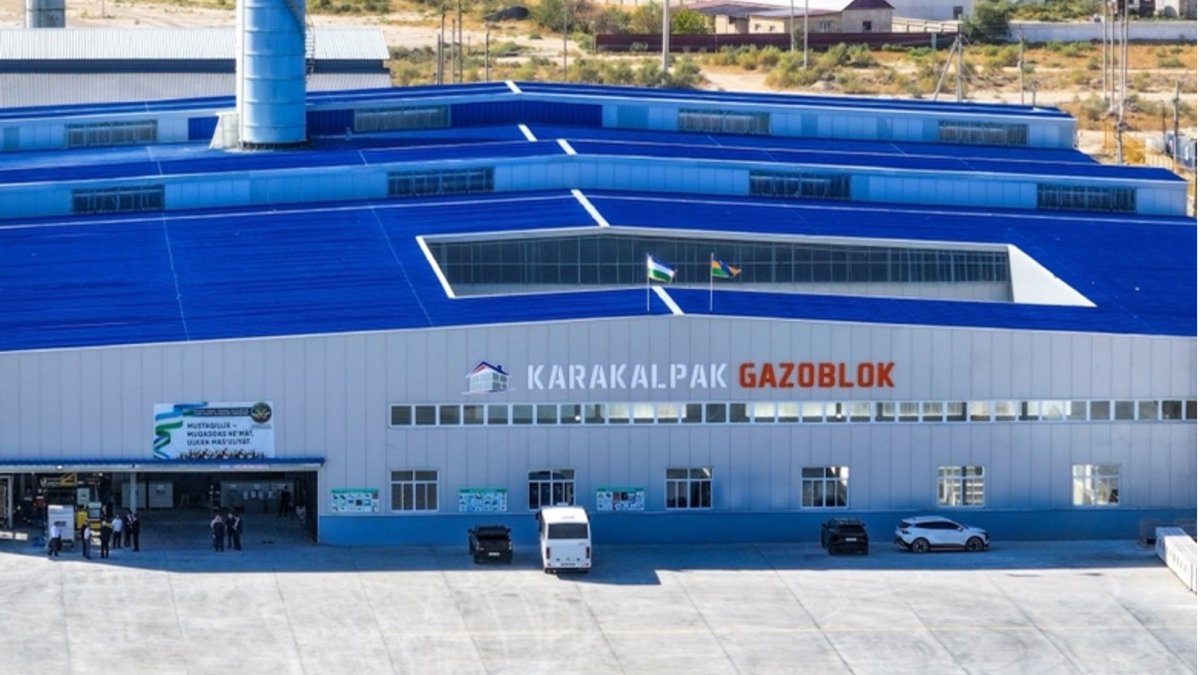
The investment programme also includes projects across several manufacturing sectors. New initiatives worth at least $150 million are planned in textiles and leather, $200 million in electrical engineering, $100 million in energy-efficient construction materials, $120 million in automotive components and $50 million in pharmaceuticals.
In Takhtakupyr, an Italian-backed $50 million project will use 20 square kilometres of land to grow tomatoes and grain for deep processing and export to European markets.
Transport links promise faster journeys
Transport infrastructure is also being upgraded. Construction has started on a 92-kilometre section of the A-380 highway, with the project valued at $233 million.
The government expects the wider road improvements to increase transit traffic by 50 per cent and cut freight journey times from Turtkul to the Kazakhstan border from around 24 hours to 10 hours.
From March next year, a high-speed train between Tashkent and Nukus is also planned, cutting the journey time from 16 hours to seven.
New housing and urban development in Nukus
Nukus is set for major urban expansion. A new 2.7-square-kilometre development, “Nukus City”, is planned in the Ashshikol area and is designed for around 50,000 residents.
The project will include energy-efficient residential buildings, business and commercial centres, services and green spaces.
Healthcare and medical education
Investment is also being directed towards healthcare. The new Karakalpakstan Scientific and Practical Medical Academy, built at a cost of 154 billion soums, will train up to 3,000 doctors and 6,800 medical and pharmaceutical workers each year.
The region is also developing a university medical cluster linking the academy with the Children’s Clinic, Oncology Centre and a new multidisciplinary hospital. High-tech medical services, including liver and kidney transplants, are already being expanded in Nukus.
Skills for new industries
The region is also investing in the workforce needed for its new projects. Nukus Technical College has introduced the international Pearson BTEC programme, whose qualifications are recognised in more than 70 countries.
The government aims to secure high-paying jobs in IT and logistics for 1,000 young people within a year, followed by another 5,000 over the next two years.
Wider investment push
The projects announced during the visit form part of a broader investment push. Karakalpakstan attracted $1.7 billion in investment in 2025, while the region’s economy grew by 10.2 per cent in the first half of 2026.
The latest programme includes 47 new projects worth $7 billion, with around 8,000 high-paying jobs expected to be created. The government has also set a target of attracting $5 billion in investment to Karakalpakstan in 2027, increasingly focusing on higher-value industries, resource processing, renewable energy and technology.
Read more:













What is your opinion on this topic?
Leave the first comment