Ankara and Washington are considering “creative ideas” to resolve U.S. sanctions imposed over Türkiye’s purchase of Russia’s S-400 air-defence system, Foreign Minister Hakan Fidan has said.
Talks seek way forward
In a televised interview, Fidan said officials from both sides were seeking a way to lift U.S. restrictions imposed on Türkiye over its 2020 acquisition of the Russian-made S-400 system.
He did not provide further details, but expressed hope that “positive steps” would be taken on the issue.
The years-long dispute has strained relations between the two NATO allies.
In 2019, Türkiye took delivery of its first S-400 components despite U.S. warnings that the system was incompatible with NATO’s defence architecture and could reveal sensitive information about Western aircraft.
Washington subsequently removed Türkiye from its F-35 fighter programme, arguing that the Russian S-400 could be used to collect data on U.S.-developed stealth technology.
The U.S. also cancelled Türkiye’s planned purchase of F-35 fighter jets, even though Turkish defence firms had manufactured some of the aircraft’s components.
In 2020, Washington imposed sanctions on Türkiye’s defence industry under the Countering America’s Adversaries Through Sanctions Act (CAATSA).
Among other measures, the sanctions imposed restrictions on U.S. export licences and financing.
Ankara defends S-400 purchase
Ankara, for its part, says it turned to Russia after failing to secure a comparable air-defence system from Western suppliers on acceptable terms.
Turkish officials have also argued that S-400 batteries can be operated without compromising NATO networks.
In July, Turkish media reported that Ankara might resell its S-400 batteries to an unidentified Gulf Arab country, in hopes of resolving the dispute.
Neither Türkiye nor the U.S., however, has confirmed the proposal.
New York talks could put dispute in focus
The issue may feature during Turkish President Recep Tayyip Erdoğan’s visit to New York this week, where he is dueto address the UN General Assembly and meet several foreign leaders.
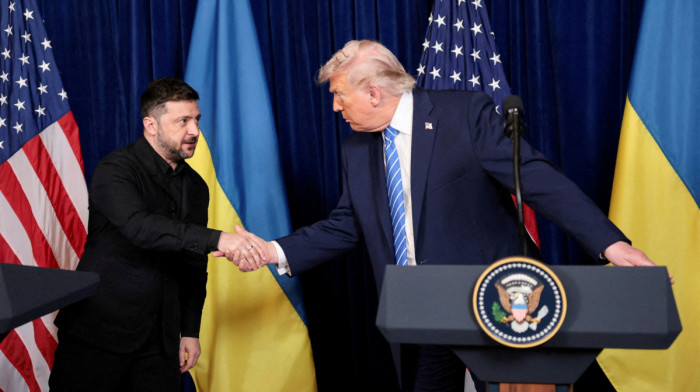
Over the weekend, Tom Barrack, the U.S. ambassador to Türkiye, said Erdoğan may meet U.S. President Donald Trump on the sidelines of the assembly, although Ankara has not confirmed a meeting.
If talks do take place, the two leaders may address the sanctions issue, along with Türkiye’s possible return to the F-35 programme and broader defence ties between the two countries.






What is your opinion on this topic?
Leave the first comment