Turkish President Recep Tayyip Erdoğan said on Thursday that his recent talks with U.S. President Donald Trump would likely produce a “positive outcome” for Türkiye’s defence sector.
Speaking to reporters after this week's NATO summit in The Hague, Erdoğan described his meeting with Trump as “constructive”, saying it could lead to tangible progress on Türkiye’s longstanding effort to rejoin the U.S.-led F-35 fighter jet programme.
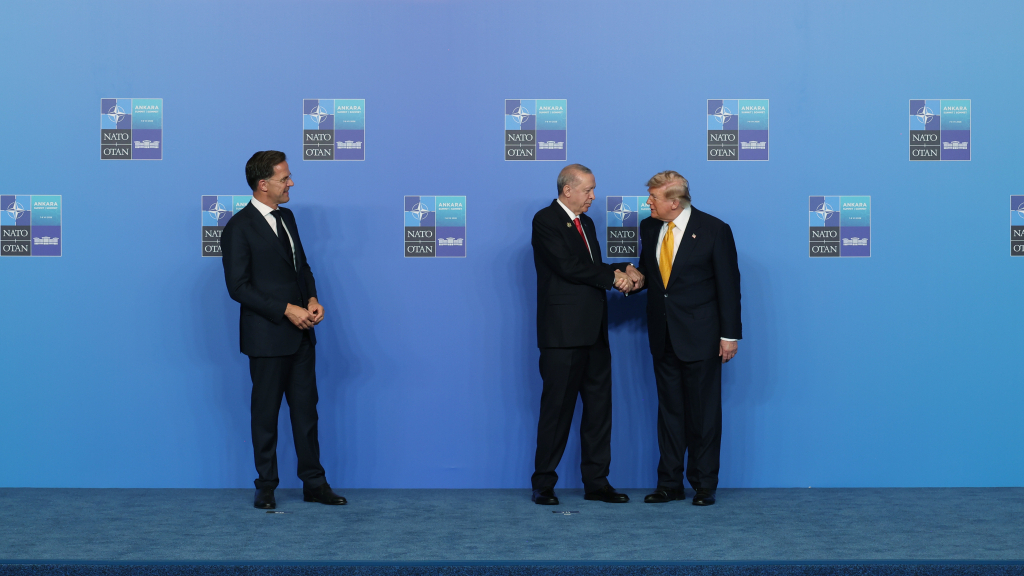
Erdoğan met his U.S. counterpart on Tuesday, the first day of the two-day summit.
It was the highest-level engagement between the two leaders since Trump returned to office last year and came amid signs that both Washington and Ankara are seeking to mend ties, particularly in the defence sector, after years of tension.
Trump, for his part, hinted that the U.S. was prepared to lift sanctions imposed on Türkiye’s defence industry under the Countering America's Adversaries Through Sanctions Act (CAATSA).
F-35 and sanctions
The CAATSA sanctions were first imposed in 2020 after Türkiye acquired the Russian S-400 air defence system, prompting Washington to expel Ankara from the F-35 programme and impose restrictions on Türkiye’s defence industry.
Ankara argues that the sanctions are unjustified and has repeatedly called for them to be lifted.
It is also seeking readmission to the F-35 programme, in which Turkish defence companies participated before the restrictions were introduced.
Despite the sanctions, Ankara has increased investment in its defence industry in recent years, with its fifth-generation Kaan fighter jet emerging as one of its flagship aerospace projects.
Outlook
Although neither side announced any formal agreements at this week’s summit, Erdoğan said his meeting with Trump had created momentum for stronger U.S.-Türkiye defence cooperation.
Officials from both countries have recently signalled a willingness to deepen defence and security collaboration, fuelling expectations that diplomatic tensions could give way to closer strategic ties.
However, any decision to lift CAATSA sanctions or readmit Türkiye to the F-35 programme would likely require further steps in Washington, where some members of Congress have voiced opposition to both measures.












What is your opinion on this topic?
Leave the first comment