The death toll from the migration crisis in the Spanish enclave of Ceuta has risen to 72, while more than 48,300 migrants have returned to Morocco, Spanish public broadcaster RTVE reported Sunday.
According to Spanish authorities, about 50,000 people had crossed into Ceuta by land and sea from Thursday in an unprecedented surge at one of the European Union's only land borders with Africa.
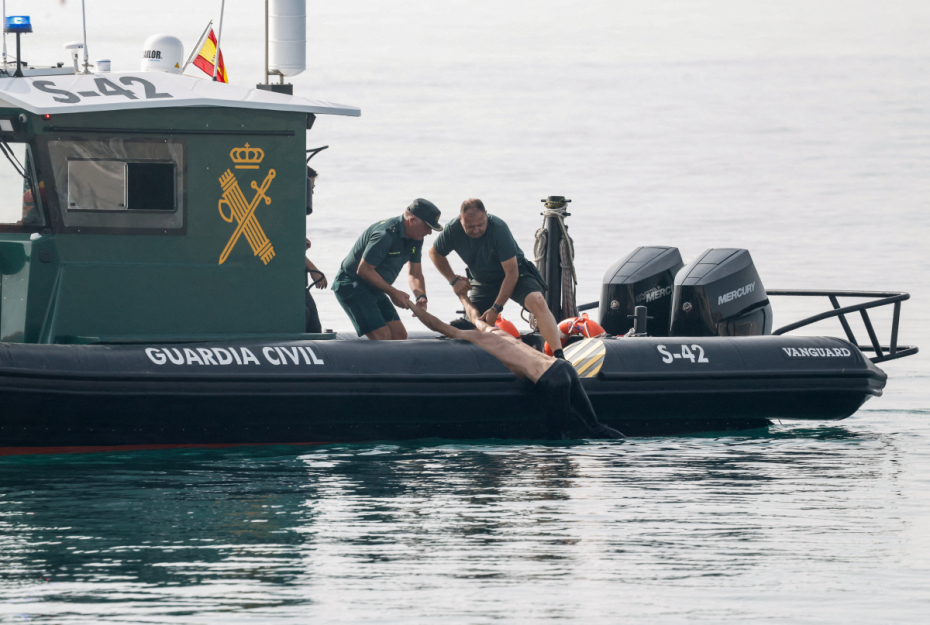
On Sunday morning, a lone migrant was seen swimming ashore at Ceuta's Tarajal beach before fleeing from police officers, while workers cleared life jackets and inflatable buoys left behind after the mass crossings.
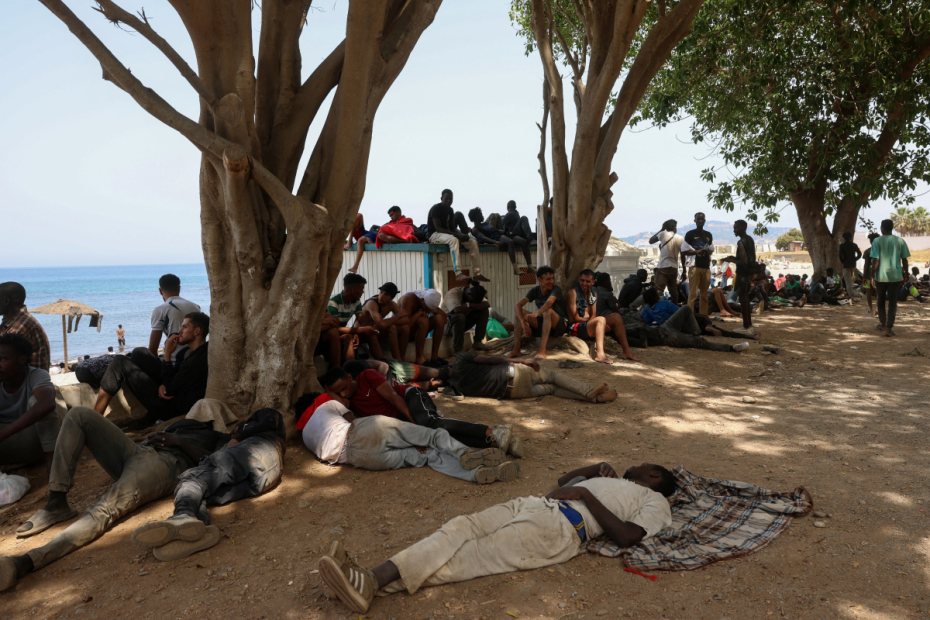
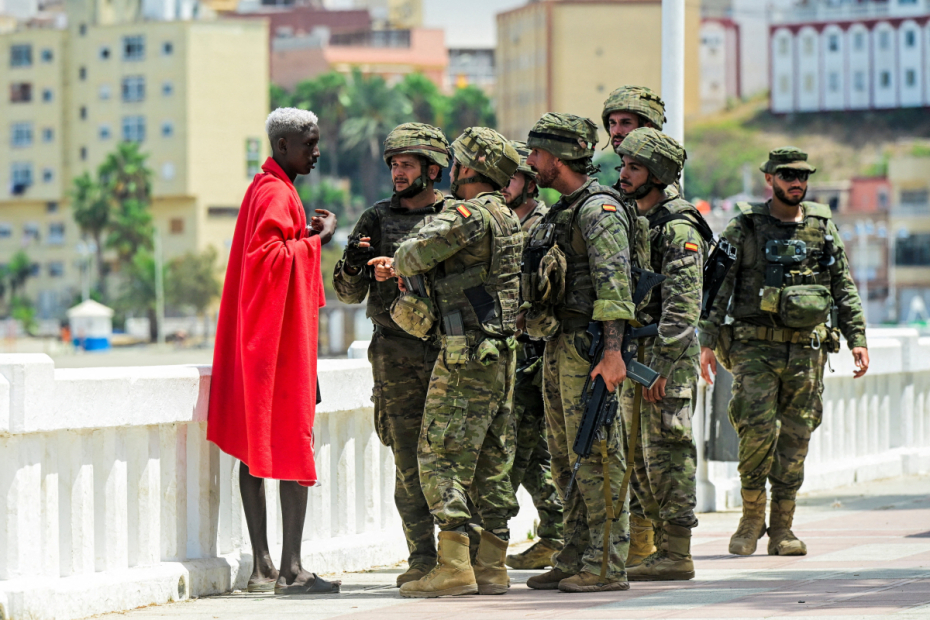
The autonomous city has gradually begun returning to normal, although security forces continued searching neighborhoods for migrants who remain in the city. Many of those returning to Morocco have done so voluntarily according to reports.
Authorities also escorted groups of migrants to the Tarajal border crossing, returning to Morocco.
Spanish authorities on Saturday installed a 500-metre (1,640-foot) sea barrier at the Tarajal border area to prevent further irregular crossings.
Sánchez rejects criticism
Meanwhile, Spanish Prime Minister Pedro Sánchez criticised Italy's decision on Friday to suspend passport-free Schengentravel arrangements with Madrid for one month.
"In the current international context, the EU cannot afford this kind of selfish, polarising and unlawful reaction," Sanchez wrote in a letter to the European Union's Commission and European Council presidents.
"Calls for Spain to be suspended from the EU's borderless Schengen zone are driven by prejudice, fake news, ignorance, or political interest," he added.
Spain's Interior Minister Fernando Grande-Marlaska defended Morocco's cooperation, saying Spain had regained control of the situation within 24 hours.
"Morocco is not a threat to Ceuta, or to the rest of Spain. It is a reliable partner."
Madrid said the people who entered Ceuta irregularly could not travel onwards to mainland Spain or elsewhere in the Schengen zone.
EU calls for coordinated response
Twenty-two European heads of state and government on Saturday called for an emergency meeting of European Union interior ministers over the recent migration crisis in Spain's North African enclave of Ceuta.
"We cannot allow uncontrolled mass crossings, the instrumentalisation of migration or other hybrid threats to create the perception that illegal entry into the European Union is possible," the letter said.
The leaders warned that such a perception would encourage further attempts to enter the bloc irregularly and have repercussions for all member states.
An emergency video conference meeting of national ministers is set for Tuesday. Ireland, which holds the rotating presidency of the EU, said on Saturday it had convened a meeting of the EU Justice and Home Affairs Council, chaired by Irish Justice, Home Affairs and Migration Minister Jim O'Callaghan, to discuss developments.












What is your opinion on this topic?
Leave the first comment