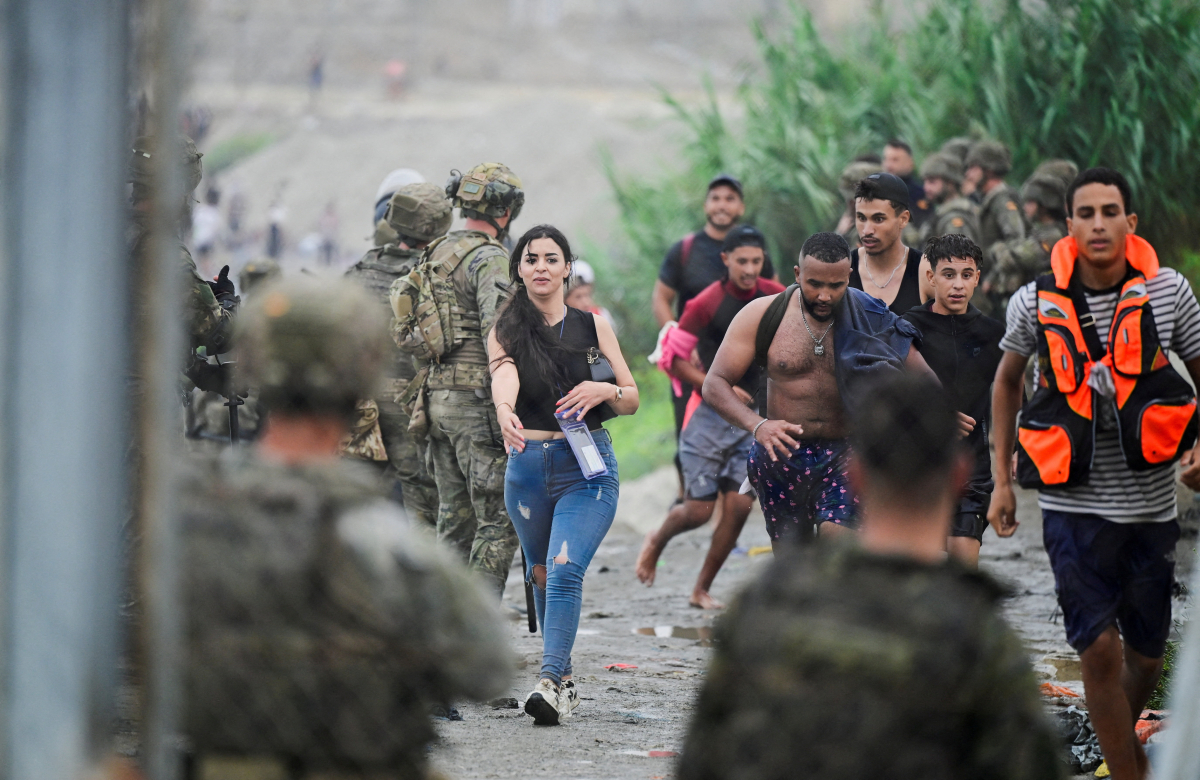
Thousands of people spent the night on beaches, waiting by fences or wading through the sea in the hope of reaching Europe, as an estimated 49,000 migrants crossed into Spain's enclave of Ceuta in just 24 hours.
By Friday morning, Spain and Morocco had reinforced security around Ceuta after an unprecedented surge saw an estimated 49,000 migrants cross into the Spanish enclave by land and sea in just 24 hours.
Officials said at least 34 people died during the crossings, with bodies recovered from the water.
The dramatic scenes have triggered a humanitarian and political crisis, while highlighting mounting pressure on one of Europe's most sensitive borders.
A city overwhelmed
Ceuta, along with the nearby Spanish enclave of Melilla, forms the European Union's only land border with Africa. The two territories, both on Morocco's northern coast, have long been flashpoints for migration.
However, officials said the latest influx was unlike anything seen before. With a population of around 85,000, Ceuta received more than half that number again in a single day. Spanish authorities said around 7,000 of those who crossed were children.
Videos showed thousands of people swimming around the border fence or making the dangerous journey along the coastline. Others climbed over barriers or entered through border crossings as security forces struggled to cope.
By Friday, Moroccan security forces had deployed water cannon and pushed back crowds gathering near the crossing points. Burnt-out vehicles remained near the border following overnight clashes.
Spain promises swift returns
Spain has deployed additional police officers and armed forces personnel to Ceuta and Melilla as it works with Morocco to regain control of the border.
The Interior Ministry said migrants who entered illegally would be returned "as soon as possible", while respecting court rulings and their legal rights.
The surge came just weeks after Spain's Supreme Court ruled that migrants intercepted at sea while trying to reach Ceuta or Melilla cannot be immediately returned to Morocco under special border procedures.
Territorial Policy Minister Ángel Víctor Torres said the government had responded quickly and would continue processing returns within the law.
Spain's Prime Minister Pedro Sánchez travelled to Ceuta on Friday alongside Interior Minister Fernando Grande-Marlaska.
Political tensions spread across Europe
The crisis has reopened divisions across Europe over migration policy.
Italy's Prime Minister Giorgia Meloni warned her government was prepared "to intervene with extraordinary measures to defend the borders and the safety of citizens, including the suspension of the Schengen Area with Spain".
Italian Foreign Minister Antonio Tajani also criticised Spain's recent immigration policies, arguing they encouraged human trafficking.
Spain's Foreign Minister José Manuel Albares rejected the criticism, calling Tajani's remarks "inappropriate". He said Spain expected "solidarity and not partisan demagoguery" from its European partners and announced he would summon the Italian ambassador in protest.
Renewed pressure on Europe's southern border
Ceuta and Melilla have experienced repeated waves of attempted crossings over the years as migrants fleeing conflict, poverty and instability seek a route into Europe.
The last major surge came in 2021, when around 10,000 people entered Ceuta over two days. Officials said the latest influx is the largest the enclave has experienced since then and could mark one of the biggest single-day border crossings into the European Union in recent years.
Human rights groups have urged both Spain and Morocco to ensure migrants are treated with dignity and have access to humanitarian support, warning that local resources in Ceuta are already under severe strain.
Read more:
















What is your opinion on this topic?
Leave the first comment