Rescue teams in Nepal, supported by Chinese and Indian experts, worked through the night to reach hundreds of people believed to be trapped inside blocked hydropower project tunnels following last week’s catastrophic Himalayan flood.
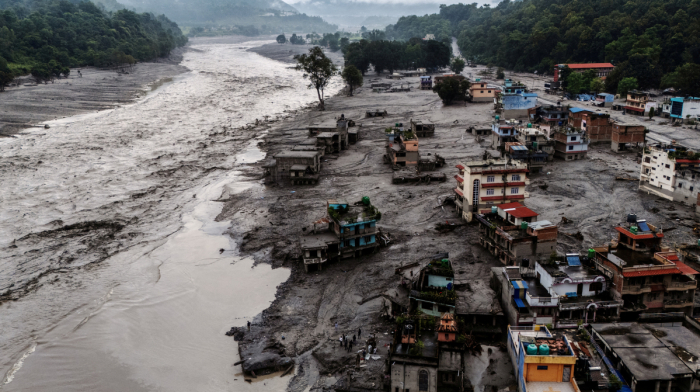
The disaster struck along the Nepal-Tibet border on Wednesday (26 August), sending a torrent of ice, rock, mud and debris through mountain valleys, towns and villages on both sides of the border. The flooding, which authorities have linked to the collapse of a glacier, has killed hundreds of people and left more than 3,000 missing across Nepal and China.
Hundreds of bodies, many of them unidentified, have been buried in shallow graves after they began decomposing in the humid conditions of Nepal’s lowland areas. Many had been swept down from the mountains by the floodwaters.
Chinese President Xi Jinping said that the country is making every effort to search for missing people following the mudslide disaster that occurred near the border crossing between Tibet and Nepal, Xinhua reported on Monday.
Xi, on a state visit to Kyrgyzstan, made his remarks at a meeting with his counterpart, President Sadyr Japarov, in Bishkek on Monday.
Hundreds feared trapped in hydropower tunnels
Nepali officials said the immediate priority was reaching workers believed to be trapped inside around half a dozen hydropower project tunnels blocked by mud, rocks and other debris.
Nepal’s disaster management authority said 933 people remained missing from hydropower projects in the flood-affected region.
Images and videos released by rescue teams showed excavators clearing large quantities of mud and rock under floodlights during overnight operations. Soldiers were also seen using torches to examine a large pit dug in an effort to find an entry point into one of the blocked tunnels.
“A large amount of debris has been deposited and that is posing us a big challenge to open the tunnels,” Nepal Army spokesperson Raja Ram Basnet told Reuters.
“Our main focus is on opening the tunnels.”
Nepal has said it does not require broad international assistance for search and rescue operations but has sought specialist tunnel-rescue expertise from neighbouring India and China.
Full scale of damage remains unclear
Prime Minister Balendra Shah described the flooding as an “unprecedented and devastating natural disaster” and said assessing the full extent of the destruction remained difficult.
“Despite the adverse weather, difficult terrain and continuing risks, we are moving forward with determination to save the lives of our citizens,” Shah said in a Facebook post on Sunday.
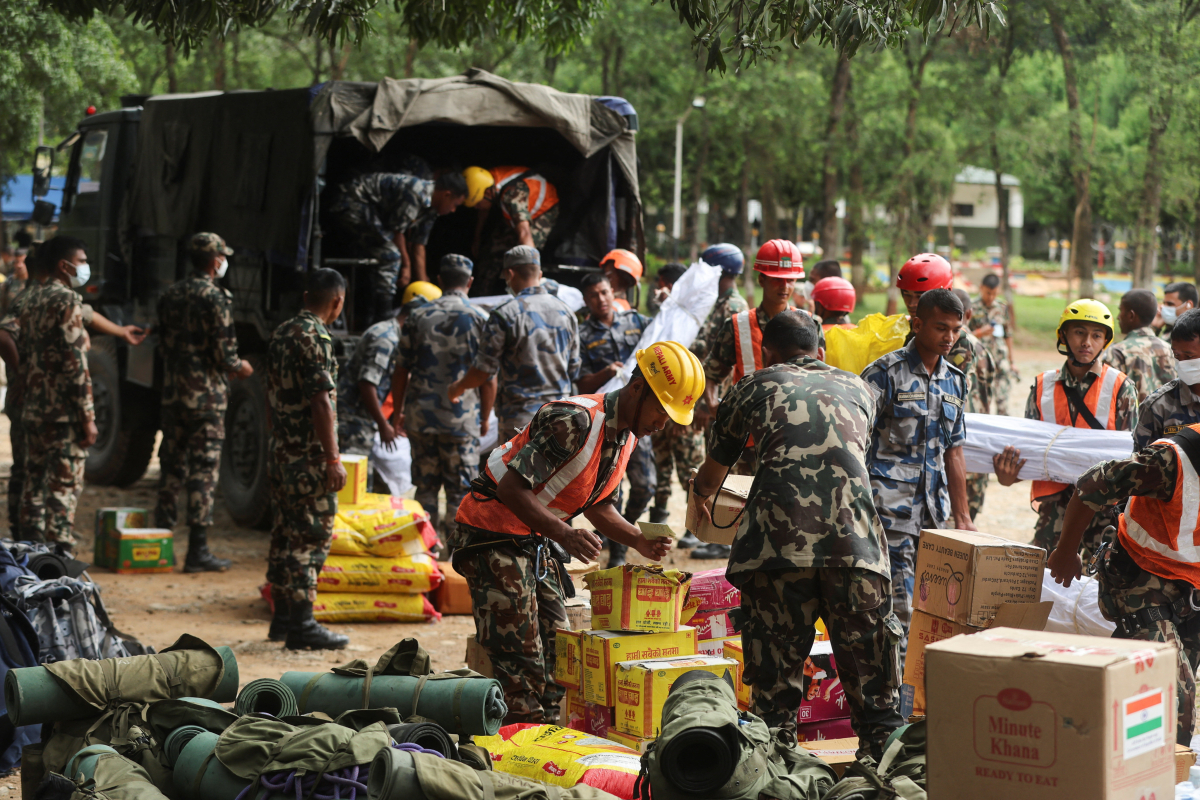
He said nearly 21,000 members of Nepal’s security forces were involved in rescue operations alongside civilian workers and volunteers.
By Sunday night, Nepali authorities had confirmed 788 deaths and said around 2,500 people remained missing, including more than 900 people connected to hydropower projects.
On the Chinese side of the border, authorities reported 16 deaths in Gyirong County and said 546 people remained missing.
Beijing also said 261 foreign nationals from 23 countries were unaccounted for in Tibet near a major border crossing with Nepal.
The Red Cross has estimated that more than 90,000 people may have been affected by the disaster.
China sends rescuers and relief supplies
China has mobilised more than 2,100 rescue workers and allocated at least 220 million yuan, equivalent to about $33 million, to relief efforts, according to state broadcaster CCTV.
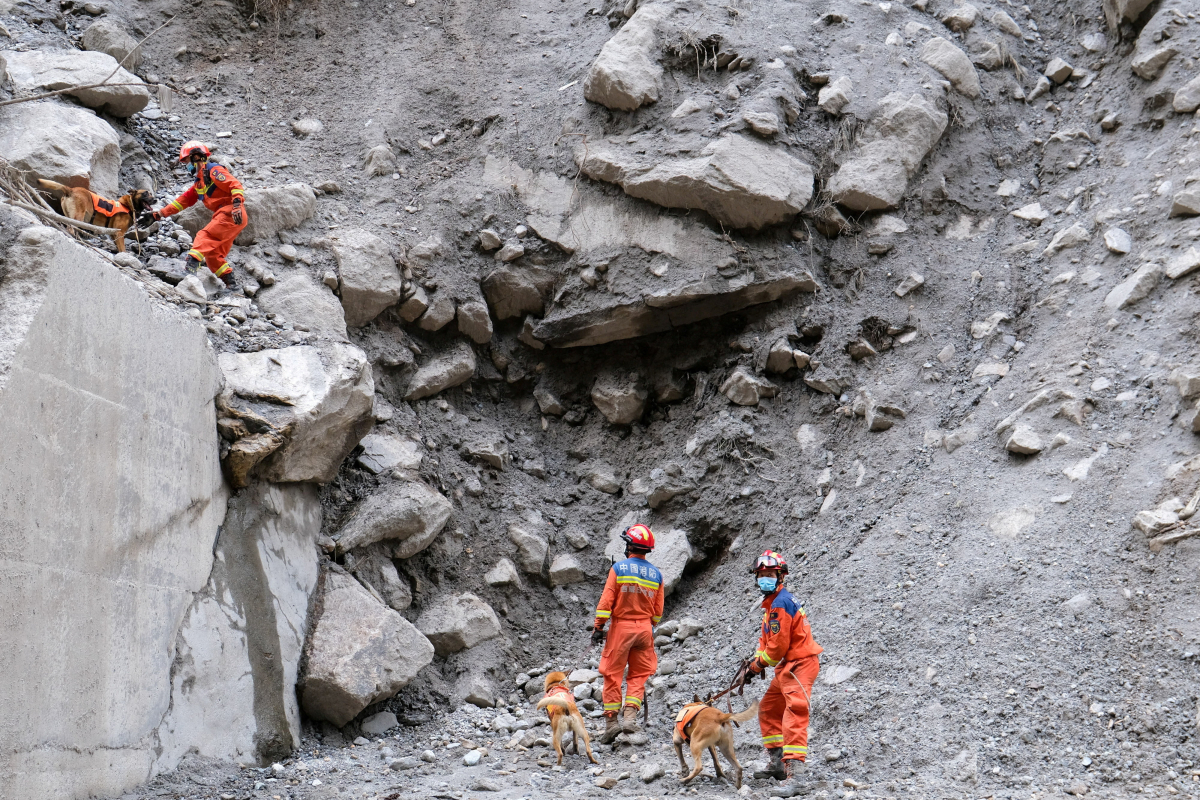
Chinese authorities have also been airdropping equipment and supplies to rescue teams, while soldiers have used life-detection equipment in searches for missing people.
Rescue operations on the Nepali side have been suspended several times since Friday because of poor weather and fears of further flooding.
Officials have been monitoring a lake formed near the Nepal-China border after the disaster. Concerns increased after it began overflowing into rivers flowing towards Nepal.
Conditions improved on Monday, allowing rescue efforts to accelerate, according to Narendra Pariyar, the district administrator of Rasuwa, one of the areas worst affected by the flooding.
Survivors search through destroyed homes
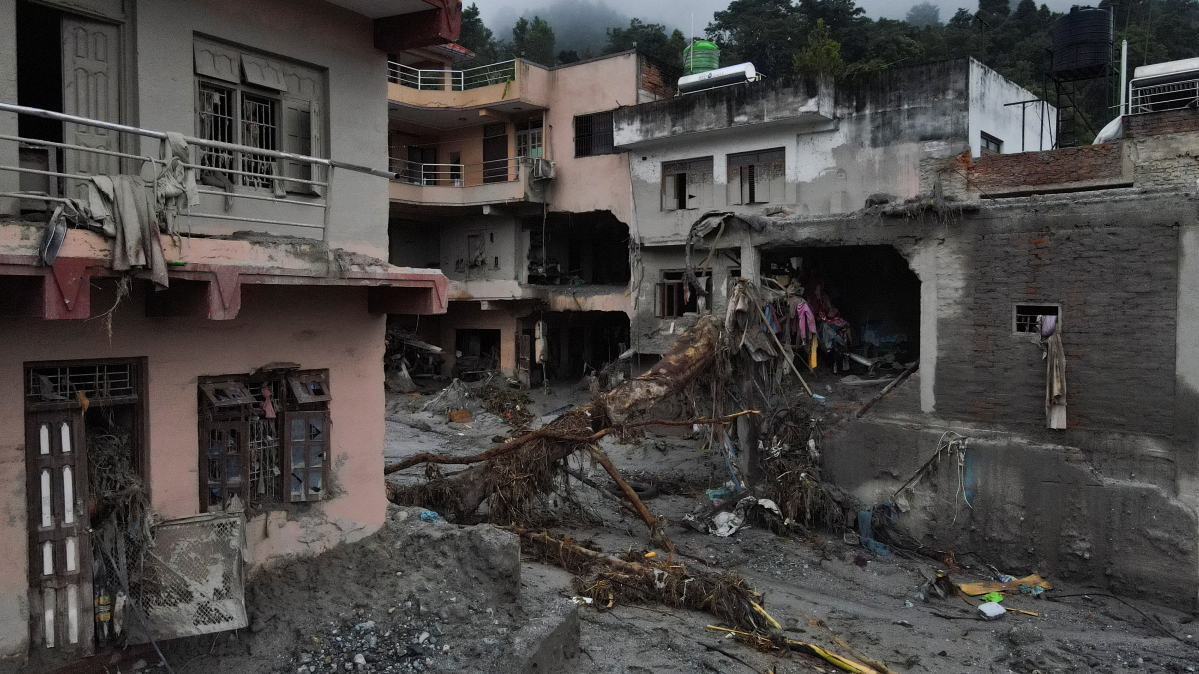
In Devighat, a holy town on the banks of the flooded Trishuli River, residents returned to the remains of their homes to search for belongings among piles of mud and debris.
The force of the flood destroyed buildings, roads and infrastructure across affected areas, leaving communities facing a prolonged recovery effort.
Surveillance footage from the disaster showed powerful torrents of water and debris sweeping through settlements as residents attempted to escape.
Chinese scientists cited by CCTV said a mudslide originating on the Nepali side took only six to seven minutes to reach the Gyirong border crossing.
Climate change linked to glacier instability
Chinese state broadcaster CCTV said the disaster had been caused by “glacier instability under the long-term effects of global warming”, describing such events as an increasingly significant form of cryosphere disaster on the Tibetan Plateau.
The flooding has also raised questions about cross-border cooperation and the sharing of information on glacier-related risks.
Two Nepali officials told Reuters that China had provided limited information on glacier risks and water levels following talks earlier this year aimed at strengthening disaster cooperation.
They expressed concern that insufficient data sharing could make it more difficult for authorities to prepare for similar disasters in the future.
China’s foreign ministry did not respond to a request for comment on the issue.



















What is your opinion on this topic?
Leave the first comment