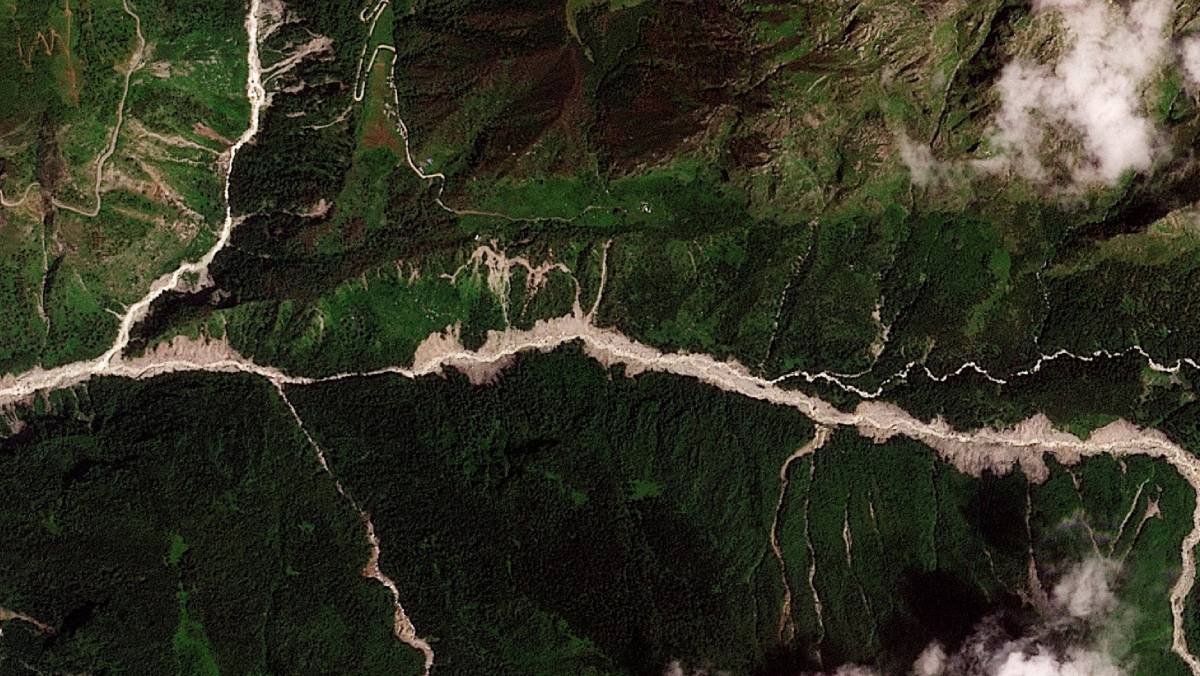
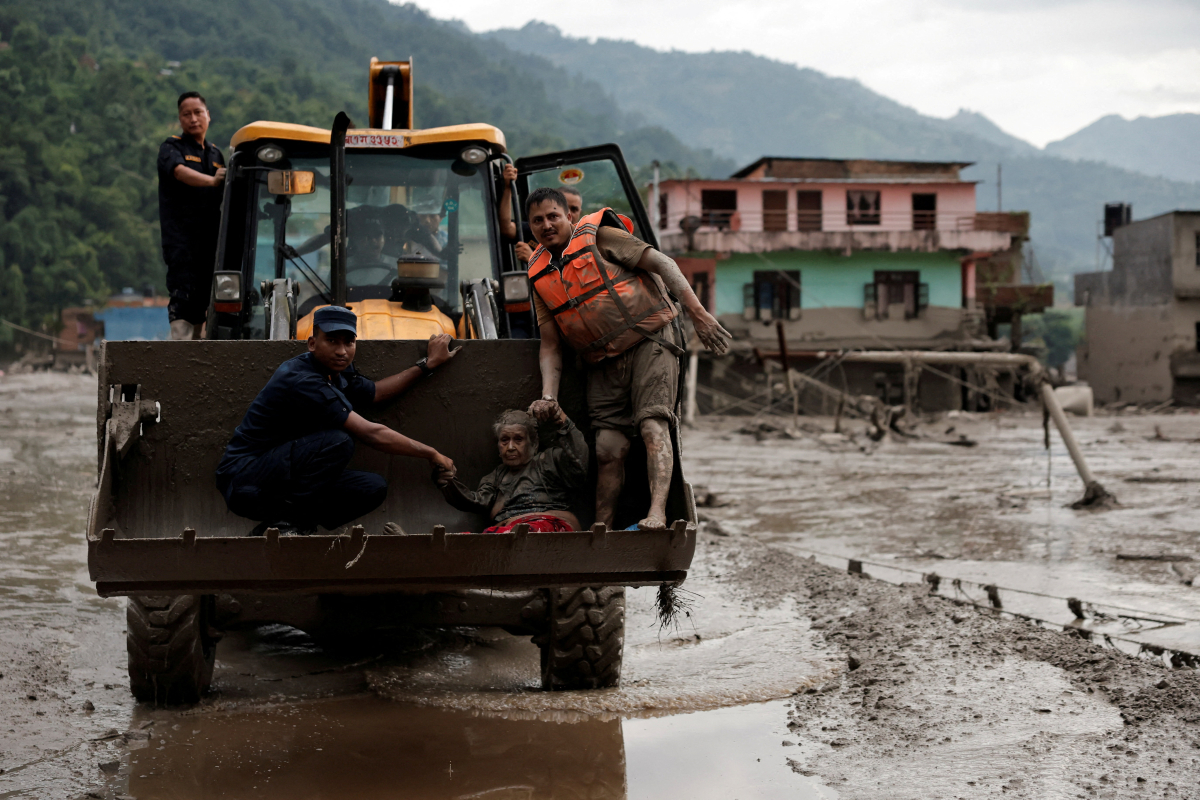
Rescuers in Nepal used helicopters on Thursday to scour for hundreds still missing after a wall of mud and rock collapsed into a river on the Himalayan border with China's Tibet, sending catastrophic floods through towns and valleys, killing 162 people.
More than 400 foreigners were among 579 tourists missing, Nepal tourism officials said, after the disaster swept a region thronged by trekkers and pilgrims, while police said they expected the death toll to rise beyond 162.
"This will go up, as we have resumed the search and more bodies are expected to be recovered," police spokesperson Abi Narayan Kafle told Reuters.
Among the missing tourists, 47 were from the United States, 34 from Australia, 33 from Britain and 24 from Canada, Sunil Sharma, a spokesperson for Nepal's tourism board, told the Associated Press news agency.
The disaster struck near the towns of Timure and Syapru Besi in Nepal’s Rasuwa district, where homes, roads and hydropower projects were damaged or destroyed.
Nepali officials said rescue efforts were being hampered by difficult terrain and strong river flows, preventing helicopters from landing in some affected areas.
Possible earthquake linked to landslide
Nepal’s Foreign Minister Shisir Khanal told parliament that initial reports suggested an earthquake may have triggered an avalanche that led to the flooding.
The German Research Centre for Geosciences said a magnitude 4.4 earthquake was recorded around seven minutes before the time shown on security footage capturing the disaster.
However, experts said the exact cause remained unconfirmed. Qianggong Zhang, head of climate and environmental risks at the International Centre for Integrated Mountain Development in Kathmandu, said an ice-rock avalanche into the Lhende Khola river may have triggered the event.
He warned that a second flood could occur because debris continued to block parts of the river upstream.
China launches rescue efforts
Chinese state media reported that the landslide affected the Gyirong border crossing in Tibet, cutting roads, communications and power supplies across the area.
China deployed at least 574 rescuers to the affected border region, according to state broadcaster CCTV.
A rescuer said teams faced major challenges because around 1.5 metres of sediment had blocked access routes. Chinese President Xi Jinping called for intensified search operations and improved early warning systems to prevent further disasters.
Major damage to infrastructure
Nepal’s Energy Ministry said 430 megawatts of power supply had been affected, mainly due to damage to hydropower projects. The disruption represents more than 12 per cent of the country’s total hydropower capacity.
Local officials warned residents living along the Bhote Koshi river to move to safer areas.
“There could be heavy casualties or loss of property,” said Rasuwa district administrator Narendra Pariyar, urging people to remain alert.
Health worker Tula Bahadur BK described widespread destruction in the area, saying settlements near the river had been completely swept away and five of his relatives were missing.
India offers humanitarian support
Indian Prime Minister Narendra Modi said New Delhi was ready to provide all possible humanitarian assistance, with teams from India and Nepal coordinating rescue and relief efforts.
The Bhote Koshi river, which originates in Tibet, flows into Nepal’s Trishuli river before eventually entering India as the Gandak river.
The region has seen similar disasters before. Last year, flooding in the Bhote Koshi river killed nine people and left 24 missing. It also destroyed a bridge linking Nepal and China and disrupted trade for months.
Read more:















What is your opinion on this topic?
Leave the first comment