The U.S. is to take control of a fifth of Venezuela’s vast oil reserves, President Donald Trump announced on Friday. He said that Washington had secured control of more than 65 billion barrels of the South American country’s reserves through a partnership with private business.
"At my direction, Secretary of State Marco Rubio, and Secretary of War Pete Hegseth, working closely with Highly Respected Interim President of Venezuela, Delcy Rodriguez, and, through a partnership with private business, have secured majority U.S. control of more than 65 billion barrels of proven Oil Reserves in Venezuela, at no cost to the American Taxpayer," Trump wrote on Truth Social.
The new agreement would represent a dramatic expansion of Washington’s role in Venezuela’s oil industry, at a time when the Trump administration is trying to secure more crude for U.S. refineries.
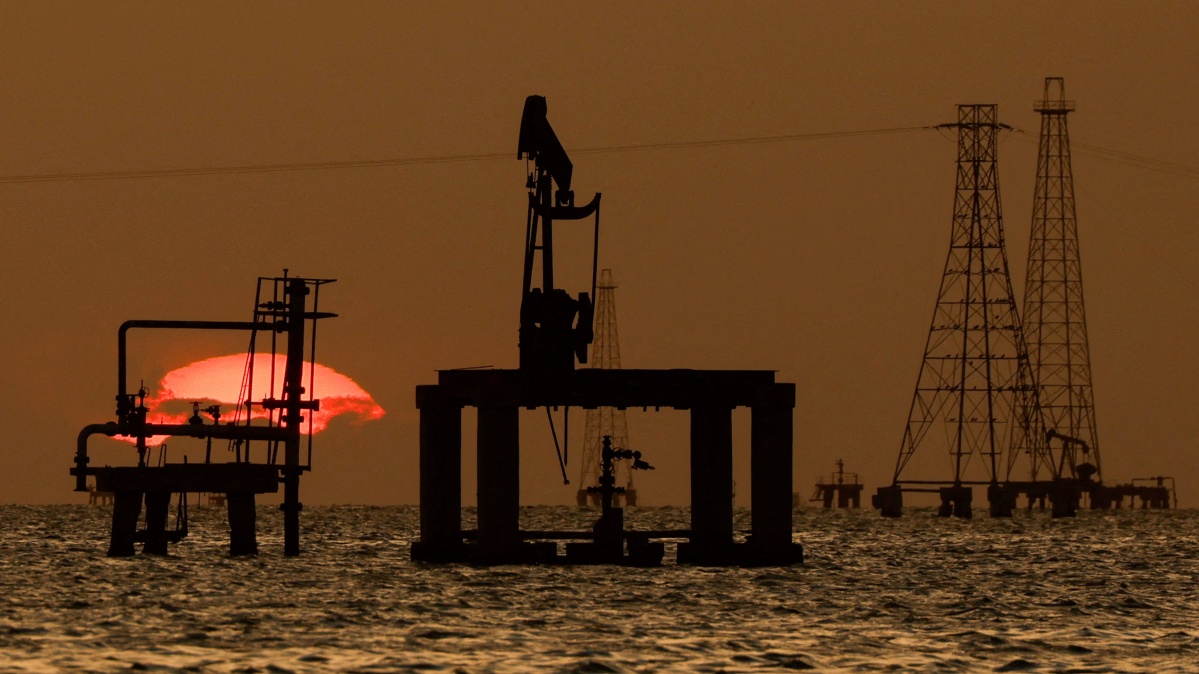
Venezuela holds the world's largest proven oil reserves, but produces only about 1.25 million barrels per day, far below its potential after years of underinvestment, mismanagement and sanctions.
Venezuelan leader praises deal
Venezuela’s Acting President, Delcy Rodríguez, hailed the agreement as significant for the country’s development, noting that it involved $100 billion in investment and a projected over $209 billion in taxes for the government.
“These investments will contribute not only to the recovery and modernization of our industry, but also to our country’s economic growth, the energy security of our hemisphere, and greater balance in international markets,” she said.
Rodríguez, who became interim leader after the U.S. captured ex-President Nicolas Maduro in January, added that the agreement marked a “historic milestone” in relations between Caracas and Washington.
U.S. could get access to Orinoco Belt
The announcement followed weeks of U.S.-Venezuelan talks over a deal that would give American companies long-term access to a group of Venezuelan oil fields and guarantee the resulting crude supply to the United States.
Venezuelan officials are preparing to sign agreements next week granting new oil exploration and production rights to a number of companies, particularly U.S. firms.
Sources have said that a lease model was under consideration. Any agreement could still face legal challenges in Venezuela, where the government retains control over the oil industry’s core activities.
A list seen by Reuters shows the fields which the U.S. could gain access to are in the Orinoco Belt and Lake Maracaibo regions. The Orinoco Belt region in the south and east of the country holds the world’s largest crude reserves.
U.S. Secretary of State Marco Rubio said the agreement was a win for the American and Venezuelan people.
“It demonstrates how President Trump's bold foreign policy is driving America First wins: securing stable reserves and low-cost oil in our Hemisphere and lowering gas prices here at home,” he said in a post on X.
David Goldwyn, President of energy consultancy Goldwyn Global Strategies, questioned whether the plan would address the obstacles that have deterred investment in Venezuela for years.
"It is hard to see how this kind of arrangement would accelerate investment at any material scale," he said, citing political uncertainty, an inadequate power grid, limited export capacity and government discretion over the industry.
Venezuela nationalised its oil industry in the 1970s, putting state-run PDVSA at its centre. Under then-President Hugo Chavez, the government expropriated assets, including projects operated by U.S. energy firms ExxonMobil and ConocoPhillips.
Read more from Venezuela:
















What is your opinion on this topic?
Leave the first comment