The AFC/M23 rebel movement is using its response to a small Ebola outbreak in eastern Democratic Republic of Congo as evidence of its ability to govern territory under its control, establishing parallel health structures and relying partly on support from neighbouring Rwanda.
Parallel institutions emerge
According to Democratic Republic of the Congo's Health Ministry data and accounts from aid workers and response officials, the rebels reported containing all known Ebola cases in areas under their control after a 21-day monitoring period passed without any new infections.
The effort comes as AFC/M23 continues to consolidate its authority across large parts of North and South Kivu provinces, captured during its rapid offensive in early 2025 that brought the key cities of Goma and Bukavu under rebel control.
Parallel institutions emerge
The outbreak, declared on 15 May, resulted in four confirmed Ebola cases in rebel-held territory — one in Goma and three near Bukavu.
Late last month, AFC/M23 announced that the outbreak had effectively ended in areas under its administration. Rebel officials said hundreds of contacts had been monitored and extensive surveillance operations carried out to prevent further transmission.
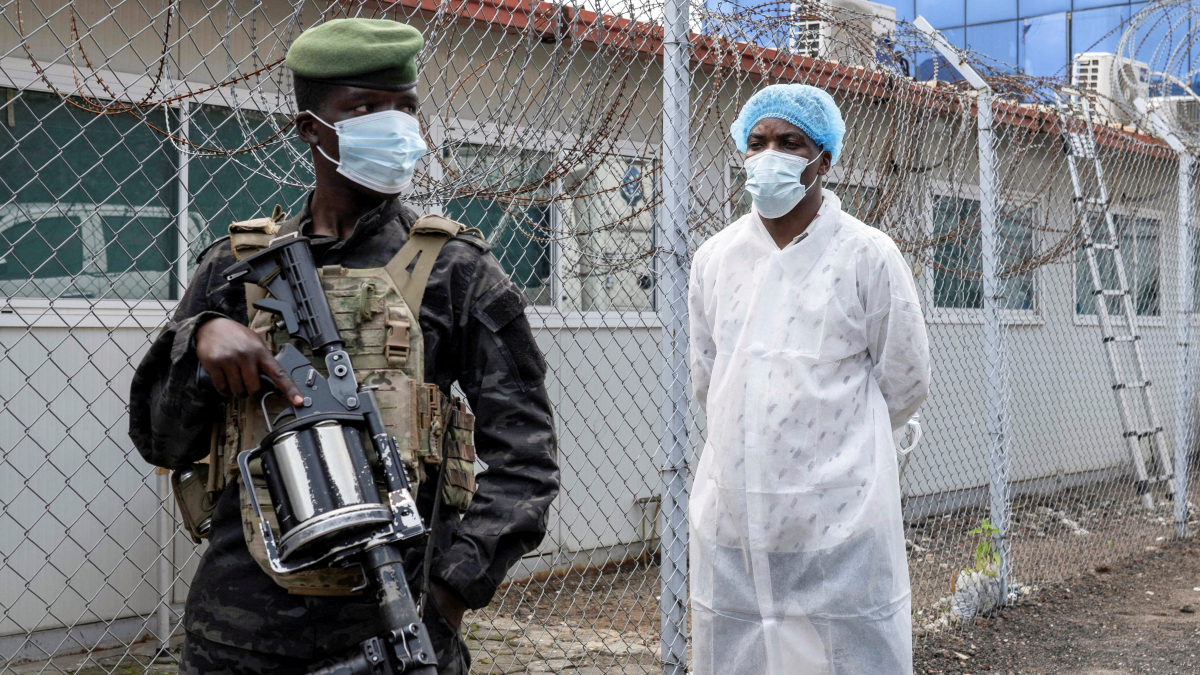
The health response has been coordinated through administrative and health structures operating separately from those of the government in Kinshasa. These institutions oversee disease surveillance, coordinate local health facilities and manage response teams in territories controlled by the rebels.
While some cooperation with the central government has continued through data sharing and laboratory testing, most operational decisions have been taken independently by authorities aligned with AFC/M23.
The rebels have actively publicised their efforts, distributing videos on social media showing officials visiting laboratories, inspecting treatment facilities and meeting healthcare workers.
Analysts say the campaign is intended not only to contain Ebola but also to demonstrate that AFC/M23 is capable of administering territory and providing public services.
Outbreak continues elsewhere
The situation in rebel-held areas differs sharply from the rest of the country.
Government figures released this week showed the outbreak has infected 1,926 people and claimed 702 lives nationwide. Health authorities have also confirmed the spread of the disease into two additional provinces, Haut-Uele and Tshopo.
Rebel officials argue that the comparatively limited impact in their territory reflects effective preparation and swift intervention measures.
AFC/M23 says it imposed strict containment measures, including isolating suspected contacts and restricting movement between rebel-controlled and government-held areas.
One journalist who travelled through affected regions told Reuters he was placed in mandatory isolation after returning from an area bordering Uganda.
Rwanda's role
With limited support from the Democratic Republic of the Congo government, AFC/M23 turned to Rwanda for assistance.
Response officials said Rwanda deployed specialists in surveillance, laboratory work, logistics and burial management to support health efforts in Goma.
Documents reviewed by Reuters indicate that medical supplies, protective equipment and medicines were also provided through Rwandan institutions, helping to fill critical gaps in the response.
Rwanda says its involvement is part of broader efforts to prevent the cross-border spread of infectious diseases, stressing that epidemics do not respect national boundaries.
However, Rwanda's support remains politically sensitive. The United Nations and several Western governments have accused Kigali of backing AFC/M23 militarily, allegations Rwanda denies.
Challenges remain
Despite the rebels' confidence, experts caution against drawing broad conclusions from a relatively small number of cases.
Reagan Miviri of the Kinshasa-based Ebuteli research institute said AFC/M23 was clearly seeking to demonstrate that it could manage a public health emergency more effectively than the central government.
However, he noted that four cases represented only a limited test of the group's governing capabilities.
The response has also faced significant logistical constraints. Documents point to shortages of protective equipment, testing supplies, vehicles and fuel.
Compounding those difficulties, Goma Airport remains closed following the rebel takeover, while disruptions to banking services in AFC/M23-controlled areas have complicated the movement of funds, personnel and aid supplies.
Health experts warn that a major surge in infections, particularly in frontline conflict zones, could quickly overwhelm existing response capacities.
As the Democratic Republic of the Congo battles one of its most serious Ebola outbreaks in years, the epidemic has become more than a public health challenge. It has also emerged as a test of authority in a country where competing administrations increasingly govern different parts of the same state.













What is your opinion on this topic?
Leave the first comment