The Democratic Republic of Congo (DRC) has reached a significant milestone in its fight against the Bundibugyo strain of Ebola, with the first patient enrolled in a clinical treatment trial aimed at identifying effective therapies for the disease.
World Health Organization (WHO) Director-General Dr Tedros Adhanom Ghebreyesus announced the development on Thursday, describing it as an important step in efforts to contain the outbreak and improve patient outcomes.
The trial comes at a critical time for the country, which is battling one of the largest outbreaks of the Bundibugyo Ebola strain ever recorded. Currently, there are no approved vaccines or treatments specifically designed for this variant of the virus.
Violence and mistrust continue to hamper response
Despite progress in expanding treatment and testing capacity, health officials warn that major obstacles remain.
Tedros highlighted a recent attack on an Ebola treatment centre in Ituri province that left two people dead, underscoring the security challenges facing health workers on the ground.
"Despite all this progress, we continue to face significant challenges, including mistrust and violence," he said.
Aid workers and health authorities have long struggled with insecurity in eastern Congo, where decades of conflict have fuelled distrust of government institutions and international organisations.
Outbreak has claimed more than 400 lives
The Bundibugyo Ebola outbreak was officially declared on 15 May and has since spread across the eastern provinces of Ituri, North Kivu and South Kivu.
According to government figures released on Wednesday, the outbreak has infected 1,406 people and caused 438 deaths. The WHO said the DRC has recorded an average of 38 new confirmed cases per day over the past two weeks.
Officials are also investigating potential exposures in two additional provinces, raising concerns that the outbreak could continue to expand.
Experimental treatments under evaluation
The new trial will involve more than 1,000 patients and is expected to take several months to complete.
Researchers will evaluate Mapp Biopharmaceutical's experimental antibody treatment, MBP134, both as a standalone therapy and in combination with Gilead Sciences' antiviral drug remdesivir.
The WHO said sufficient supplies of the drugs are available for the study. Discussions are also underway with the United States government, which donated MBP134 supplies, and with Gilead to ensure that patients can continue accessing the treatments if they prove safe and effective.
Gilead announced that it has donated more than 2,000 vials of remdesivir for the trial, in addition to a further 2,000 vials previously supplied for emergency use in June.
Race to develop rapid Ebola tests
Alongside treatment efforts, global health organisations are accelerating work to develop rapid diagnostic tests for the Bundibugyo strain.
The Geneva-based diagnostics organisation FIND said five potential manufacturers have been selected from an initial pool of 21 candidates and could begin field trials in eastern Congo within weeks.
The shortlisted companies include two manufacturers from West Africa, two from South Korea and one from the United States.
Health officials say a rapid antigen test could transform outbreak control efforts by enabling medical workers to identify infected individuals immediately rather than waiting days for laboratory results.
Currently, no rapid diagnostic test has been approved for the Bundibugyo Ebola virus.
Testing challenges remain
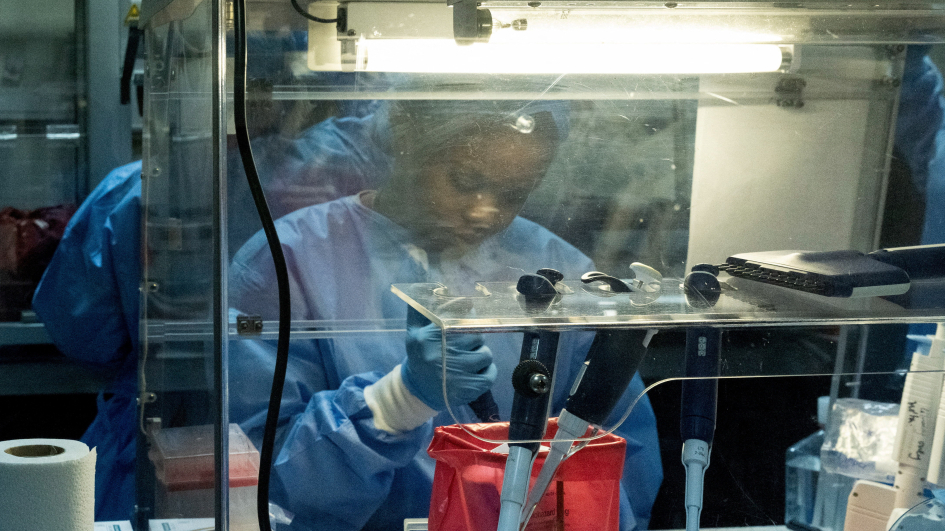
The DRC has expanded its laboratory network, now comprising 10 facilities capable of testing for Bundibugyo Ebola.
However, responders continue to face major logistical hurdles. Poor road infrastructure, unreliable electricity supplies and insecurity make it difficult to transport samples and deliver timely results.
According to the International Pandemic Preparedness Secretariat, rapid antigen tests could dramatically improve outbreak management by allowing health workers to make immediate decisions about isolation and treatment at the point of care.
FIND is also working to identify manufacturers able to provide simplified molecular tests that can be deployed in remote areas and used by laboratory personnel with limited specialist training.
Treatment capacity expands
The WHO says other aspects of the response are showing signs of improvement.
Authorities are now successfully following up with four out of every five identified contacts of Ebola patients. However, officials acknowledge that more contacts still need to be traced for each confirmed case.
Treatment capacity has also increased significantly. There are currently 650 Ebola treatment beds available across affected areas, with around 96% already occupied.
To cope with rising demand, the WHO and its partners are working to add another 300 beds in the coming weeks.
As the outbreak continues to spread, health officials hope that advances in treatment and diagnostics, combined with expanded healthcare capacity, will help bring the epidemic under control despite the persistent challenges posed by insecurity, limited infrastructure and public mistrust.
















What is your opinion on this topic?
Leave the first comment