More than 30 people have died since early May in a displacement camp in northeastern Democratic Republic of the Congo, raising fears that Ebola may be spreading undetected amid severe overcrowding and poor sanitation, according to camp officials and aid workers.
Symptoms point to possible Ebola spread
Health responders say efforts to determine the cause of the deaths have been hampered by widespread refusal among residents to allow testing of both the living and the dead.
Officials at Kigonze camp in Bunia, an area at the centre of an ongoing Ebola outbreak, said many of those who died displayed symptoms consistent with the disease, including fever, headaches and vomiting.
However, no official confirmation has been possible because families and patients have resisted testing, according to aid organisations including Caritas.
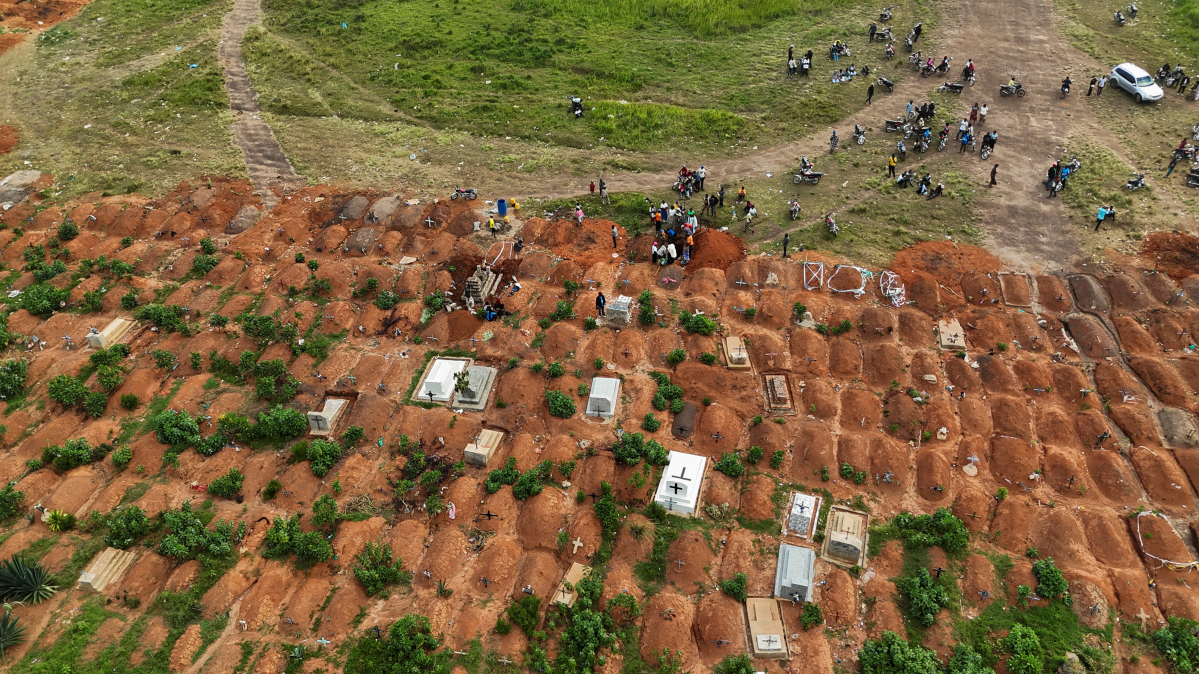
Camp spokesperson Désiré Grodya Bapi said the scale of the deaths was unprecedented. He noted that the camp typically records between one and three deaths per month, compared with around 10 burials in a single week recently.
Bodies buried amid growing humanitarian distress
Witnesses described increasingly dire conditions inside the camp, which is home to more than 15,000 displaced people.
Aid workers reported seeing bodies wrapped in sheets, including those of children and a pregnant woman, while burial teams wearing protective equipment carried out emergency procedures. Footage verified by Reuters showed health workers in hazmat suits disinfecting bodies and preparing small coffins as grieving families gathered nearby.
Attempts by health teams to conduct inspections and testing have reportedly been rejected by some residents.
Fear of undetected outbreak in displacement camps
Humanitarian workers warn that the deaths highlight the risk of undetected Ebola transmission among more than five million displaced people in eastern Democratic Republic of the Congo, where overcrowding and poor sanitation create ideal conditions for the spread of disease.
Camp residents described rapidly deteriorating living conditions, with families crowded into tightly packed tents and limited access to clean water and sanitation facilities.
Health officials have taken samples from a small number of victims, with results still pending.
Sanitation crisis deepens health risks
Aid organisations say deteriorating water and sanitation infrastructure is increasing the risk of a wider outbreak, particularly in displacement camps.
Toilets are reportedly insufficient and frequently overflow, forcing some residents to empty them manually because of a lack of sanitation services. Aid workers have linked these conditions to declining international funding for water, sanitation and hygiene (WASH) programmes in the region.
United Nations data cited by aid groups indicates that funding for sanitation facilities in the Democratic Republic of the Congo more than halved between 2024 and 2025, leaving significant gaps in disease prevention infrastructure.
Aid cuts strain response capacity
Humanitarian organisations, including Mercy Corps, CARE International, Oxfam and Danish Refugee Council, say budget reductions have forced them to scale back essential services, including access to clean water, sanitation facilities and hygiene support in Ebola-affected provinces.
Mercy Corps, for example, reportedly reduced its coverage from more than 125,000 displaced people in 2024 to fewer than 19,000 this year because of funding shortfalls.
The U.S. remains a major donor to Ebola response efforts, but aid groups say cuts to broader humanitarian funding have weakened preventive systems that are critical to controlling outbreaks.
Trust barriers continue to hamper response
Health experts warn that, despite official monitoring of Ebola cases, community mistrust, poor sanitation and limited access to healthcare could allow the virus to spread further without detection.
With testing still being resisted in parts of the camp, authorities say confirming the exact cause of the recent deaths remains a major challenge, leaving humanitarian agencies operating amid uncertainty in one of the region's most vulnerable displacement settings.




















What is your opinion on this topic?
Leave the first comment