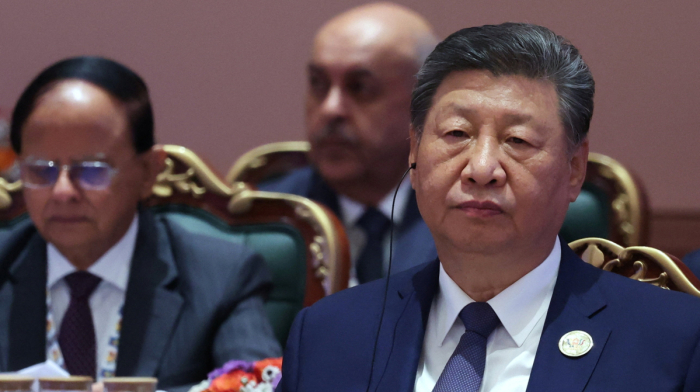
Chinese Vice Premier Zhang Guoqing will attend a video conference hosted by French President Emmanuel Macron on Thursday (12 June) to discuss global economic imbalances, marking a rare high-level engagement between China and G7 nations ahead of next week's summit in France.
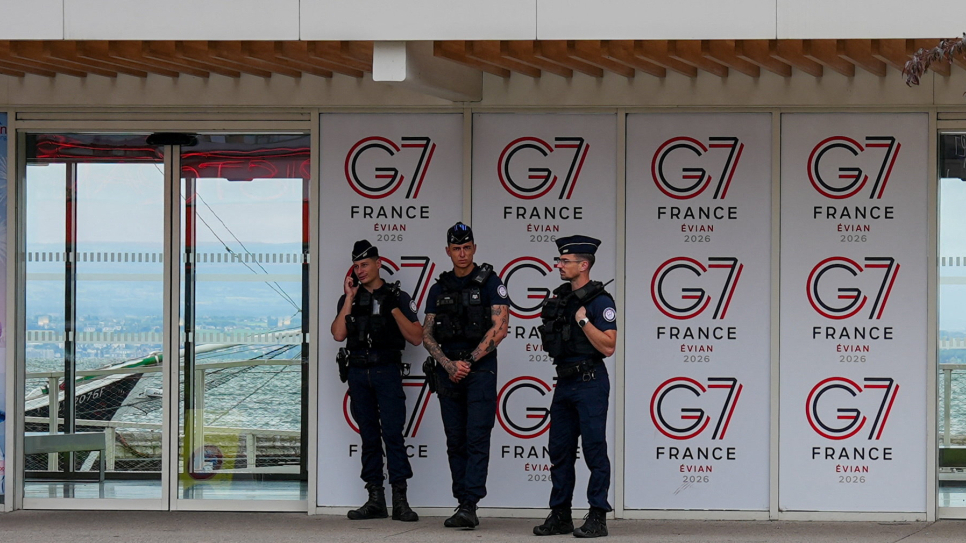
The meeting comes just days before G7 leaders gather in Évian-les-Bains from 15 to 17 June, where trade tensions linked to surging Chinese exports are expected to be a central issue.
French officials say the initiative forms part of a broader effort by Paris to open dialogue with Beijing before the European Union takes further decisions on whether to tighten trade measures against China over industrial overcapacity and low-cost exports.
Officials have also framed the agenda around crisis management and areas of limited consensus, with no major breakthroughs expected on key issues including economic imbalances and critical mineral supply chains.
China-G7 engagement
Zhang's participation in the "Global Convergence for Growth" video conference marks an unusual instance of direct Chinese involvement in discussions closely aligned with G7 priorities. China has historically criticised the grouping as unrepresentative of the global order.
The talks come amid growing concern in Europe over China's expanding trade surplus and its rapid move up the value chain, particularly in electric vehicles, batteries and other high-tech sectors.
European policymakers have warned that the trend risks triggering a "second China shock", echoing earlier disruptions caused by Chinese manufacturing dominance in lower-value industries.
EU divisions over trade
Beijing has rejected accusations that its exporters benefit unfairly from state subsidies, arguing instead that Western tariffs and restrictions undermine global trade rules.
Despite rising concern, European Union member states remain divided on how to respond. Germany, the bloc's largest economy, has been cautious about imposing tariffs because of its deep reliance on China as a key export market, particularly for the automotive sector.
However, as Chinese electric vehicle manufacturers increasingly compete with German carmakers, pressure is growing within parts of Europe for a tougher trade stance.
The video conference is expected to feed into broader discussions at the G7 summit, as well as subsequent European Union meetings, where China's trade practices are likely to remain a central point of debate.
Middle East and Ukraine on agenda
Diplomats say discussions at the G7 summit are likely to be shaped by ongoing instability in the Middle East, including tensions between the U.S. and Iran, as well as wider regional security concerns affecting global energy markets.
A fragile ceasefire between Washington and Tehran is reportedly under strain, with unresolved disputes over nuclear negotiations, sanctions and maritime security in the Gulf region.
France has invited regional powers including Saudi Arabia, the United Arab Emirates, Qatar and Egypt to the summit in an effort to support mediation initiatives and stabilisation efforts.
Russia's war in Ukraine is also expected to feature prominently, with Ukrainian President Volodymyr Zelenskyy attending as Kyiv seeks renewed international support.
European leaders are expected to press for stronger coordination with Washington as efforts to end the conflict remain stalled and concerns grow over shifting U.S. priorities amid tensions in the Middle East.
Read more:














What is your opinion on this topic?
Leave the first comment