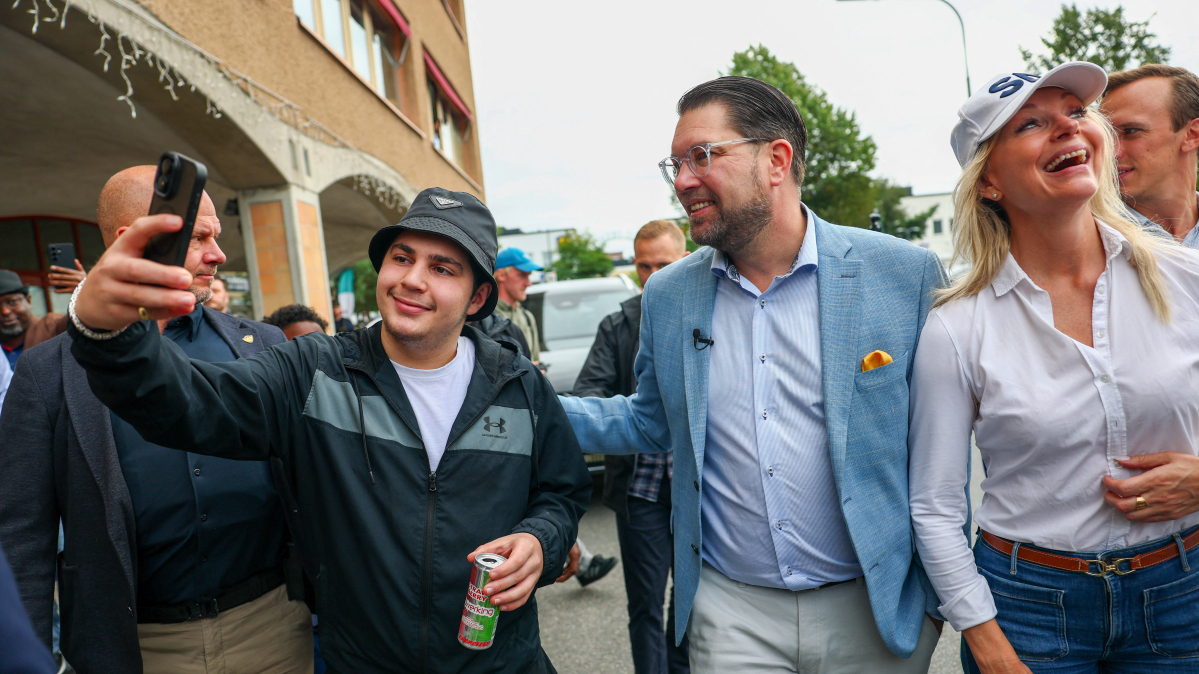
Swedes vote in an election on Sunday (13 September) that could see the far-right enter government for the first time if the country's right-wing parties can form a majority.
Opinion polls show the centre-left opposition alliance ahead, with the Social Democrats's leader Magdalena Andersson favourite to become Prime Minister, but her bloc's lead has been squeezed sharply in the final days of the campaign.
The last pre-election poll showed the gap between the two blocs narrowing to 5.6 percentage points, down from 8.2 points a week earlier, with Social Democrat support falling to 27.6 per cent, a level below the party's 2022 result.
Far-right could enter government
Meanwhile, centre-right Prime Minister Ulf Kristersson has promised the far-right Sweden Democrats ministerial posts if his right-wing bloc is returned to power.
The Sweden Democrats, led by Jimmie Akesson, have already propped up Kristersson's government as part of a 2022 agreement, allowing the party influence over government policy, particularly on crime and immigration.
Supporters of the right-wing bloc say its policies have helped curb gang violence and cut immigration dramatically, and that a victory would amount to a public endorsement of that approach and more in the same vein in the years ahead.
“We can unify parties, voters and issues into joint action. That's why we get things done,” Kristersson, who has pledged to bring the far-right Sweden Democrats into government if his bloc wins, told reporters in the country's parliament this week.
Critics counter that the agenda is undermining civil liberties while forcing immigrants to conform more closely to Swedish cultural norms or leave the country, urged on by both carrot and stick.
“We've become a harder society, a quieter society, but also a poorer society as we've had growth far below our potential and where households see their pay checks buy less and less,” Andersson said.
“Our country has based its strength on sharing in each other's achievements and that we stick together when things are hard,” she added.
Left beset by disagreements
The Social Democrats, Greens, Left Party and Centre Party broadly agree on the need for higher welfare and public spending, but divisions persist on many issues, including immigration, where Andersson's party wants a more restrictive line than some of its would-be partners.
Meanwhile, the rival right-wing bloc has reached agreement on several voter priorities, including support for Ukraine, military rearmament and relief for households hit by the cost-of-living crisis.
Turnout is expected to be high: more than 3.37 million people had already cast advance votes as of the morning of 12 September, and 8,046,725 people are eligible to vote.
Read more from Sweden:















What is your opinion on this topic?
Leave the first comment