After Labour's devastating performance in the 8 May local elections, the party's internal architecture has cracked open with remarkable speed.
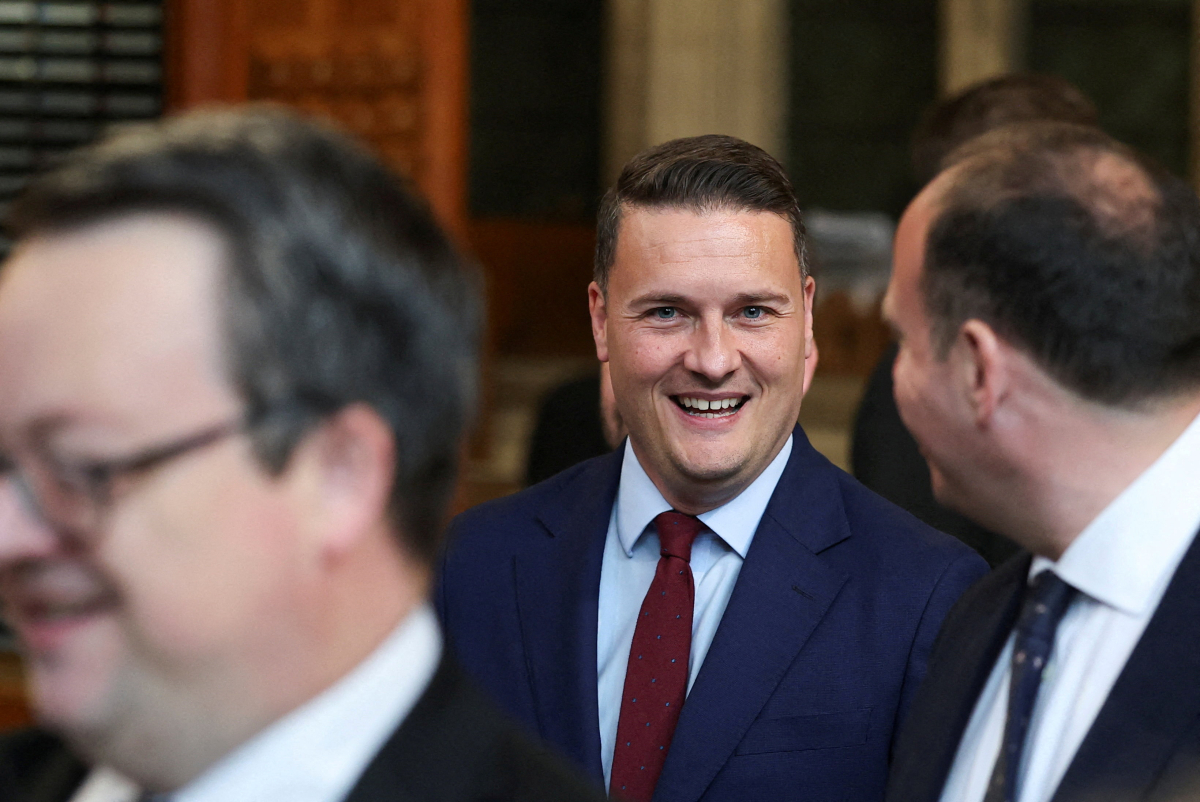
Prime Minister Keir Starmer, fighting for his political survival after dozens of his own MPs called for him to quit, has met his potential leadership rival Wes Streeting, the Health Secretary, who is reported to be preparing his resignation in an attempt to trigger a contest to replace the premier.
The ceremony of the King's Speech, normally a moment of governmental confidence, was overshadowed by what could become the most dangerous threat to the prime minister since MPs began urging him to resign following one of Labour's worst defeats in last week's local elections.
Who is Wes Streeting?
The man at the centre of this storm is not easily categorised. Born on 21 January 1983 and raised in Stepney, Streeting attended Westminster City School before reading history at the University of Cambridge, where he served as president of the Cambridge Students' Union.
He went on to lead the National Union of Students before entering local government, becoming deputy leader of the London Borough of Redbridge before winning the Ilford North seat in 2015. He grew up on a council estate in London's East End and was the first person in his family to graduate from university — a story he later recounted in his Sunday Times bestselling memoir, One Boy, Two Bills, And A Fry Up.
Keir Starmer appointed one of his closest allies as Secretary of State for Health and Social Care in the hope that Streeting could deliver the substantial improvements the NHS required. His record in the role has been mixed but headline-grabbing.
The Institute for Government's 2025 Performance Tracker notes that NHS performance is improving, but warns that a complex and haphazardly planned reform package could slow progress. That assessment appears to capture Streeting's tenure well: bold ambition coupled with complicated execution.
Why is he preferred by Labour's right?
To Labour’s centrist reform wing, Streeting is seen as a near-ideal candidate. He speaks with conviction about reform, carries an authentic working-class biography and has demonstrated genuine electoral resilience. A BBC analysis identified him as the name "spoken of most" when Labour figures discussed potential successors to Starmer - and that was before this week's events transformed speculation into action.
Reuters reported that Streeting told LBC radio in November 2025 that "the prime minister is not fighting for his job", and later insisted to Sky News that briefing about a leadership challenge was "totally self-defeating and not true." That he has since manoeuvred to the brink of a formal challenge tells its own story about how rapidly Labour's internal arithmetic has shifted.
A party divided: Two visions of labour
The crisis has exposed a split that cuts across ideology, personality and political geography. On the soft left, Safeguarding Minister Jess Phillips resigned, writing to Starmer that she believed him to be "a good man fundamentally, who cares about the right things", but that she had "seen first-hand how that is not enough". Her departure was viewed as emblematic of a generation of Labour MPs who believe the government has stalled on the promises that swept it to power in 2024.
Labour MP Richard Burgon, speaking on BBC Radio 4's Today programme, warned: "It feels like we are years and years into an unpopular government, rather than a year into a government that's just got rid of the Conservatives. We're losing votes to the left, we're going to be losing seats to the right."
That dual haemorrhage is precisely the problem Streeting's supporters argue he is best placed to address.
The question Westminster cannot yet answer
Starmer has so far managed to cling to power and fend off an immediate threat to his leadership, with reports suggesting that potential successors currently lack the numbers required to launch a formal challenge. Whether that reprieve proves permanent or merely temporary is now the defining question in British politics.
Streeting himself has said little. But in Westminster, silence is rarely neutral. The Health Secretary, who grew up on a council estate and remade himself through sheer force of will, has spent his entire career preparing for a moment like this. Whether that moment has truly arrived - and whether he is prepared to seize it - may become clear within days.


















What is your opinion on this topic?
Leave the first comment