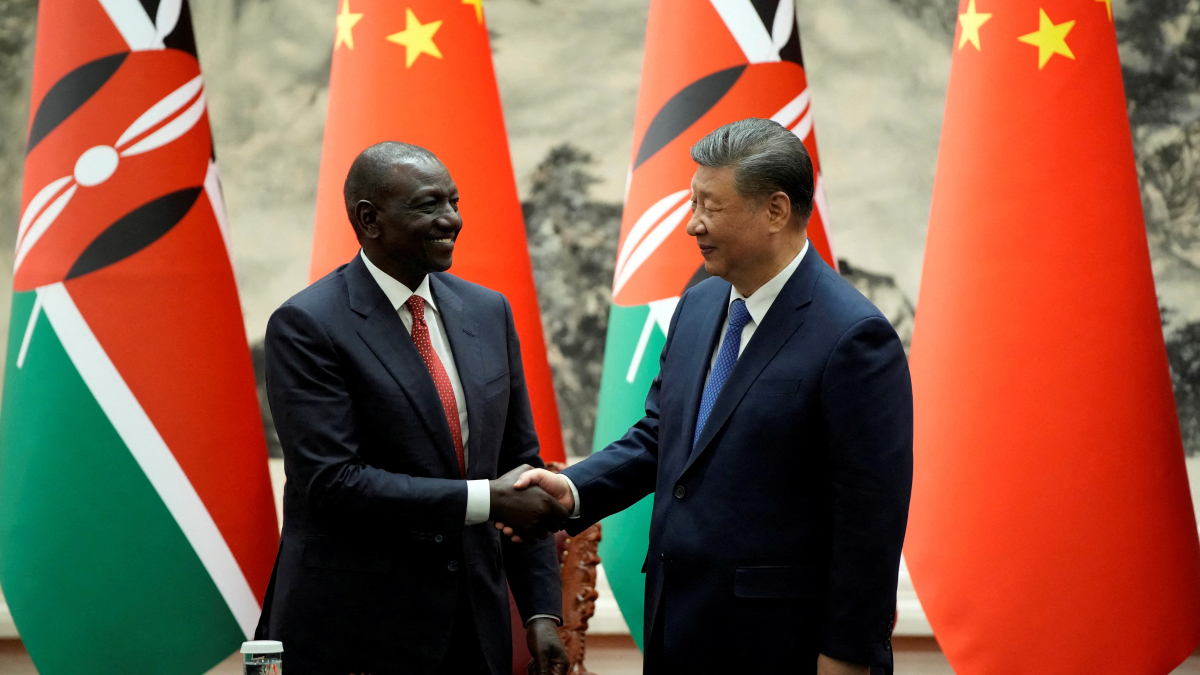
China and Kenya have agreed to revive a long-delayed railway project, signalling renewed momentum in infrastructure cooperation and a shift towards more sustainable financing models across Africa.
The project centres on extending Kenya’s Standard Gauge Railway (SGR), a major transport corridor developed with Chinese support under the Belt and Road Initiative. Construction had been stalled for more than six years after funding slowed amid concerns over debt levels and economic viability.
Under the renewed agreement, both sides are adopting a revised financing approach. Rather than relying heavily on large government loans, Kenya is exploring alternative funding methods, including revenue from a railway development levy. This is expected to ease financial pressure while allowing the project to progress.
Chinese firms, including China Road and Bridge Corporation, are expected to continue playing a central role in construction. The restart follows a series of negotiations aimed at restructuring earlier arrangements and aligning the project with Kenya’s current economic priorities.
The railway extension is seen as vital for regional connectivity. Once completed, it is expected to link the port city of Mombasa with neighbouring countries such as Uganda, strengthening trade routes across East Africa. The initial phase, completed in 2017, already connects Mombasa to Nairobi and parts of the interior, but the incomplete extension has long limited its full potential.
Kenyan President William Ruto has emphasised the importance of completing the railway, describing it as key to reducing transport costs, boosting trade and supporting long-term economic growth. Reviving stalled infrastructure projects has become a priority for his administration as it seeks to stimulate development.
For China, the renewed partnership reflects an evolving strategy in overseas investment. Rather than relying solely on large-scale lending, its involvement is increasingly shifting towards shared-risk models and more financially sustainable cooperation.
The revival of the railway project is being closely watched as a test case for future China–Africa partnerships. It highlights how previously stalled mega-projects can be brought back on track through adjusted financing, sustained diplomatic engagement and a shared commitment to long-term development goals.



















What is your opinion on this topic?
Leave the first comment