Cuba and the United States have been at odds for more than six decades, with tensions rooted in the 1959 revolution that transformed the island’s political and economic system. Renewed focus on relations comes as Donald Trump’s rhetoric intensifies and conditions on the island worsen.
The conflict began on January 1, 1959, when rebels led by Fidel Castro, who would go on to lead Cuba as a communist state, and his brother Raúl Castro, a key revolutionary commander who later became president, removed the U.S.-backed leader Fulgencio Batista from power.
Soon after, the new government restructured a U.S.-aligned economic system and moved closer to the Soviet Union, raising concerns in Washington during the Cold War. Over the next two years, relations worsened quickly.
Fidel Castro took control of major industries like sugar, oil and banks, and introduced land reforms by taking land from large private owners and redistributing it, which directly affected U.S. businesses in Cuba.
In response, U.S. President Dwight Eisenhower stopped buying a set amount of sugar from Cuba, and the U.S. began restricting trade with the island. This marked the start of a long economic blockade that lasted for decades.
By 1961, diplomatic relations had collapsed. The United States severed ties and closed its embassy in Havana.
Cold War tensions shape early alliance
As tensions escalated, Cuba turned to the Soviet Union for support. In 1960, Havana began receiving oil from the Soviet Union, starting a close political and economic partnership.
Moscow gave Cuba military help, money and technical support, and bought Cuban sugar at good prices. This was crucial because it kept Cuba’s economy running after it lost trade with the United States.
Cuba lies just 90 miles (145km) from the United States, underlining its strategic importance in global politics.
From Bay of Pigs to nuclear brink
In April 1961, a U.S.-backed force of Cuban exiles attempted to overthrow Castro in the Bay of Pigs invasion, but was defeated within days. The failed operation strengthened Castro’s grip on power and deepened Cuba’s ties with the Soviet Union.
Tensions escalated further during the Cuban Missile Crisis in October 1962, when the Soviet Union deployed nuclear missiles on the island.
U.S. President John F. Kennedy imposed a naval blockade and demanded their removal, bringing the world to the brink of nuclear war.
A deal was eventually reached, with Moscow withdrawing the missiles in exchange for a U.S. pledge not to invade Cuba.
Brief thaw in diplomatic relations
Relations improved briefly in 2014, when U.S. President Barack Obama moved to restore diplomatic ties. However, the shift did not lead to lasting reform.
Sebastian Aros, interim director of the Cuban Research Institute at Florida International University, said the Cuban government used the opening to consolidate control.
"Obama began lifting parts of the U.S. sanctions against Cuba. The Castro regime immediately implemented a counter-reform, eliminated the nascent small private sector, and concentrated the economy under military control," Aros said.
Instead of making the economy more open, the government made it more controlled. A military-run business group called GAESA took control of a large part of the economy.
Sanctions and shortages hit daily life
Cuba has faced shortages of fuel, food and basic goods, alongside prolonged electricity cuts that have disrupted daily life and business activity.
These pressures have also contributed to increased migration, with many Cubans seeking opportunities abroad.
Tensions remain amid ongoing talks
Relations remain strained, with sanctions still in place. Cuba and the United States have confirmed they are engaged in bilateral talks at a time of heightened tension. Washington is increasing pressure on Havana through what analysts describe as a de facto oil blockade.
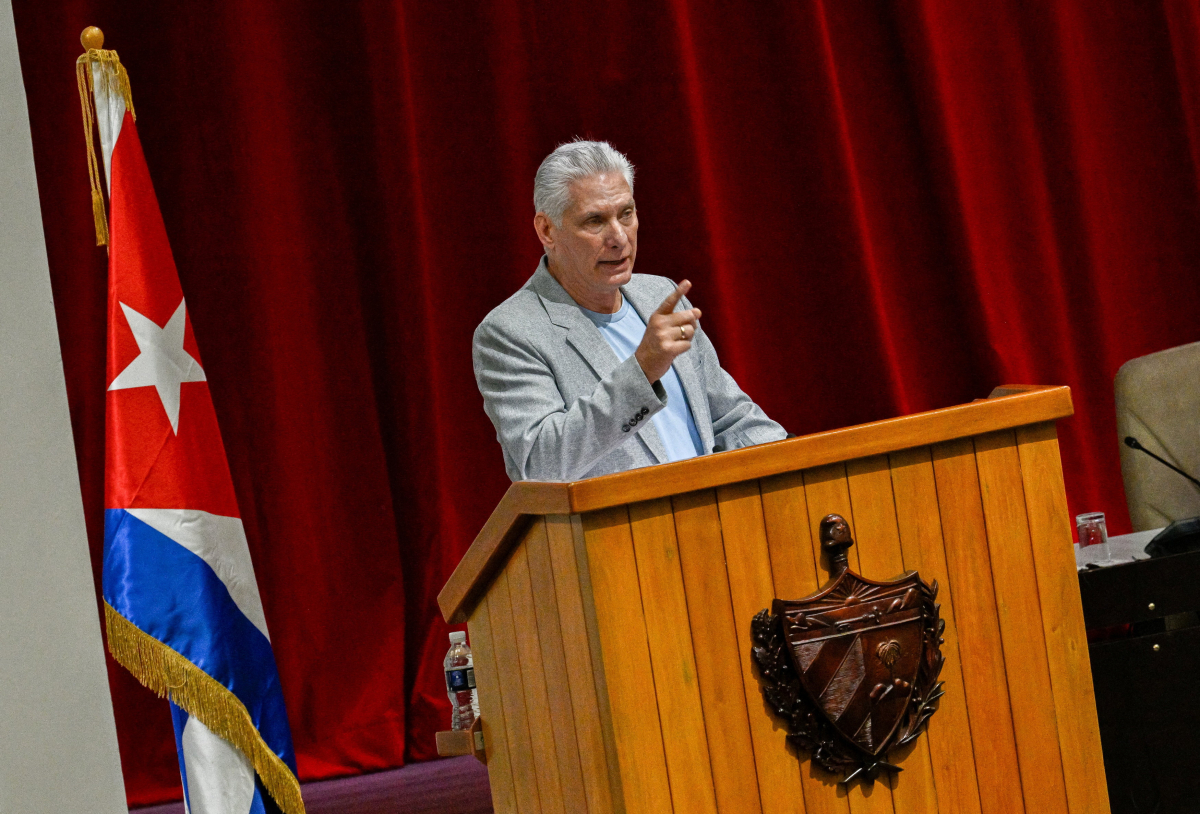
Cuban President Miguel Díaz-Canel has said the talks must take place "on the basis of equality" and mutual respect.
A decline in oil supplies from Venezuela, a key ally, has contributed to fuel shortages and widespread power outages across the island, with protests reported in recent months.
Trump escalates rhetoric on Cuba
U.S. President Donald Trump said on Friday that "Cuba is next" during a speech at an investment forum in Miami, as he highlighted recent U.S. military actions in Venezuela and Iran.
He did not outline specific plans, but has suggested the government in Havana is close to collapse.
Trump has also said he could "do anything he wants" with Cuba. Earlier in March, he suggested Cuba could face a "friendly takeover", before adding: "It may not be a friendly takeover". Trump has indicated that negotiations with elements of Cuba’s leadership are under way, while suggesting military action could be an option.
President Miguel Díaz-Canel has acknowledged that talks with the United States are ongoing, aimed at avoiding confrontation. Despite the rhetoric, U.S. military officials say there is no indication that Washington is actively preparing for an invasion of Cuba.
"The United States wants the regime to leave. The regime wants to stay," Aros said.
Relations remain locked in a long-standing stalemate, with little prospect of a near-term breakthrough.












What is your opinion on this topic?
Leave the first comment