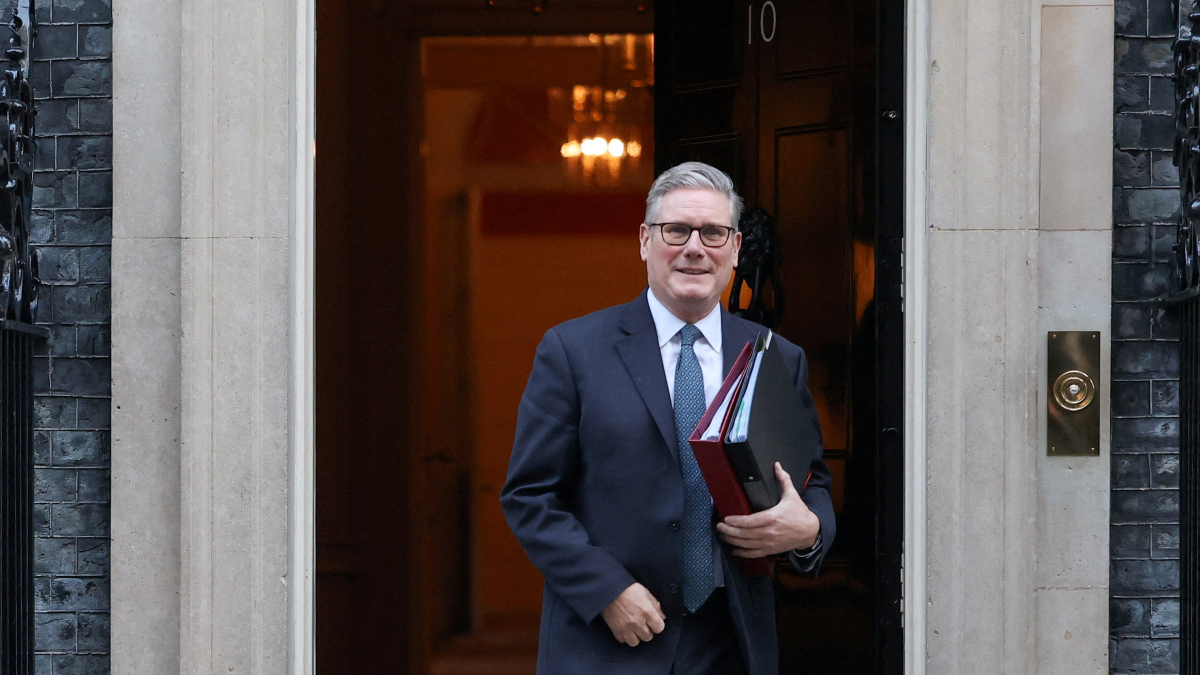
British Prime Minister Sir Keir Starmer said on Monday (23 March) that Britain must plan for the possibility that the Iran war could continue for some time, and added that he had no "meaningful concerns" about energy supply.
"All of our focus and energy has to be in the swift de-escalation, but we've got to plan on the basis that it could go on for some time, and that's the way in which we'll plan this afternoon," Starmer told a parliamentary committee, referring to an emergency meeting (COBR) with his ministers that took place later on Monday.
He added that while the government had to plan for potential pressures on energy security, he said that the government does not have "any meaningful concerns about energy supplies.”
Starmer also said his government may consider expanding the powers of the competition regulator to tackle price gouging and profiteering in the energy market, given the impact of the Middle East conflict.
"We are looking at measures to deal with profiteering ... we might look at what further teeth we can give the CMA (Competition and Markets Authority) to deal with this," Starmer told a parliamentary committee.
"I want to see more on price gouging or profiteering ... we're actively considering whether the CMA should have additional powers to deal specifically with that, but at the moment we're making sure they're focused on anti-profiteering."
Cabinet Office Briefing Rooms (COBR)
Starmer made the comments before he chaired an emergency COBR meeting to assess the escalating Iran war’s impact on the British economy, with ministers warning that de‑escalation remains the best way to protect growth, secure household finances, and reduce instability.
The session brought together senior ministers, including Finance minister Rachel Reeves and the Governor of the Bank of England Andrew Bailey, to discuss risks to inflation, energy prices and public finances.
The meeting followed a call with U.S. President Donald Trump, where both leaders discussed current developments in the Middle East and ongoing concerns around global energy routes such as the Strait of Hormuz, which has been disrupted by the conflict.
Senior ministers provided updates on pressures facing markets and costs for households. Officials warned that bringing the conflict to an end through diplomatic de‑escalation remains the most important step to protect the economy.
Speaking to Parliament earlier on Monday, Starmer said the immediate focus must be on securing a negotiated resolution, including efforts toward placing tougher conditions on Iran, particularly around nuclear weapons, a stance echoed in recent international discussions around diplomacy.
At the same time, he said the government is preparing measures to shield households from the domestic impact of the crisis. The Chancellor is expected to outline a package in Parliament aimed at protecting working people from rising living costs, including actions intended to crack down on companies accused of price gouging during the current instability.
Plans include a proposed anti‑profiteering framework designed to help bodies such as the Competition and Markets Authority (CMA) identify and act against unfair price increases. Downing Street said that if needed, further targeted and time‑limited measures could be introduced as details are worked through by relevant departments.
Earlier in the day at the Liaison Committee, Starmer warned ministers that they “mustn’t fall into the false comfort that there will be a quick and early end” to the Iran conflict, saying the government must plan on the basis that the situation could continue for some time. He also reiterated that the crisis was “not our war” and that any UK involvement would need to have a lawful basis, underscoring the government’s focus on both diplomatic solutions and domestic stability.












What is your opinion on this topic?
Leave the first comment