The AnewZ Opinion section provides a platform for independent voices to share expert perspectives on global and regional issues. The views expressed are solely those of the authors and do not represent the official position of AnewZ
Recent operations by the U.S. military have led some to believe that a decapitating strike is a silver bullet capable of fixing any foreign policy problem swiftly. However, this logic is flawed, and the risks of relying on swift, targeted actions are too great to ignore.
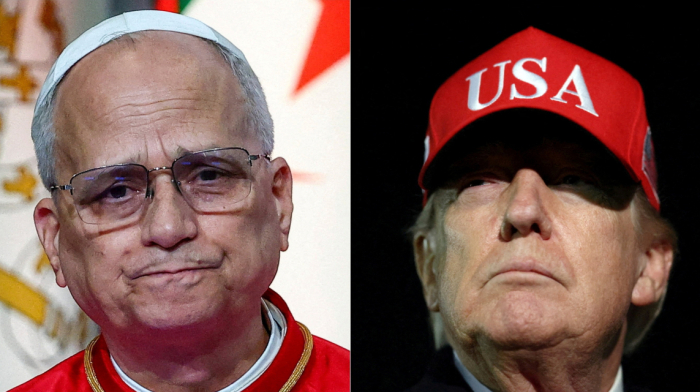
For an extended period, American foreign policy revolved around the idea of strategic containment, including sanctions, deterrence, and diplomatic pressure. With Donald Trump returning to the White House, the U.S. adopted a new National Security Strategy that embraced a realism-driven policy approach.
A few weeks later, the U.S. launched Operation Absolute Resolve, resulting in the capture of Venezuelan President Nicolás Maduro. The operation was carried out in two stages. First, the U.S. Armed Forces struck Venezuelan infrastructure to suppress air defenses. Parallel to this, a dedicated task force launched an attack on Maduro’s compound, seizing the Venezuelan leader and his wife.
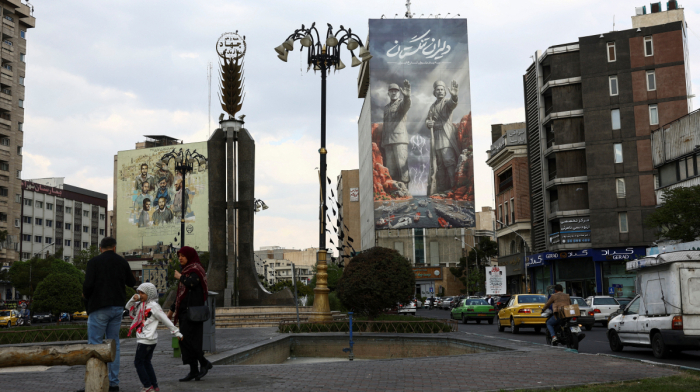
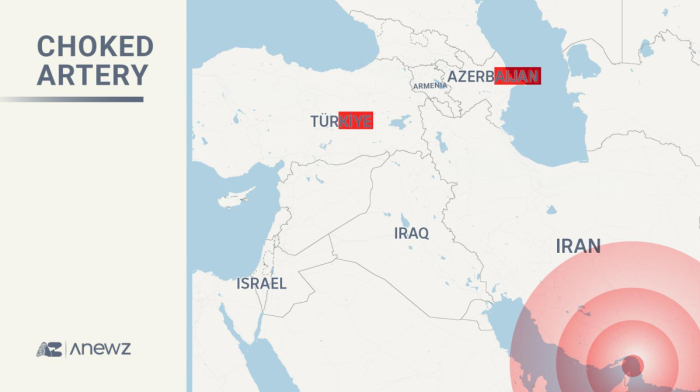
Fast forward to February 27, 2026, the U.S. and Israel launched a coordinated joint attack targeting Iran. On the first day of the operation, Iran’s Supreme Leader, Ayatollah Ali Khamenei, was killed in an air strike. In theory, the strike represented another successful example of decapitation.
However, in practice, things are far more complicated. The conflict continues, and the Iranian military retains operational capacity, striking the U.S. and Israeli assets in the Middle East. Unlike in Venezuela, the operation in Iran did not end in a swift victory, showing that removing a leader does not automatically dismantle a state’s military capabilities.
Several factors explain the variation in these two cases. First, Venezuela boasts modest military resources and capabilities compared to Iran. Tehran has developed domestic drone and missile programs, coupled with years of preparation for potential confrontation with Israel and the U.S. These factors provided Iran with a higher level of resilience compared to Venezuela.
Regime structure and ideology are other variables explaining the variance in the outcome. In contrast to Venezuela, the Iranian political system is vastly different, with institutions playing a more prominent role in policymaking.
The Assembly of Experts elects a successor to maintain political continuity. The Islamic Revolutionary Guard Corps (IRGC) protects leadership and holds significant influence across military, political, and economic affairs. The Guardian Council oversees candidates and ensures ideological consistency.
These institutions create a safety net and ensure Iran is not dependent on a single individual, maintaining cohesion even after the Supreme Leader’s death.
Relying purely on decapitation strikes presents significant risks. One major issue is the unpredictable response. Iranian forces continue to strike regional targets, highlighting strategic uncertainty. Another problem is regional escalation; removing leaders can trigger chaos, prolonging conflicts and creating instability.
Finally, decapitation strikes may produce a “rally-around-the-flag” effect, where foreign attacks boost domestic support for the regime rather than weaken it.
Policymakers must avoid treating decapitation strikes as a one-size-fits-all solution. Success depends on the adversary’s institutional resilience, military capability, and strategic context. Removing a leader may bring short-term gains but rarely ensures lasting political stability.
Decapitation strikes are merely one tool in the foreign policy toolbox, not a guarantee of victory.





















What is your opinion on this topic?
Leave the first comment