Oscars 2026 nominations announced: 'Sinners' breaks record with 16 nods
The Academy Awards nominations have been announced, with the crime drama Sinners leading the race securing a record 16 nominations ahe...
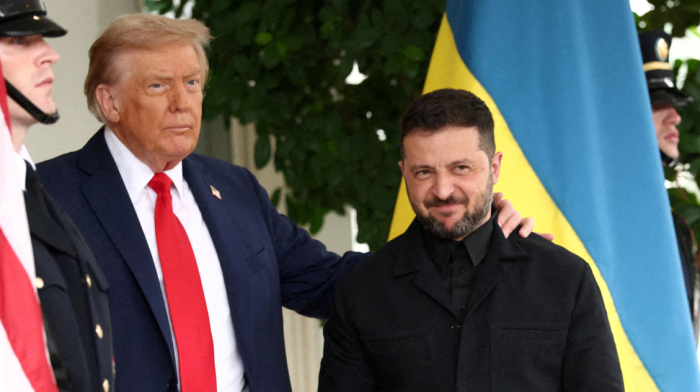
U.S. President Donald Trump is weighing why Tehran has not moved toward limiting its nuclear programme even as Washington expands its military presence across the Middle East.
His special envoy, Steve Witkoff, said Trump is not irritated but wants to know why diplomatic traction remains elusive.
In an interview on Fox News, Witkoff said: "I don't want to use the word 'frustrated,' because he understands he has plenty of alternatives, but he's curious as to why they haven't... I don't want to use the word 'capitulated,' but why they haven't capitulated."
He said the White House believes Iran should already be seeking a way forward.
"Why, under this pressure, with the amount of seapower and naval power over there, why haven't they come to us and said, 'We profess we don't want a weapon, so here's what we're prepared to do'? And yet it's sort of hard to get them to that place."
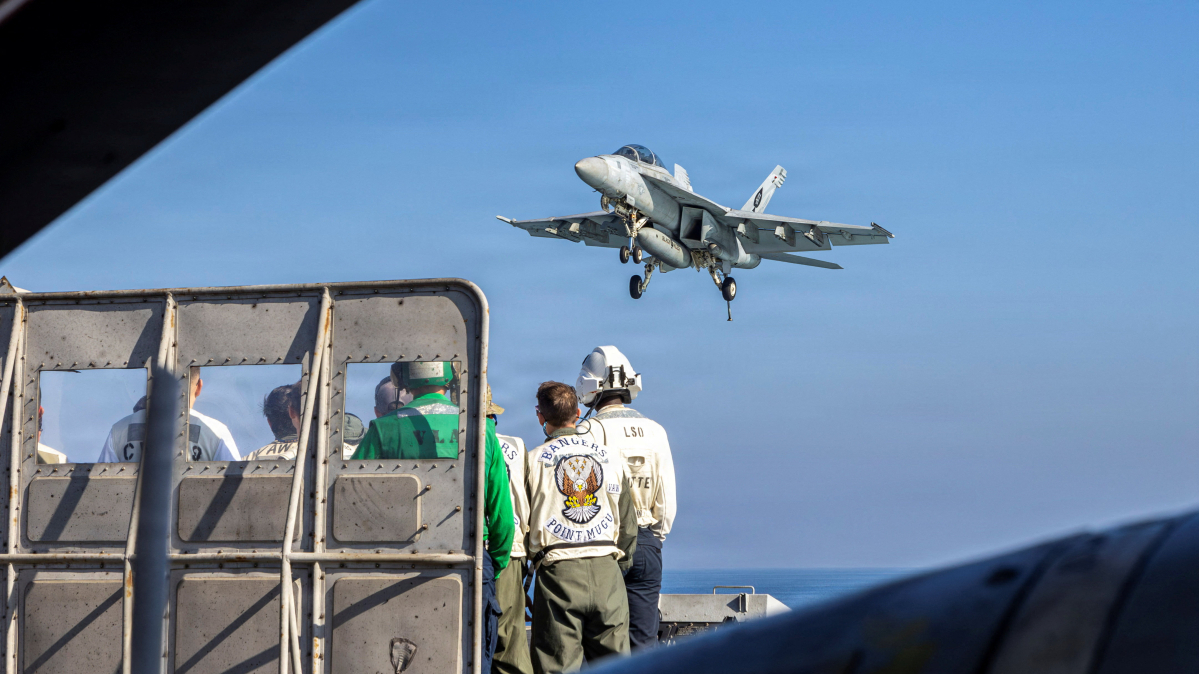
The current U.S. posture includes preparations for a potential multi-week air campaign, while Iran has issued its own warnings that U.S. bases would be targeted if Washington launches strikes.
American officials say Iran must abandon enriched uranium that could, in Washington's assessment, support weapons production, halt support for armed groups in the region and accept restrictions on its missile programme.
Tehran insists its nuclear work is peaceful and says some adjustments are possible, but only in exchange for lifting financial sanctions.
It rejects linking nuclear discussions to other files, such as missiles or regional activities.
Witkoff said: "They've been enriching well beyond the number that you need for civil nuclear. It's up to 60% (fissile purity).
They're probably a week away from having industrial, industrial grade bomb making material, and that's really dangerous."
A senior Iranian official told Reuters that both sides still hold different views on sanctions relief and the scope of any agreement.
Witkoff also confirmed he has met, at Trump's direction, with opposition figure Reza Pahlavi, the exiled son of Iran's last shah.
He offered no details about the talks.
Pahlavi emerged as a focal point for parts of the opposition during last month's demonstrations, a wave of unrest in which thousands are believed to have been killed.
Earlier in February, he said U.S. military intervention in Iran could save lives and urged Washington not to prolong negotiations with the country's clerical leaders.

Israel and Iran continued to exchange strikes on Friday (13 March), as the U.S. and French militaries reported deaths in Iraq, and the U.N. launched a $325 million appeal to help Lebanon, where a seventh of the population have left their homes since fighting began.
Israeli Prime Minister Benjamin Netanyahu issued veiled threats to Iran’s new Supreme Leader, Mojtaba Khamenei, and Hezbollah on Thursday (12 March), during his first press conference since the conflict with Iran began.
A long-running investigation has suggested that the street artist known as Banksy may be legally named David Jones. A report indicates that Jones was previously known as Robin Gunningham, a name long associated with Banksy, before legally changing his name several years ago.
A widening conflict involving Iran, the United States and Israel has triggered escalating military strikes across the Middle East, disrupted shipping through the strategic Strait of Hormuz and raised concerns over global energy supplies. This live report tracks the latest developments.
Ayman Ghazali, a 41-year-old U.S. citizen born in Lebanon, crashed his truck into the hallway of a Detroit-area synagogue on Thursday (12 March) while children attended preschool. Security personnel shot him dead during the confrontation, and authorities said no one else was seriously injured.
Kremlin spokesman Dmitry Peskov said on Saturday (14 March) that many countries are interested in purchasing Russian oil after the United States temporarily eased sanctions on certain exports.
An explosion lightly damaged a Jewish school in Amsterdam early on Saturday (14 March) in what the city’s mayor described as “a deliberate attack against the Jewish community.”
Ukrainian drones struck an oil refinery and a key port in Russia’s southern Krasnodar region overnight (13-14 March), local authorities said, causing injuries and damage. In separate action, Russian air attacks on Ukrainian territory killed and wounded civilians near Kyiv, officials reported.
Start your day informed with AnewZ Morning Brief. Here are the top news stories for the 13rd of March, covering the latest developments you need to know.
North Korea fired what appeared to be a ballistic missile on Saturday (14 March), Japanese and South Korean officials said. The development comes amid the joint annual U.S.-South Korea "Freedom Shield" military drills and South Korean Prime Minister Kim Min-seok's visit to Washington.
You can download the AnewZ application from Play Store and the App Store.
What is your opinion on this topic?
Leave the first comment