Europe's five largest defence powers are teaming up on a multi-million-euro project to bring low-cost air-defence systems such as autonomous drones or missiles into production within 12 months, ministers meeting in Krakow, Poland, said on Friday (20 February).
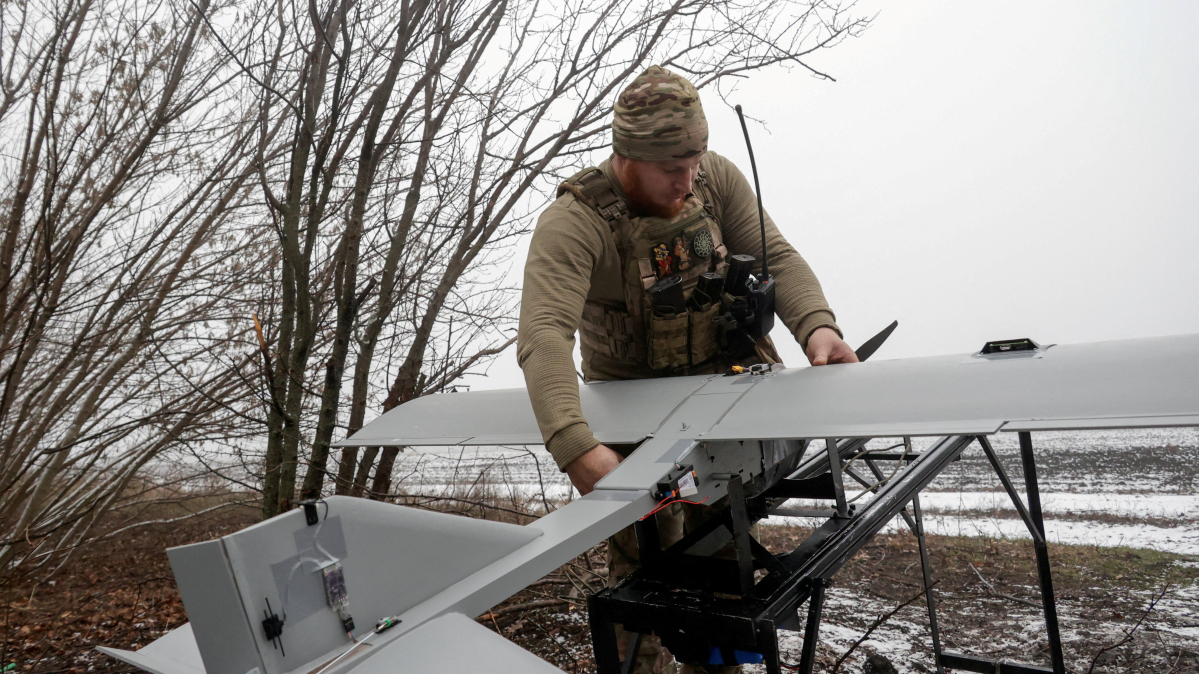
The war in Ukraine has shown how autonomous interceptor drones can provide an effective alternative to costly air-defence missiles and Kyiv's European allies are keen to learn from its experience.
The European Group of Five Defence Ministers brings together top military spenders France, Germany, Italy, Poland and Britain.
The ministers met as European leaders seek to boost defence capabilities amid growing doubts about Washington's commitment to protecting the continent.
German Defence Minister Boris Pistorius said on Friday that a European version of the Five Eyes intelligence alliance of English-speaking countries was being considered as a way to respond more effectively to threats posed by Russia.
Speaking at the meeting in Krakow alongside his counterparts from Poland, France, Britain and Italy, Pistorius said discussions were ongoing.
"What can we do next? One idea could be to consider a joint tanker fleet or multi-domain task force, or even a European version of Five Eyes," he said.
"It's a multi-million pound, multi-million euro commitment ... to step up this technology," Britain's Minister for Defence Readiness and Industry Luke Pollard said.
"We're really hopeful that this will produce an effector that... will be in production within 12 months."
In military terminology, “effectors” are the components of a system that produce a physical effect, while “autonomous platforms” are unmanned systems capable of independent decision-making.
The 'Low-Cost Effectors and Autonomous Platforms' initiative, known as LEAP, focuses on developing advanced low-cost air-defence systems, including autonomous drones and missiles.
The first project is expected to be delivered by 2027, the UK government said in a separate statement.
"We have just signed a very important commitment on the joint development of drone-based strike capabilities, low-cost, joint production, and joint procurement of low-cost drone effectors and payloads," Polish Defence Minister Wladyslaw Kosiniak-Kamysz said.
"This is the challenge of our times - technologies are changing... and we must respond very quickly."
















What is your opinion on this topic?
Leave the first comment