Ukraine could export several billion dollars of military equipment and services this year after authorising its first wartime foreign sales, a senior government official said. The country is also considering introducing a tax on arms exports.
Davyd Aloian, Deputy Secretary of Kyiv’s National Security and Defence Council, in an exclusive interview with Reuters said that earlier this month the state commission handling wartime export licences approved most of 40 applications from defence producers, covering materiel, spare parts, components, and related services.
“Taking into account ready-made products, spare parts, components, and services that can be provided, it amounts to several billion dollars,” Aloian said.
He added that the total potential is “significantly higher” than Ukraine’s pre-war exports.
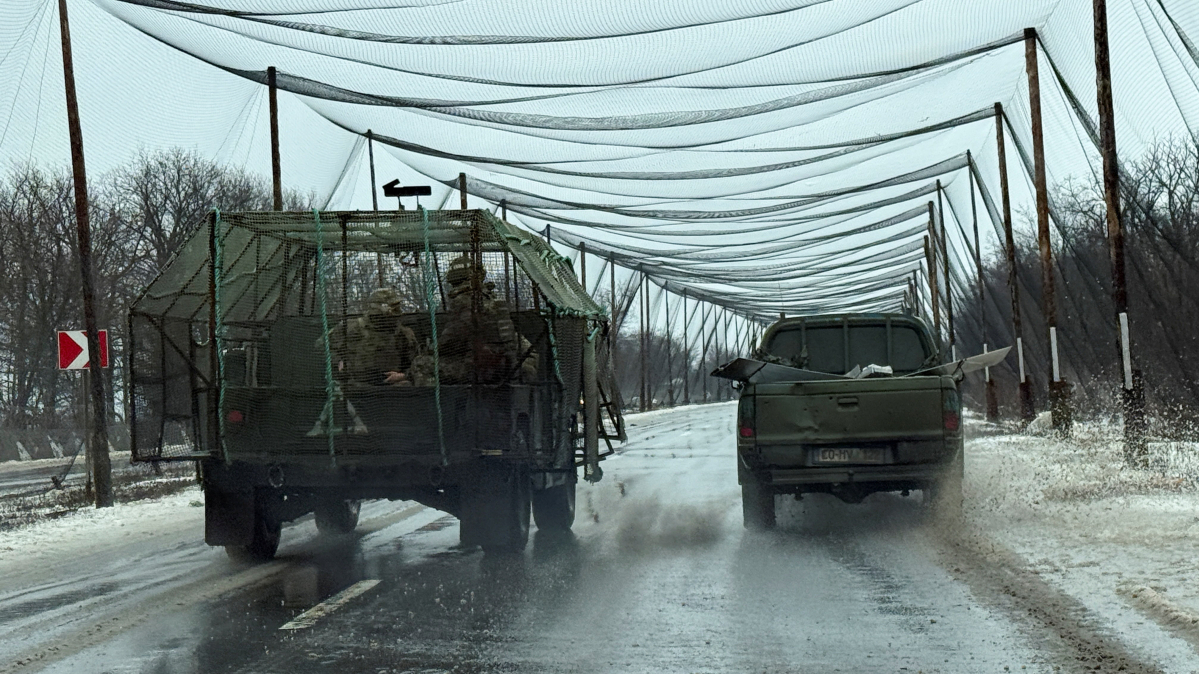
Aloian emphasised that Ukraine’s own military needs remain the top priority and that an immediate export surge is unlikely as Russian forces continue advancing in the east and airstrikes strike towns far from the frontline.
Foreign interest and strategic priorities
According to Aloian, several of Ukraine’s allies are interested in its battlefield-tested technology. He named Germany, Britain, the U.S., Nordic countries, three Middle Eastern nations, and at least one Asian country among the keenest potential buyers.
He said that exports will be prioritised for Ukraine’s strongest wartime allies, with joint ventures and cooperative arrangements emphasised over straightforward sales.
“These initiatives are intended to attract investment, establish new supply chains to the frontline, and provide access to advanced technologies, while allowing Ukrainian defence manufacturers to maintain a presence in the global market,” he said.
He added that some companies have already established subsidiaries overseas to operate internationally.
“The system prioritises frontline and national interests first, then commercial considerations,” Aloian said.
He also noted that an export tax for defence producers is under consideration, which could generate revenue for underfunded domestic military projects and help justify the resumption of exports.
Funding and joint production
Aloian explained that Ukraine’s limited budget has led the government to seek funding from allied governments and private investors to expand its home-grown defence industry. He said joint production initiatives with the UK and Germany aim to scale up drone production and introduce new technologies.
Ukrainian President Volodymyr Zelenskyy said that the first Ukrainian drones produced in Germany will be delivered in early 2026, coinciding with his attendance at the Munich Security Conference (MSC) to discuss exports and further joint production facilities.
Rustem Umerov, chair of the National Security and Defence Council, told Reuters that coordinated exports will allow Ukraine to attract investment, expand production, and introduce new technologies while maintaining national security priorities and supporting frontline needs.
Arms exports
Ukraine halted weapons exports after Russia’s February 2022 invasion, relying heavily on allied arms supplies. At the same time, Kyiv invested heavily in domestic defence production, particularly drones and missiles, sparking a wartime technology boom that has made Ukrainian systems highly sought after abroad.
Ukrainian defence firms received the first permits to export controlled goods since the 2022 invasion according to Umerov on 12 February. The approvals followed a meeting of the Interdepartmental Commission on Military-Technical Cooperation and Export Control Policy, which resumed work after an eight-month pause.
President Volodymyr Zelenskyy has pledged to open 10 weapons export centres across Europe by the end of 2026 and to begin producing Ukrainian-made drones in Germany.
Umerov said exports would be tightly supervised, prioritising the Ukrainian Armed Forces while attracting foreign investment, scaling up production, and introducing new technologies. Ukraine’s defence production capacity exceeds $55 billion, with potential to reach $50 billion by 2028, according to the Kyiv School of Economics.
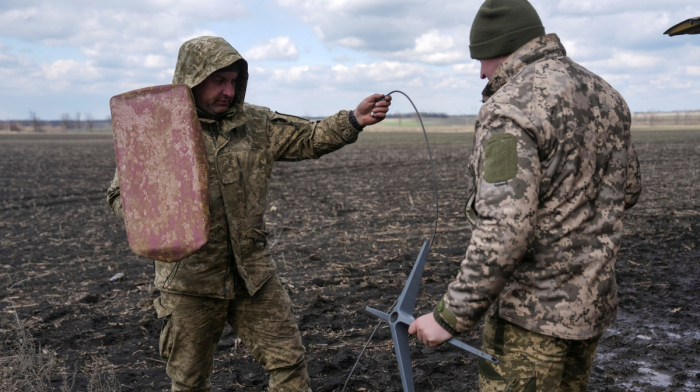
Since 2022, Ukraine’s war has driven a surge in its defence industry. There are now more than 1,000 arms and military equipment manufacturers, most privately owned companies founded after the Russian invasion. Battlefield experience has enabled innovation in drones, electronic warfare systems, and reconnaissance technology.
In 2025, Ukraine allocated 775 billion hryvnias ($18 billion) for domestic drone production, supported by allied contributions, reshaping frontline tactics with high-risk zones up to 20 kilometres wide for opposing troops.
By early 2026, Ukraine had 450 drone producers. Drones now account for the majority of battlefield strikes. These include unmanned aerial vehicles (UAVs) capable of dropping small bombs, intercepting other drones, or operating via fibre-optic control.













What is your opinion on this topic?
Leave the first comment