“Real security guarantees are needed before the war ends,” Ukrainian President Volodymyr Zelenskyy said at the Munich Security Conference on Saturday (14 February), warning that Russian aggression shows no sign of relenting.
President Zelenskyy said that no Ukrainian power plant has escaped damage from Russian strikes, warning that the Kremlin’s aggression continues to devastate the country.
Speaking at the conference, he detailed that Russia launched 24 ballistic missiles and more than 200 drones in a single night this week.
Zelenskyy added that air defence deliveries often arrive only days before they are deployed, while weapons systems are evolving faster than political decisions.
The Ukrainian leader condemned Iran for supplying Russia with Shahed drones, which he said are now powered by jet engines and can be guided in real time. He said Ukraine is producing enough of its own drones to render the Shaheds ineffective.
He also cited casualty figures, claiming Russia is losing 156 soldiers for every kilometre of land captured -around 30,000–35,000 killed or injured each month.
In remarks aimed at Russian President Vladimir Putin, Zelenskyy said the Kremlin leader “cannot let go of the idea of war” and predicted that the conflict could return or expand if Putin remains in power for another decade.
“That is why we need real security guarantees before the end of the war,” Zelenskyy added, urging action from the U.S. government and Congress.
He also called for measures against Russia’s "shadow fleet" of oil tankers, a major source of Kremlin revenue, following discussions with French President Emmanuel Macron and European Commission President Ursula von der Leyen.
Rubio's stance
“The United States and Europe, we belong together,” Marco Rubio declared during his Munich Security Conference speech.
Rubio emphasised that Washington was prepared to act alone if necessary but preferred to work alongside its European allies to address pressing international challenges.
On Ukraine, Rubio said the “hardest questions” remain unresolved and the U.S. will continue to test whether Russia is serious about ending the conflict.
Addressing U.S.-China relations, he stressed that the two largest economies in the world have an obligation to communicate, but warned that no agreements should come at the expense of U.S. national interests.
Rubio acknowledged that the relationship will face challenges, yet the U.S. should work to avoid unnecessary friction.
U.S.-China relations in focus
Chinese Foreign Minister Wang Yi said Beijing and Washington should work together to manage global tensions, warning that moves over Taiwan could push the two powers towards conflict.
Speaking at the Munich Security Conference, Wang said cooperation between the United States and China would be the best outcome in the current global environment. He added that Beijing was encouraged by what it sees as signs of greater respect for China in Washington.
Wang also cautioned against amplifying what he described as a narrative of systemic rivalry between Europe and China.
Minister Wang Yi told the conference that Europe “cannot be a spectator” in the Ukraine conflict, encouraging the bloc to develop a concrete plan to help resolve the war.
“When the U.S. and Russia resumed dialogue, Europe seemed left by the side,” Wang said. “The war is taking place on European soil; Europe certainly has the right to participate in the negotiation process.”
He welcomed Europe’s early efforts to engage with Russia, but cautioned that dialogue must lead to actionable proposals rather than being “just dialogue for the sake of dialogue.”
Europe “waking up” to changing world order
Dutch Foreign Minister David van Weel said Europe has been slow to recognize that the global order has been shifting for years but is now beginning to confront that reality.
He pointed to the inability of the UN Security Council to play a decisive role in major conflicts, arguing that the existing system of multilateralism has been under sustained pressure.
Van Weel said the United States wants Europe to take greater responsibility for its own defence and identity, describing the global environment as increasingly tough.
He also agreed that reform of the United Nations is necessary, particularly to make the institution more effective for smaller member states that rely on a rules-based system.
UK calls for “hard power”
British Prime Minister Keir Starmer said Russia has demonstrated its appetite for aggression, warning that the threat extends beyond Ukraine and across Europe.
Starmer accused Moscow of using disinformation, cyberattacks and sabotage to undermine European societies while continuing to rearm despite the war in Ukraine.
He said Europe must strengthen its “hard power,” describing it as the “currency of the age,” and stressed that the continent must be ready to deter aggression and, if necessary, fight to protect its people and values.
Starmer also described Europe as a “sleeping giant,” noting that European economies collectively exceed Russia’s but remain fragmented in defence planning and procurement.
EU defence clause “must be brought to life”
European Commission President Ursula von der Leyen called for activating the European Union’s mutual defence clause, arguing that collective defence is an obligation under the bloc’s founding treaties.
“No taboo can go unchallenged” when it comes to European defence, she said, calling for a new security strategy that strengthens capabilities in space, intelligence and deep-strike systems.
Von der Leyen said Europe must formalise emerging security collaborations and deepen coordination, including with the United Kingdom, nearly a decade after Brexit.
“This is a true European awakening,” she said, urging the bloc to adapt quickly to what she described as a volatile global environment.
NATO-U.S. ties
Meanwhile, NATO Secretary-General Mark Rutte told media that while European countries are discussing ways to strengthen their collective nuclear deterrence, there is no intention to replace the United States’ nuclear umbrella.
Speaking to journalists a day after Germany confirmed talks with France on nuclear deterrence, Rutte stressed that efforts to reinforce Europe’s security should complement — not substitute — existing U.S. guarantees.
Key meetings
According to the conference schedule, Ukrainian President Volodymyr Zelenskyy is set to join NATO Secretary General Mark Rutte in a panel on securing long-term international support for Kyiv.
Leaders from Denmark, Finland and Spain will discuss ways to strengthen transnational security, and Venezuelan opposition figure and Nobel laureate Maria Corina Machado will address developments in her country.
Organisers say the conference provides a critical platform for political, military, and diplomatic leaders to tackle conflicts, alliances, and the evolving balance of power on the international stage.
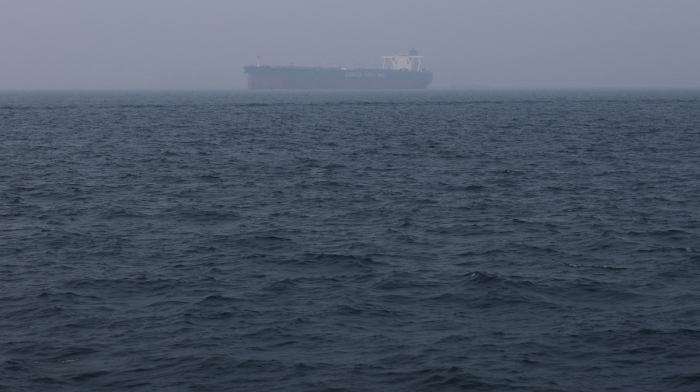
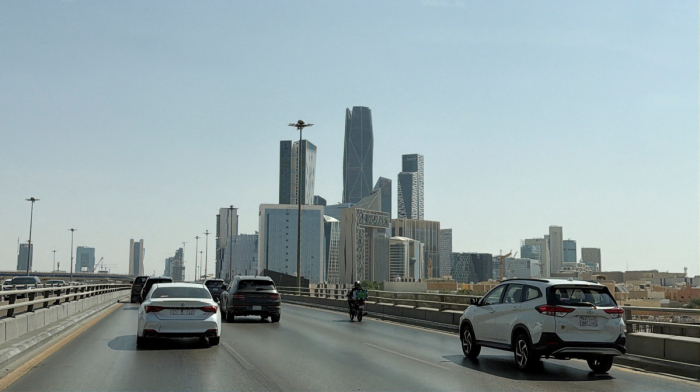
An unknown projectile struck a tanker 68 nautical miles northeast of Saudi Arabia on Friday according to a report released by the United Kingdom Maritime Trade Operations (UKMTO) on Saturday.
U.S. President Donald Trump has called it “a disgrace” that Ukraine has resumed attacks on Russian oil refineries. Attacks are continuing from Russia and Ukraine as media reports say Ukraine has almost run out of Patriot interceptor missiles.
The day after waiving sanctions and tariffs related to Russian exports, U.S. President Donald Trump said on Saturday he has yet to announce a final decision on the matter as Secretary of State Marco Rubio said officials want more time to evaluate the situation.
A Saudi AH-6i helicopter crashed in the Najran region of Saudi Arabia due to a technical malfunction, killing its two crew members, the Saudi-led coalition's spokesman Brigadier General Turki al-Maliki said in a statement on Sunday.
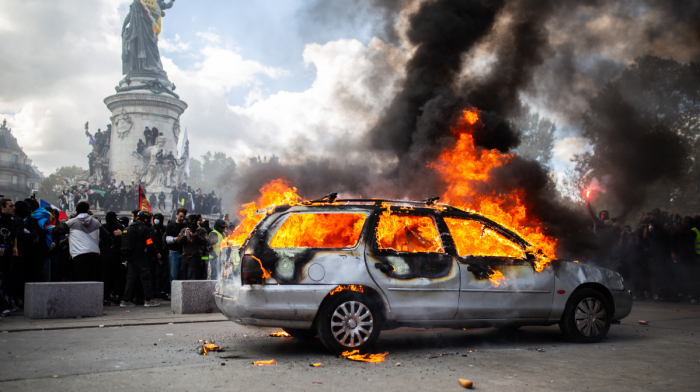
What started out as planned protests against the cost of living, declining public services and education funding in France, quickly devolved into violent riots across the country on Saturday.
The day after waiving sanctions and tariffs related to Russian exports, U.S. President Donald Trump said on Saturday he has yet to announce a final decision on the matter as Secretary of State Marco Rubio said officials want more time to evaluate the situation.
Pope Leo returned to public life on Sunday, five days after undergoing surgery for lung cancer, telling thousands of pilgrims in St Peter’s Square that he would gradually resume his usual activities.
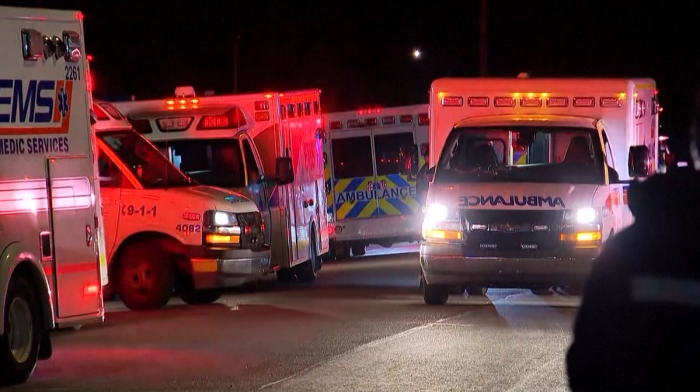
Several people have been killed and injured following a serious incident that sparked a major fire at a Canadian military base in Alberta, Defence Minister David McGuinty confirmed on Saturday (17 October). The cause of the incident and the number of casualties have not been officially released.
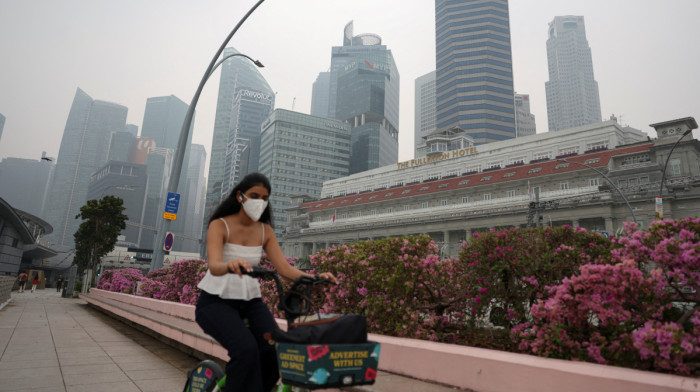
Singapore is experiencing severe haze as smoke from wildfires in Indonesia’s Kalimantan region drifts across the region, disrupting daily life, affecting businesses and prompting Singapore’s National Environment Agency issuing preventive notices to seven companies on 16 October.
What started out as planned protests against the cost of living, declining public services and education funding in France, quickly devolved into violent riots across the country on Saturday.
Download the AnewZ app
You can download the AnewZ application from Play Store and the App Store.








What is your opinion on this topic?
Leave the first comment