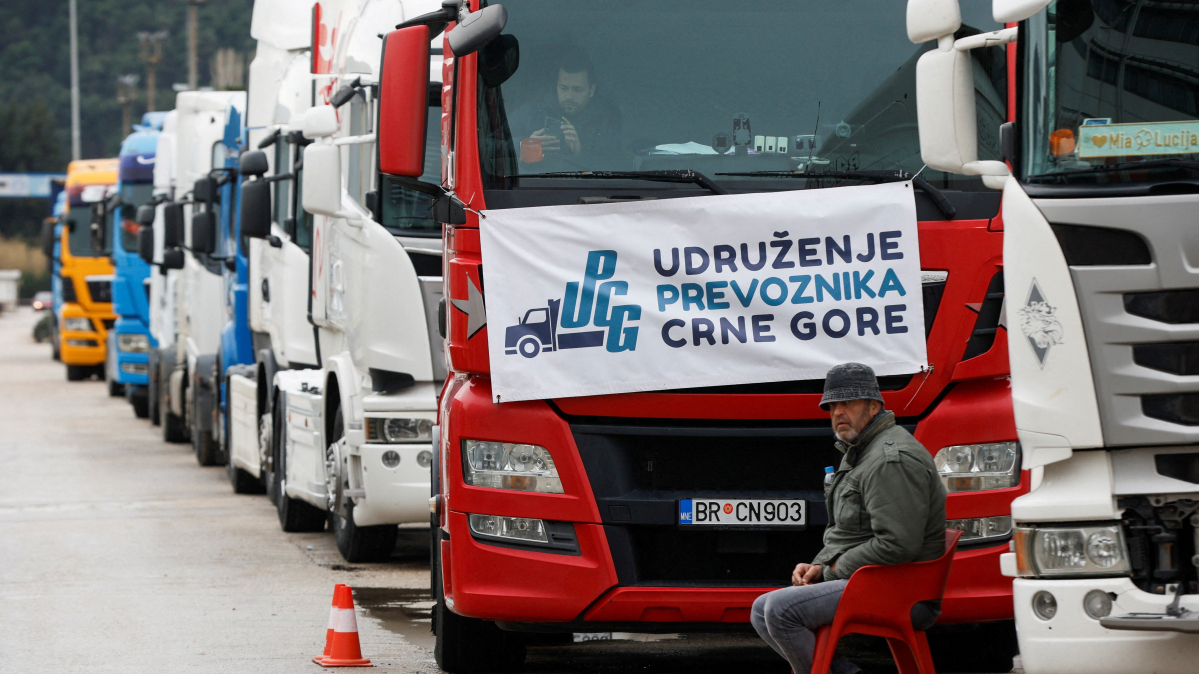
Truck drivers in two of the four Balkan states protesting against the EU’s tightened entry-exit rules stepped back on Thursday, easing some pressure on major cargo routes, while colleagues in Bosnia and Serbia kept their lines of trucks in place.
Montenegro and North Macedonia ended blockades on borders with Greece, Bulgaria and at the Adriatic port of Bar, with North Macedonian hauliers saying they would clear freight lanes by Thursday evening.
The Bar blockade had prompted concerns over possible fuel shortages.
Drivers launched their protests on Monday over the EU’s stricter enforcement of Schengen stay limits, saying the rules expose them to detention or deportation and add hundreds of millions of euros to operating costs.
They have urged their governments to push Brussels to adapt the system for professions that depend on constant cross-border travel.
The EU on Thursday adopted what it described as its first visa strategy, offering more flexibility for highly mobile workers such as truck drivers, athletes and touring artists.
“This is particularly relevant for professional drivers from Bosnia and Herzegovina and the Western Balkans region,” Luigi Soreca, the EU’s ambassador in Bosnia, wrote on X.
But Serbian and Bosnian truckers said the new language from Brussels did not meet their demands.
“These statements do not fulfil our demands nor resolve our problems,” said Zijad Saric, a Bosnian transporter and protest organiser.
At Serbia’s Batrovci crossing with EU member Croatia, a mile-long queue of trucks remained in place on Thursday, blocking access to the cargo terminal.
Serbia’s Chamber of Commerce chief Marko Cadez said 93% of exports from the four protesting countries were halted, inflicting about €92 million in daily losses.
EU-based companies operating in or exporting to the region have also been hit.
“For every company it is about €10,000 to €50,000 per day in penalties as they are not servicing customers,” Cadez told Reuters in Belgrade.












What is your opinion on this topic?
Leave the first comment