China is supplying key industrial equipment that has enabled Russia to speed up production of its newest nuclear-capable hypersonic missile, an investigation by The Telegraph has found, heightening concerns in Europe over Moscow’s ability to threaten the West despite international sanctions.
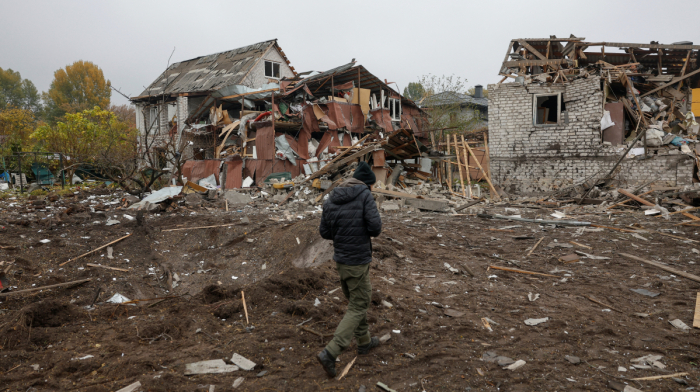
Russian forces earlier this month fired the Oreshnik hypersonic ballistic missile at the western Ukrainian city of Lviv, around 40 miles from the Polish border. Capable of travelling at speeds of up to 8,000 miles per hour, the missile can strike targets across Europe in less than 20 minutes and deploy multiple warheads mid-flight.
Although the Oreshnik has reportedly been used only twice in combat, Russian officials have claimed it is impossible to intercept. Ukrainian analysts and Western security experts warn the weapon represents a significant escalation in Russia’s strike capabilities.
The investigation found that China has supplied specialised machine tools and advanced manufacturing equipment essential to producing the missile’s warheads and guidance systems. Among the most significant items is a Chinese-made computer numerical control (CNC) carousel lathe, used to precisely cut and shape metal components.
Ukrainian defence intelligence has identified the machine at the Votkinsk plant, Russia’s primary missile manufacturing facility, which is under sanctions imposed by the UK, U.S., EU and Japan. The plant also produces Iskander-M ballistic missiles and Topol-M intercontinental ballistic missiles.
According to the analysis, China has sent at least $10.3 billion (£7.7 billion) worth of technology and advanced equipment to Russia, enabling Moscow to expand weapons production and sidestep Western export controls.
The shipments include components Russia cannot produce domestically or at sufficient scale. Among them are an estimated $4.9 billion worth of microchips and memory boards, which power precision-guided weapons and fighter aircraft, as well as $130 million in ball bearings, critical for aircraft, vehicles and missile systems.
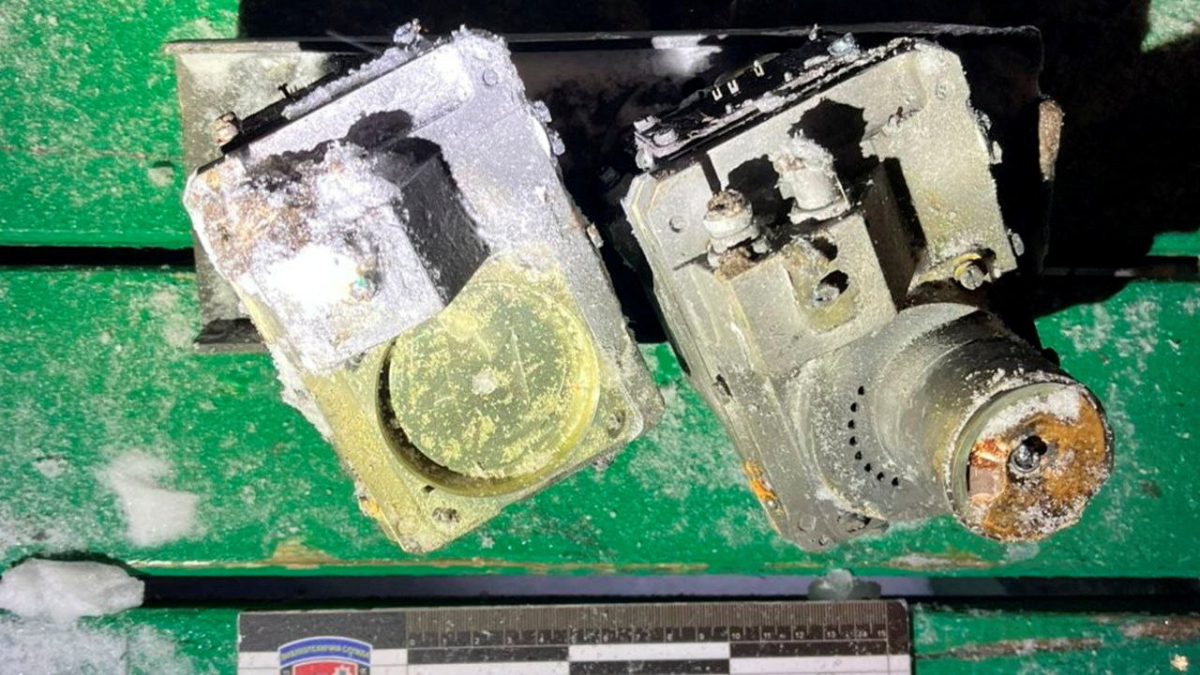
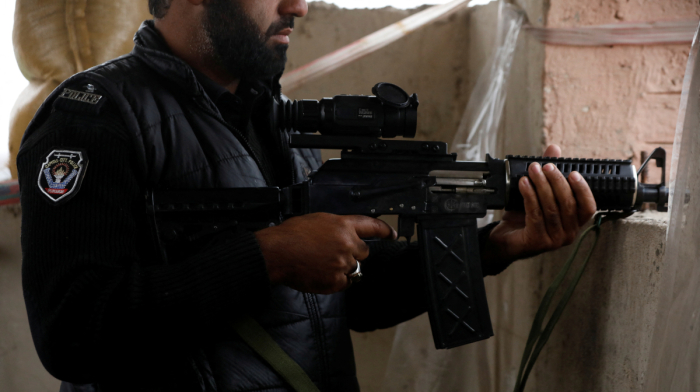
China has also supplied mounted piezoelectric crystals used in radar and electronic warfare systems, along with telescopic sights compatible with military weapons.
Western governments have agreed to restrict exports of these items to Russia, but China never joined sanctions imposed after Moscow’s invasion of Ukraine. Analysts say access to Chinese manufacturing has been vital to sustaining Russia’s war effort.
“Without access to the Chinese economy and Chinese industrial capacity, Russia would have struggled to sustain this war,” said Michael Kofman, a senior fellow at the Carnegie Endowment for International Peace, quoted in The Telegraph.
Experts say Chinese machine tools, while not always matching Western standards, are sufficiently advanced for Russia’s military needs and have allowed Moscow to modernise ageing factories and increase production speed.
The equipment has also supported Russia’s expanding drone industry, including facilities producing domestic versions of Iranian-designed Shahed drones, as well as missile and aircraft production lines.
China has further supplied testing equipment such as multimeters and oscilloscopes, which are used to ensure the reliability of electronic warfare systems, radar and drone microelectronics.
Analysts warn that the full scale of Chinese assistance may be underestimated, as shipments are increasingly routed through third countries and intermediary firms to evade detection.
Neither Beijing nor Moscow fully disclose trade data, complicating efforts to monitor the flow of sensitive technology. However, researchers say the trend underscores Russia’s growing dependence on China as Western sanctions continue to tighten.
The findings add to mounting scrutiny over Beijing’s role in indirectly supporting Russia’s military capabilities while publicly claiming neutrality in the Ukraine war.















What is your opinion on this topic?
Leave the first comment