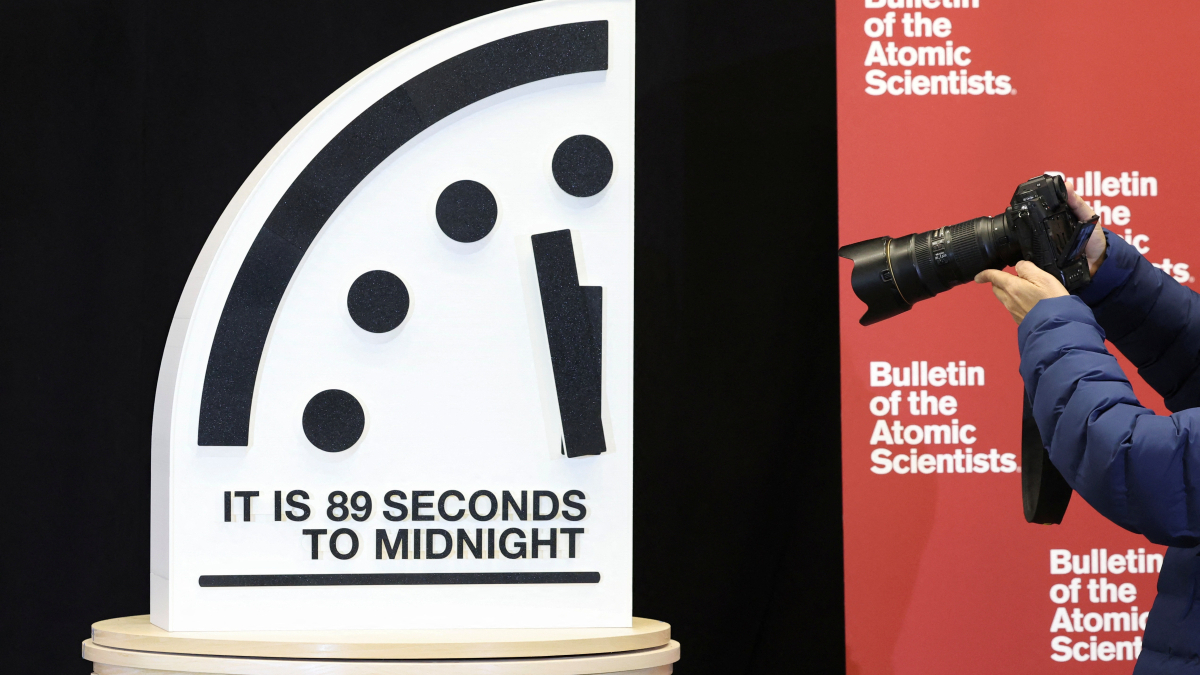
The "Doomsday Clock" is closer than ever to midnight. Atomic scientists have cited aggressive behaviour by the symbolic countdown to human extinction has ticked forward once again, leaving humanity with less time than ever before to avert global catastrophe.
The Bulletin of the Atomic Scientists set the clock to 85 seconds before midnight, the theoretical point of annihilation. That is four seconds closer than it was set last year. The Chicago-based nonprofit created the clock in 1947 during the Cold War tensions that followed World War Two to warn the public about how close humankind was to destroying the world.
The scientists voiced concern about threats of unregulated integration of artificial intelligence (AI) into military systems and its potential misuse in aiding the creation of biological threats, as well as AI's role in spreading disinformation globally.
They also noted continuing challenges posed by climate change.
"Of course, the Doomsday Clock is about global risks, and what we have seen is a global failure in leadership," nuclear policy expert Alexandra Bell, the Bulletin's president and CEO, told Reuters.
"No matter the government, a shift towards neo-imperialism and an Orwellian approach to governance will only serve to push the clock toward midnight."
It was the third time in the past four years that the scientists moved the clock closer to midnight.
"In terms of nuclear risks, nothing in 2025 trended in the right direction," Bell said.
"Longstanding diplomatic frameworks are under duress or collapsing, the threat of explosive nuclear testing has returned, proliferation concerns are growing, and there were three military operations taking place under the shadow of nuclear weapons and the associated escalatory threat. The risk of nuclear use is unsustainably and unacceptably high."
"Every second counts, and we are running out of time," Bell told the press in Washington.
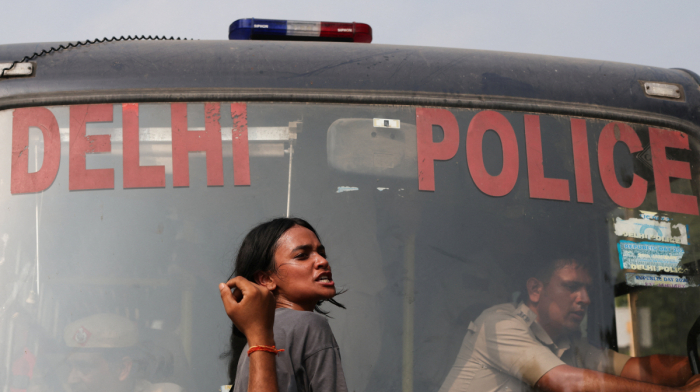
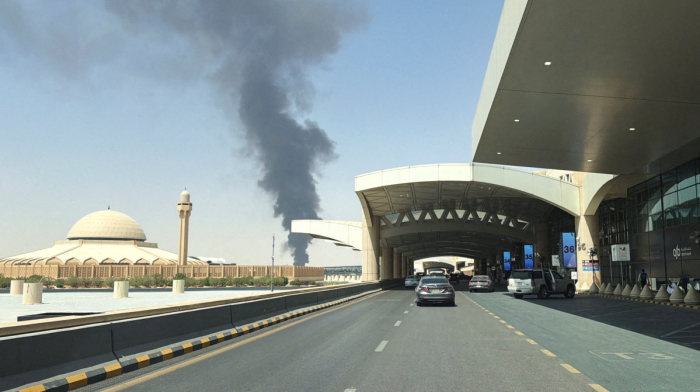
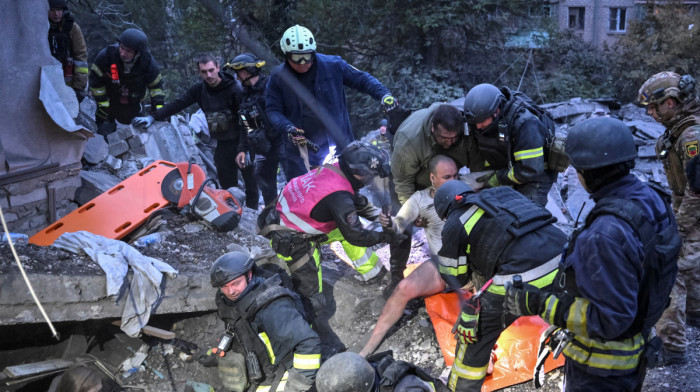
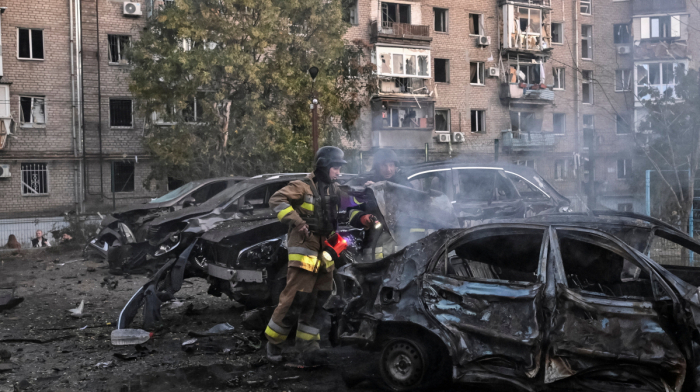
He pointed to Russia's continued war in Ukraine, the U.S. and Israeli bombing of Iran and border clashes between India and Pakistan. Bell also cited continuing tensions in Asia including on the Korean Peninsula and China's threats toward Taiwan, as well as rising tensions in the Western Hemisphere since U.S. President Donald Trump returned to office 12 months ago.
The last remaining nuclear arms pact between the United States and Russia, the New START treaty, expires on 5 February. Russian President Vladimir Putin proposed in September that the two countries agree to observe for another year the limits set under the pact, which caps each side's number of deployed nuclear warheads at 1,550.
Trump has not formally responded. Western security analysts are divided about the wisdom of accepting Putin's offer.
Trump in October ordered the U.S. military to restart the process for testing nuclear weapons after a halt of more than three decades. No nuclear power, other than North Korea most recently in 2017, has conducted explosive nuclear testing in more than a quarter century.
No country would benefit more from a full-scale return to such testing than China, given its continued push to expand its nuclear arsenal, according to Bell, a former senior official at the U.S. State Department's Bureau of Arms Control, Deterrence and Stability.
Daniel Holz, Chair of the Bulletin’s Science and Security Board, issued a stark warning regarding the expiration of the final remaining nuclear treaty between the United States and Russia, set to lapse next week.
"For the first time in over half a century, there will be nothing preventing a runaway nuclear arms race," Holz stated.
This expiration signals the death knell of the post-Cold War security order, removing the verification mechanisms and warhead caps that have governed strategic stability between the world’s two largest nuclear powers. The situation is further complicated by the rapid expansion of China’s nuclear arsenal, creating a volatile three-way nuclear rivalry that current diplomatic channels seem ill-equipped to manage.
The Bulletin also highlighted a distinct deterioration in the geopolitical climate following the return of U.S. President Donald Trump to the White House 12 months ago. Tensions in the Western Hemisphere have risen sharply, contributing to a "zero-sum" international atmosphere.
The scientists noted that rather than seeking cooperation, major powers have become "aggressive, adversarial, and nationalistic."
This rise in autocracy is not merely a political trend but a threat multiplier; as trust evaporates, the ability of nations to collaborate on shared existential threats, such as climate change and pandemics, diminishes.
Holz pointed specifically to domestic instability, citing "recent tragedies in Minnesota" and the erosion of constitutional rights within the United States as evidence that when governments become unaccountable to their citizens, global danger increases.
The most immediate danger posed by AI is the complete erosion of a shared reality. Maria Ressa, the 2021 Nobel Peace Prize Laureate and CEO of Rappler, joined the scientists to warn that the world is living through an "information Armageddon."
Ressa argued that the technology ruling modern life, from social media algorithms to generative AI chatbots, has fundamentally commodified human intimacy and is not anchored in factual reality.
"Your chatbot is nothing but a probabilistic machine," Ressa noted, highlighting how these tools are supercharging disinformation campaigns.
This "corruption of the information ecosystem" makes addressing other risks nearly impossible. When populations cannot agree on basic facts due to AI-generated disinformation and deepfakes, generating the political will to fight climate change or sign peace treaties becomes futile.
The Bulletin warned that this technological chaos serves the interests of rising nationalistic autocracies, which thrive on division. It says, by allowing the unregulated spread of disinformation, the international community is effectively dismantling the very mechanisms of accountability and truth required to turn back the clock.
Holz concluded, "If the world splinters into an us-versus-them... it increases the likelihood that we all lose."










What is your opinion on this topic?
Leave the first comment