A senior Iranian official says at least 5,000 people have died in the protests rocking the country. Among those killed are said to be some 500 members of the security forces.
The official, who declined to be named because of the sensitivity of the issue, told Reuters on Sunday that "terrorists and armed rioters" were responsible for killing "innocent Iranians".
He said some of the heaviest clashes and highest death tolls occurred in Kurdish areas in northwest Iran, where separatist groups have been active.
"The final toll is not expected to increase sharply," the official said, adding that "Israel and armed groups abroad" had supported and equipped those involved in the protests.
Iranian authorities have not published an official nationwide death toll. Rights groups have reported significantly lower figures.
The U.S.-based Human Rights Activists News Agency (HRANA) said on Saturday it had verified 3,090 deaths, including 2,885 protesters.
HRANA later said the toll had risen to 3,308, with another 4,382 cases under review, and confirmed more than 24,000 arrests.
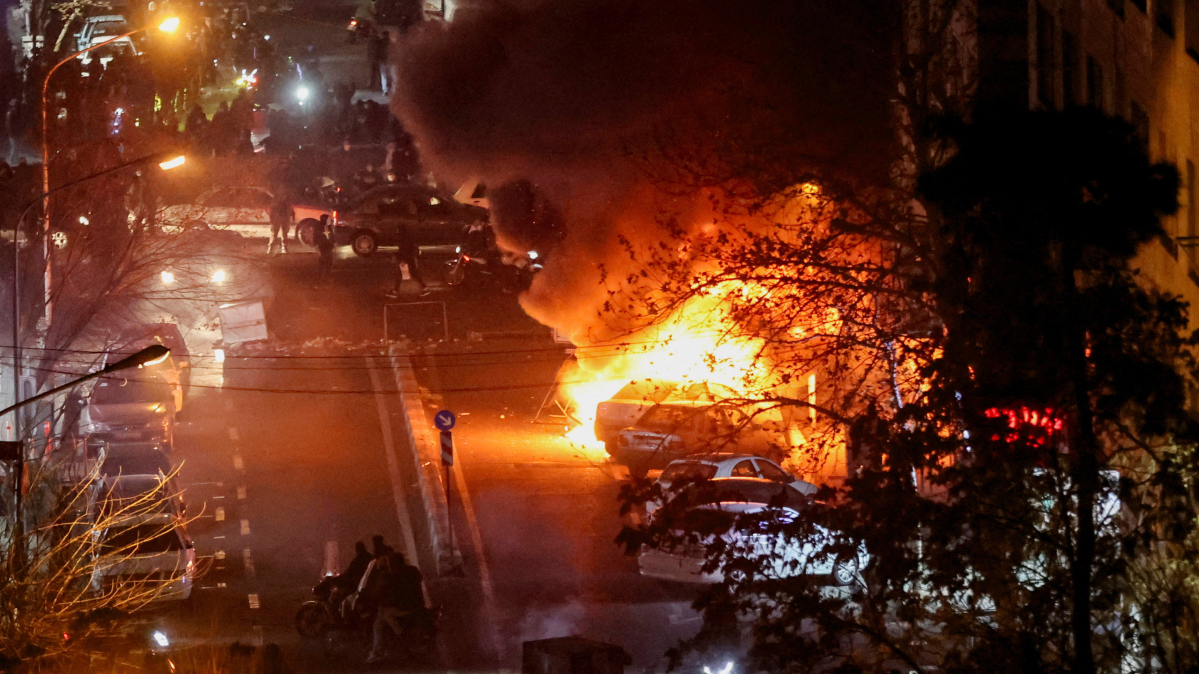
The protests erupted on 28 December over economic hardship before spreading nationwide and evolving into calls for an end to clerical rule in the Islamic Republic. Demonstrations were reported in dozens of cities, including Tehran, Isfahan, Mashhad and Tabriz, before a sweeping security crackdown followed.
Residents said the crackdown appeared to have largely quelled protests. Several people in Tehran told Reuters the capital had been comparatively quiet for four days, although drones were seen flying overhead. There were no signs of major demonstrations on Thursday or Friday.
A resident in a northern city on the Caspian Sea also described calm streets. Those contacted asked not to be identified for safety reasons.
Internet monitoring group NetBlocks said there had been a "very slight rise" in connectivity after around 200 hours of shutdown, though access remained at roughly 2% of normal levels.
Iran has repeatedly restricted internet access during periods of unrest, but analysts say the scale and duration of the latest blackout are among the most severe in recent years, severely limiting the flow of information and protesters’ ability to organise.
Some Iranians living overseas said on social media they had briefly been able to contact people inside the country early on Saturday, before connectivity dropped again.
The Iranian Kurdish rights group Hengaw, based in Norway, said some of the deadliest clashes during the unrest took place in Kurdish regions in the northwest.
Iran’s prosecutor general has said detainees would face severe punishment, describing them as people who "aided rioters and terrorists attacking security forces and public property".
"All perpetrators are mohareb," state media quoted Mohammad Movahedi Azad as saying, using an Islamic legal term meaning to wage war against God, which is punishable by death under Iranian law.
Khamenei blames U.S.; Trump responds
In comments reported by Iranian state media on Saturday, Khamenei said Iran would not be dragged into war but would punish what he described as domestic and international "criminals".
"We consider the U.S. president criminal for the casualties, damages and slander he inflicted on the Iranian nation," he said.
Trump, who has repeatedly warned of "very strong action" if Iran executed protesters, said on social media that Iranian leaders had cancelled more than 800 planned executions.
He did not provide evidence for the claim, and Iranian authorities said there was "no plan to hang people".
The United Nations has urged Iran to respect the right to peaceful protest and restore full internet access amid international concern over the scale of the crackdown.
Reuters has not been able to independently verify casualty figures or details of the disturbances reported by Iranian officials and rights groups.










What is your opinion on this topic?
Leave the first comment