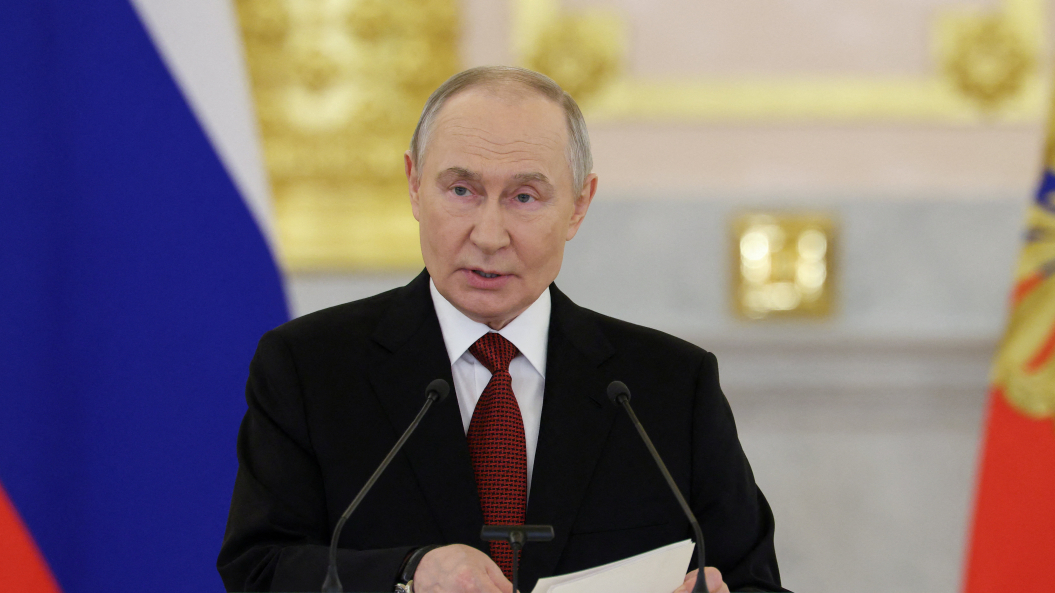
The Kremlin has welcomed recent signals from several major European capitals suggesting a renewed openness to dialogue with Moscow, calling the shift a “positive evolution” in Europe’s stance towards Russia.
Kremlin spokesperson Dmitry Peskov said on Friday that statements from leaders in France, Italy and Germany indicated a growing recognition that talks with Russia would be necessary to ensure long-term stability in Europe.
“We have noted statements made in recent days by a number of European leaders, namely from Paris, Rome and even Berlin, as strange as it may seem that, to ensure stability in Europe, we must talk to the Russians,” Peskov said. “This is entirely consistent with our vision.”
Russia has remained largely isolated on the diplomatic stage since it launched its full-scale invasion of Ukraine in early 2022. However, recent comments from European leaders suggest a cautious reassessment of that approach.
Italian Prime Minister Giorgia Meloni, French President Emmanuel Macron and German Chancellor Friedrich Merz have all recently indicated a willingness to consider renewed dialogue with Moscow. Merz this week spoke of the need for a “balance in relations” with Russia, fuelling speculation of a potential shift in Germany’s position.
European Commission chief spokesperson Paula Pinho also acknowledged that talks with Russia would be unavoidable at some stage, though she stressed that conditions were not yet in place. “It is inevitable at some point,” she said, adding: “We’re not there yet.”
Peskov said that if the remarks reflected a genuine strategic rethink among European leaders, Moscow would view it as a constructive development. “If this truly reflects the strategic vision of the Europeans, then this is a positive evolution of their positions,” he said.
However, the idea of reopening talks with the Kremlin has divided Ukraine’s Western allies. British Foreign Secretary Yvette Cooper warned against assuming Moscow’s willingness to negotiate, saying there was no “evidence that Putin actually wants peace”.
The renewed discussion around dialogue comes amid growing concern in Brussels and other European capitals that the United States could sideline Europe in any future peace negotiations involving Kyiv and Moscow. In response, Meloni last week called for the European Union to appoint a special envoy to engage with Russia directly.
For now, European leaders remain cautious, balancing diplomatic signals with continued support for Ukraine as the war shows no sign of ending.











What is your opinion on this topic?
Leave the first comment