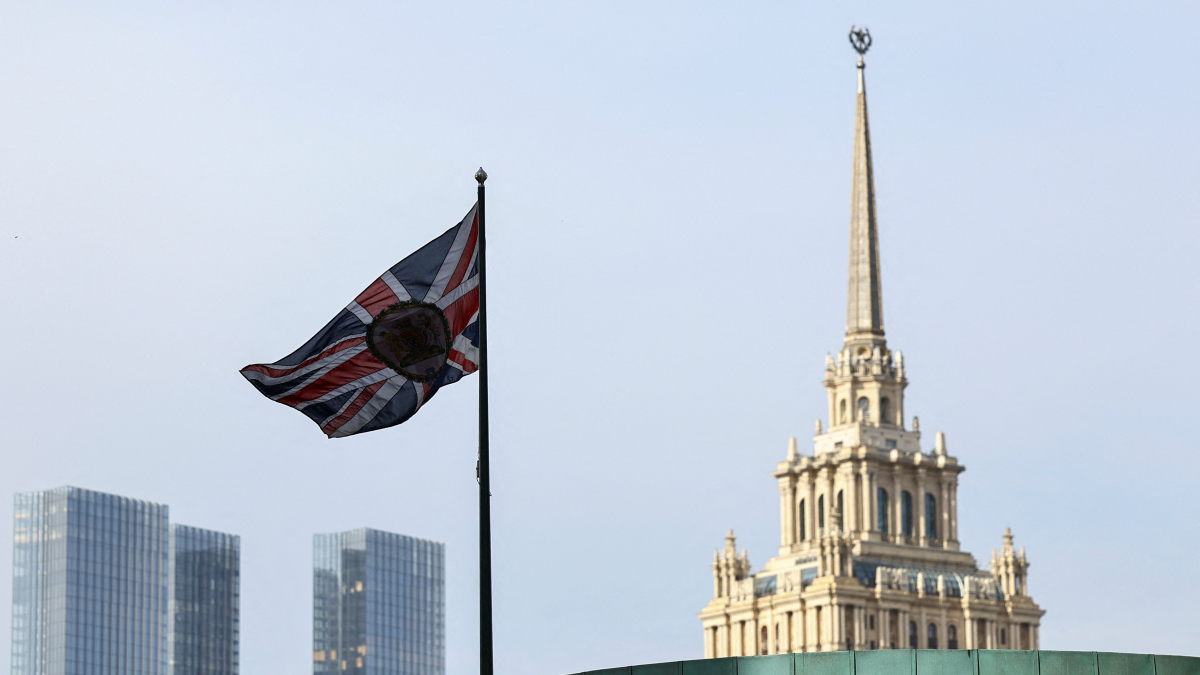
Russia expelled a British diplomat it accused of being an undeclared intelligence operative, a claim dismissed by London as “malicious and baseless”, with the UK saying it was weighing its response on Thursday.
Russia’s Federal Security Service (FSB), the main successor to the Soviet-era KGB, identified the diplomat as Gareth Samuel Davies, a second secretary at the British embassy in Moscow. The agency alleged he was operating undercover for British intelligence.
Russian media broadcast images of Davies, and authorities said he had been given two weeks to leave the country.
Russia’s foreign ministry summoned Britain’s charge d’affaires in Moscow, Danae Dholakia, to lodge a formal protest over the matter.
In a statement, the ministry said Moscow would not tolerate the activities of what it described as undeclared British intelligence officers on Russian territory. It warned that any escalation by London would be met with a “decisive mirror response”.
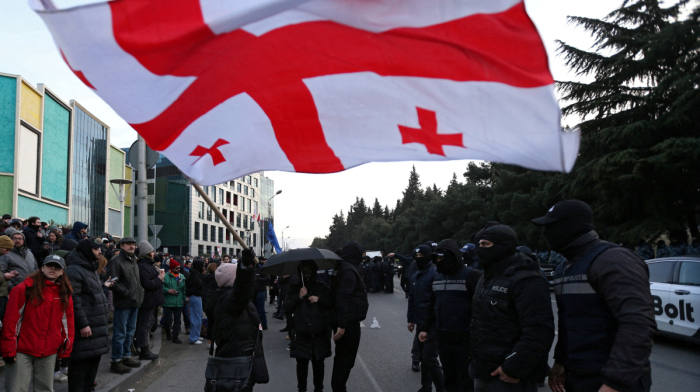
During the summons, protesters gathered outside the foreign ministry, chanting anti-British slogans as the diplomatic vehicle carrying the charge d’affaires arrived.
The UK Foreign Office said the allegations were part of a pattern of unfounded accusations against British diplomats in Russia.
“Their targeting of British diplomats reflects desperation, and actions like this undermine the basic conditions required for diplomatic missions to operate,” a spokesperson said, adding that Britain was carefully considering its options.
Relations between Russia and Western countries have sharply deteriorated amid the war in Ukraine, with both sides accusing each other of espionage activities on a scale not seen since the Cold War.
Russian officials claim that the CIA, Britain’s Secret Intelligence Service (MI6) and France’s DGSE have intensified efforts to gather intelligence, recruit Russian citizens and destabilise the country.
Western European intelligence chiefs, meanwhile, accuse Russia’s FSB, the SVR foreign intelligence service and the GRU military intelligence agency of orchestrating cyber attacks and sabotage operations across Europe, allegations Moscow denies.
Britain has increasingly been portrayed by Russian officials and state media as Moscow’s principal adversary, even as the United States under President Donald Trump has sought to reset relations with Russia and promote peace talks over Ukraine.
On Russian state television, Britain, often referred to as “Perfidious Albion” is depicted as a shadowy intelligence power allegedly working behind the scenes to undermine Russian interests globally.
Russia has also imposed stringent travel restrictions on British diplomats, requiring advance notice for any trips beyond a 120-kilometre radius from Moscow.
Western governments now regard diplomatic postings to Russia as among the most challenging in the world. The US State Department classifies Moscow as a hardship post, alongside cities such as Kabul, Damascus and Mogadishu.
Western diplomats in the Russian capital say they are routinely subjected to surveillance and harassment, while Moscow has long complained that its own diplomats face similar treatment in major Western capitals.










What is your opinion on this topic?
Leave the first comment