President Donald Trump has signed an executive order preventing Venezuelan oil revenues held by the United States, from being used in judicial proceedings, arguing that court action could threaten U.S. policy objectives in Venezuela.
The order, published on Saturday (10 January), said the seizure of the funds could "undermine critical U.S. efforts to ensure economic and political stability in Venezuela".
It states that the revenues are Venezuelan property being held by the United States for "governmental and diplomatic purposes" and are not subject to private claims.
The move comes as the Trump administration seeks to encourage U.S. oil companies to invest in Venezuela following the capture and removal of former leader Nicolás Maduro on 3 January, making energy investment central to its plans for rebuilding the country.
Trump has urged American firms to commit large-scale funding to revive Venezuela’s oil sector, saying production capacity and infrastructure would require at least "$100 billion" in investment.
He has argued that a recovery in output would increase global supply and help lower energy prices in the United States.
"The plan is for them to spend at least $100 billion to rebuild the capacity and the infrastructure," Trump said.
Senior oil executives warned, however, that Venezuela remains too unstable for long-term private investment.
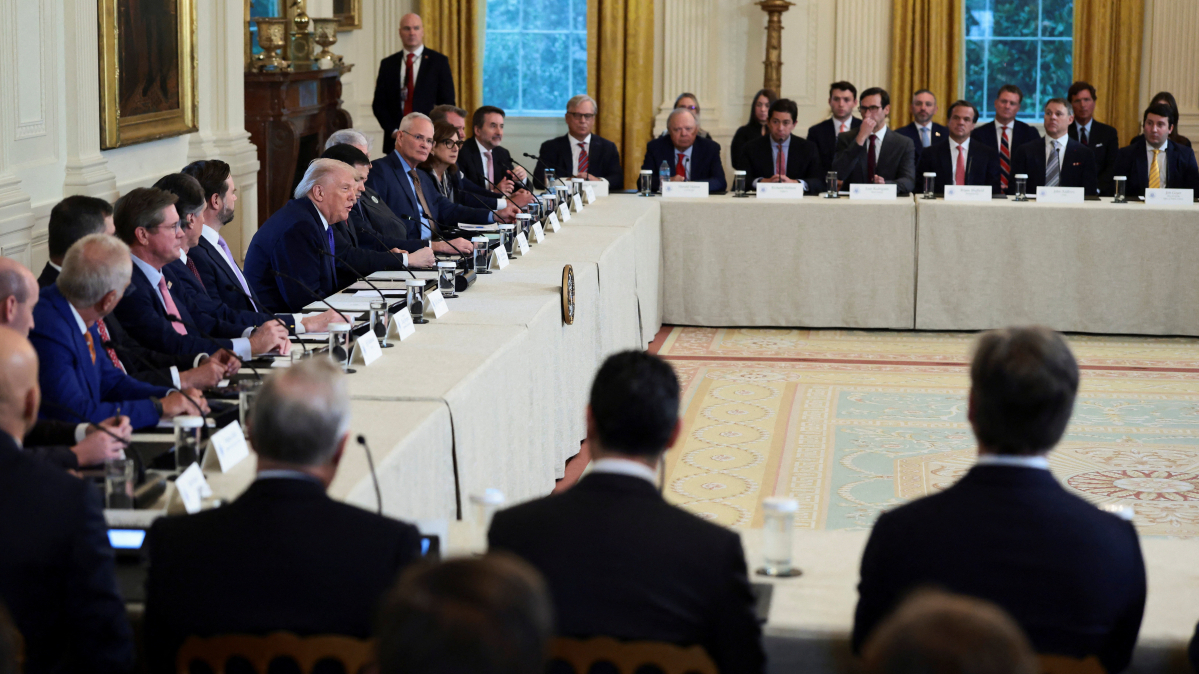
"If we look at the commercial constructs and frameworks in place today in Venezuela, today it’s uninvestable," said Darren Woods, chief executive of ExxonMobil, during a meeting with Trump on Friday.
Trump sought to reassure industry leaders during the session, telling them they would deal directly with the U.S. government rather than Venezuelan authorities.
Venezuela has a long history of state asset seizures, sweeping U.S. sanctions and prolonged political uncertainty, all of which have deterred foreign investors.
The White House has framed its approach as an economic intervention.
Trump has ordered the seizure of tankers carrying Venezuelan oil and said the U.S. would take control of sales of between 30 million and 50 million barrels of previously sanctioned crude, with plans to oversee global sales indefinitely.
Some Democratic lawmakers have criticised the approach, arguing that Washington’s control of Venezuelan oil revenues amounts to political leverage rather than economic assistance.
The executive order is based on the National Emergencies Act and the International Emergency Economic Powers Act. It argues that the risk of Venezuelan oil revenues becoming entangled in U.S. court cases constitutes an "unusual and extraordinary threat" to U.S. interests.




















What is your opinion on this topic?
Leave the first comment