Russia’s pipeline gas exports to Europe fell 44% in 2025, reaching their lowest level since the 1970s. This sharp decline follows the closure of Ukraine's transit route and the EU's commitment to phase out Russian fossil fuels amid the ongoing conflict with Ukraine.
The European Union has committed to phasing out Russian fossil fuel imports by the end of 2027, as part of its strategy to reduce reliance on Russian energy amid the ongoing war in Ukraine.
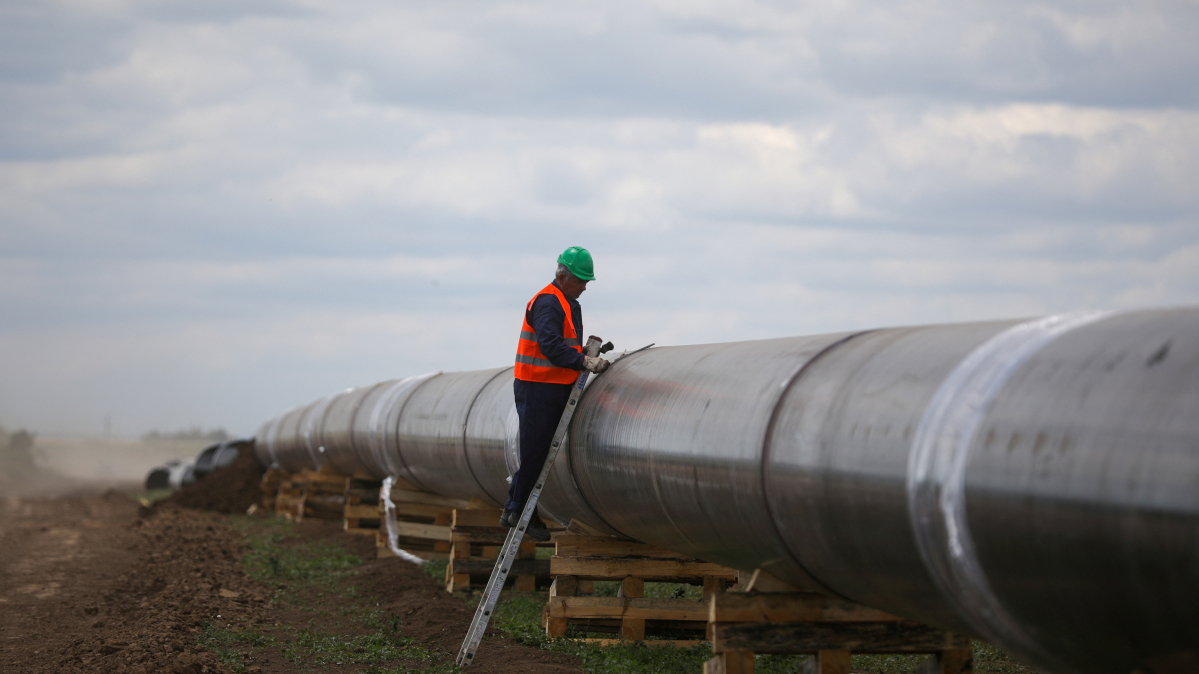
The decision aims to weaken the economic foundations of Russia’s military campaign and drive down its oil and gas revenues. Previously, Russia was Europe's largest energy supplier, with the Soviet-era pipeline network built in the 1960s and 1970s serving as the backbone of its energy exports.
However, this year, Russian gas exports to Europe plummeted to just 18 billion cubic meters (bcm), down significantly from the peak of 175-180 bcm in 2018-2019. This sharp decline follows the closure of the Ukrainian route for Russian gas, which had historically been a crucial pathway for transporting gas to European markets.
Currently, TurkStream is the only operational pipeline remaining for transporting Russian gas to Europe. This undersea pipeline, which passes through Türkiye, now serves as the primary route for Russian exports to countries like Serbia, Hungary, Slovakia, and Türkiye.
Despite the significant overall decline, gas deliveries via TurkStream increased by 12.9% in December compared to the previous year, reaching approximately 56 million cubic meters per day.
This increase in supply through TurkStream also reflects a broader trend, with exports to Europe via this route rising by around 7% in 2025, compared to 16.8 bcm in 2024.
However, even with these gains, the total exports of Russian gas to Europe are a fraction of previous years’ figures, underscoring the changing dynamics of the European energy market.
Gas exports from Russia to Türkiye, in particular, continue to be a significant part of Russia’s energy strategy, with Türkiye receiving around 20 bcm per year.
Nonetheless, this decline in pipeline exports marks a significant turning point for Russia’s energy sector, as Europe moves rapidly to diversify its energy sources and reduce its reliance on Russian fossil fuels.
Russia’s energy giant, Gazprom, has not commented on the drop in exports or provided specific reasons for the sharp decline.
















What is your opinion on this topic?
Leave the first comment