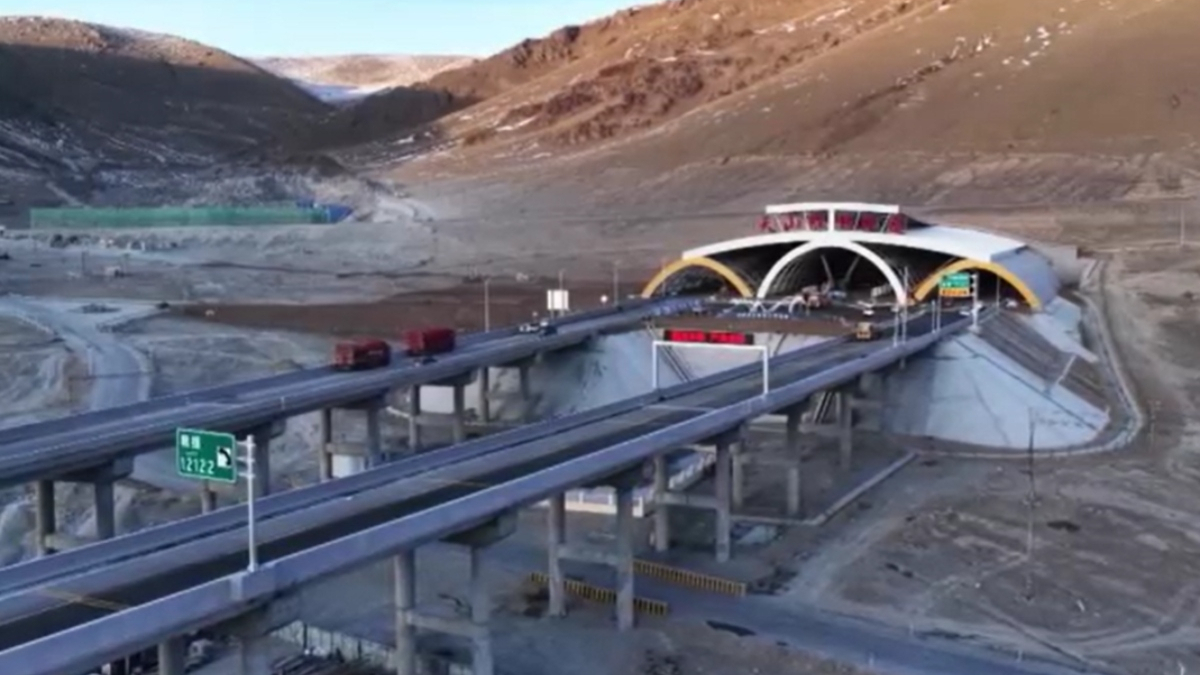
China has opened the world’s longest expressway tunnel to traffic in the Xinjiang region, across one of the country’s most challenging mountain areas.
The Tianshan Shengli Tunnel, stretching more than 22 kilometres, is now fully operational as part of the Urumqi–Yuli Expressway.
The tunnel cuts directly through the heart of the Tianshan Mountains, a natural barrier that has long made travel between northern and southern Xinjiang slow, difficult and largely dependent on weather.
Before its completion, drivers had to navigate winding mountain roads that could take several hours and were often closed in winter. With the tunnel now open, the same journey takes around 20 minutes.
Construction of the tunnel began more than five years ago and was widely seen as one of the most complex highway engineering projects ever attempted in the region.
Builders had to work at depths of more than 1,100 metres underground, pass through multiple geological fault zones and deal with extreme cold, high altitude and unstable rock formations.
At peak periods, thousands of workers and engineers were involved, using advanced drilling, monitoring and ventilation systems to keep the project on track.
Officials say the tunnel will significantly change how people and goods move across Xinjiang.
The full Urumqi-Yuli Expressway provides a direct link between the regional capital in the north and key cities and counties in the south, cutting overall travel times between major hubs from more than seven hours to roughly three.
“This project removes a long-standing transport bottleneck between northern and southern Xinjiang,” a regional transport official said, adding that it will make travel safer, faster and more reliable throughout the year.
“It creates conditions for more balanced development and closer economic ties across the region.” He said.
For people who rely on the route for work, the impact is immediate. Long-haul drivers who regularly cross the Tianshan range say winter travel has become far less stressful, with shorter journeys and fewer disruptions caused by snow and ice.
The expressway project, which includes multiple bridges and additional tunnels, represents a major investment in Xinjiang’s infrastructure.
Authorities say it will support industries such as logistics, tourism and agriculture, while also improving access to services for communities in more remote areas.
With traffic now flowing through the Tianshan Shengli Tunnel, the opening stands as both an engineering milestone and a practical change for daily life in Xinjiang and is turning one of the country’s toughest mountain crossings into a fast, year-round route.

















What is your opinion on this topic?
Leave the first comment