Afghanistan among worst-hit countries for unexploded ordnance, UN warns
Afghanistan remains the third most affected country globally for unexploded ordnance casualties, with more than 50 people killed or injured each mo...
In the midst of political tensions and a looming budget crisis in France, the government is grappling with the intricacies of passing an emergency bill ahead of the Christmas period.
As negotiations for a full budget continue to falter, there is an atmosphere of uncertainty surrounding France's political landscape.
A key voice in the current discussions is Pascal Mas, a geopolitical analyst, who offers his insights into the situation.
Speaking to AnewZ’s Andi Mioč, Mas sheds light on the pulse of French society, the state of negotiations, and the potential impact of the stopgap bill on future political developments.
Pascal Mas begins by acknowledging the complexity of the situation: "The situation is quite difficult to explain because we are now a few days up to Christmas. And so people are not really involved in the political discussions and disputes."
He also highlights the prevailing sense of detachment among the French public as they prepare for the festive season, with many less engaged in the unfolding political drama saying "it's clear that there are not very much involved in this thing because we probably know that there will be a new emergency law to vote the budget".
Mas also sheds light on the unique timing of the crisis. With municipal elections scheduled for March, complicating the political environment.
He explains, "The situation, politically, the situation is also specific because on March next year there will be elections for the cities, the municipalities.
And so, the politicians are more involved in saving their own position than to argue on the budget."
The political landscape in France is marked by a distinct sense of detachment as the country approaches both the holiday season and a looming political crisis.
Despite the ongoing discussions and the likely passing of an emergency law to address the budget, the underlying tensions remain unresolved.
The upcoming municipal elections add another layer of complexity, with politicians prioritising their positions over the immediate fiscal challenges facing the nation.

The Iran-U.S.-Israel conflict is intensifying, with fresh strikes near Tehran, European calls for restraint, and Iran threatening to target U.S. firms in the region, raising fears of a broader escalation across the Middle East.
There are fears of an oil spill after a drone strike hit a Kuwaiti oil tanker near Dubai on Tuesday, while U.S.-Israeli strikes in Iran reportedly killed at least two people. A loud explosion was heard in Beirut in southern Lebanon early Wednesday, as oil prices climbed above $100 a barrel.
Fears of wider escalation grow despite President Donald Trump saying U.S. strikes on Iran could end within weeks. Meanwhile missile attacks, tanker incidents and rising casualties across Israel, Lebanon and the Gulf heighten risks to regional stability and energy routes.
Russian-flagged tanker carrying approximately 700,000 barrels of crude oil docked at Cuba's Matanzas oil terminal on Tuesday, shipping data confirmed, marking a vital and controversial delivery to an island paralysed by severe energy shortages and a suffocating U.S. blockade.
A Russian military An-26 aircraft has crashed in Crimea, killing all 30 people on board, Russia’s Defence Ministry has confirmed.
In a major policy reversal, the U.S. Treasury has removed Venezuela’s acting president, Delcy Rodríguez, from its sanctions list, signalling a sharp shift in Washington’s approach to Caracas.
A technical team from the United States Federal Bureau of Investigation (FBI) has touched down in Cuba this week to launch an "independent investigation" into a deadly maritime shootout that happened on 25 February.
“He is not… the owner!” U.S. District Judge Richard J. Leon wrote, temporarily halting construction of President Donald Trump’s $400 million White House ballroom, underscoring a cascade of legal, regulatory and public opposition that has engulfed the controversial expansion.
Start your day informed with the AnewZ Morning Brief. Here are the top stories for 2 April, covering the latest developments you need to know
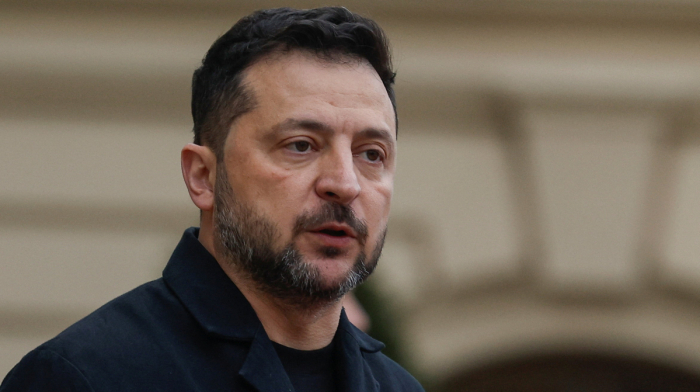
President Volodymyr Zelenskyy criticised Russia for answering his offer of an Easter ceasefire with airstrikes on Wednesday but he praised as "positive" fresh talks with U.S. mediators aimed at resolving the four-year conflict.
You can download the AnewZ application from Play Store and the App Store.
What is your opinion on this topic?
Leave the first comment