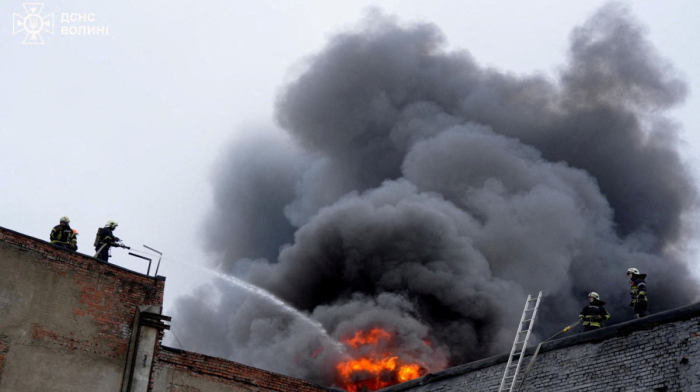
View: Ukraine funding crisis deepens as war drags on
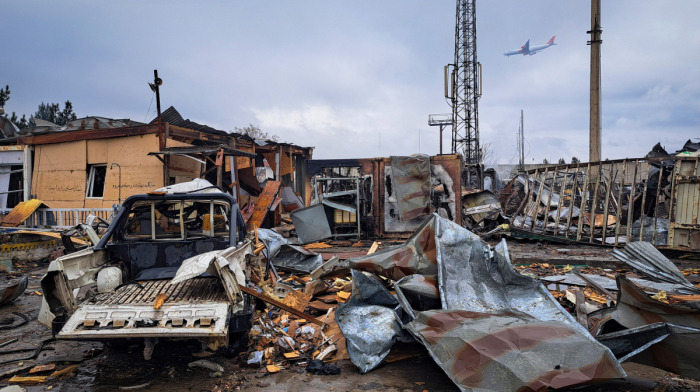
Russia’s latest attacks on Zaporizhia come as European leaders gather in Brussels to discuss the possible use of frozen Russian assets to support Uk...
European Commission President Ursula von der Leyen reportedly told EU leaders on Thursday that the signing of a free trade agreement with the Mercosur bloc has been postponed until January.
Von der Leyen had hoped to finalise the deal this weekend during a Mercosur summit in Foz do Iguaçu, Brazil. However, she first required the backing of a qualified majority of EU member states in Brussels, which was not secured amid opposition from France and Italy, BFMTV reported.
The agreement, concluded last December after more than 25 years of negotiations with Argentina, Brazil, Paraguay, and Uruguay, requires approval from a qualified majority of EU governments. Opposition from France, Poland, and other countries has delayed the process, with leaders calling for stricter safeguards to protect domestic agriculture.
Protests erupted in Brussels on Thursday, with thousands of farmers demonstrating against the pact. Some demonstrations turned violent, prompting Belgian authorities to deploy tear gas and water cannons after protesters threw objects and damaged property.
European lawmakers recently approved measures intended to cap sensitive farm imports, including beef and sugar, but critics argue these safeguards have been weakened during negotiations between the Commission, Parliament, and Denmark, which currently holds the EU presidency.
Earlier in the day, Italian Prime Minister Giorgia Meloni spoke with Brazilian President Luiz Inácio Lula da Silva, telling him that Italy supports the Mercosur trade deal in principle but requires up to a month to secure domestic backing from farmers. Lula confirmed the conversation and said he would consult Mercosur partners at their upcoming summit to determine the next steps.
Supporters of the agreement, including German Chancellor Friedrich Merz and Spanish Prime Minister Pedro Sánchez, emphasised its strategic importance, highlighting its potential to strengthen European exports and reduce reliance on China. French President Emmanuel Macron stressed that reciprocity and robust safeguards are essential before opening European markets to South American goods.
The latest clashes between Thailand and Cambodia mark a dangerous escalation in one of Southeast Asia’s oldest and most sensitive disputes.
In the complex world of international diplomacy, the ongoing tensions between India and Pakistan have raised significant questions about the role of third-party mediation.
Citizens from an additional seven countries, including Syria, are being banned from travelling to the U.S. from the 1st of January next year. President Donald Trump made the annoucement on Tuesday (16 December) now has a total of 39 countries banned from entering the States.
Austria’s public broadcaster ORF, which is hosting the Eurovision Song Contest next year, has said it will not block Palestinian flags in the audience or suppress crowd reactions during Israel’s performance.
Police in Australia have charged a man who allegedly opened fire on a Jewish event on Sydney's Bondi Beach with 59 offences, including 15 counts of murder and one of committing a terrorist act.
Brazilian President Luiz Inácio Lula da Silva has offered to mediate between the U.S. and Venezuela, warning that urgent diplomatic intervention is needed to prevent a “fratricidal war” in Latin America.
Türkiye has enhanced its environmental and cultural conservation efforts, registering 10,503 monumental trees and 319 caves nationwide, the Ministry of Environment, Urbanisation and Climate Change confirmed.
Former Iraqi President Barham Ahmed Salih has been elected by the UN General Assembly as the next High Commissioner for Refugees, beginning a five-year term on 1 January 2026.
Russian Foreign Minister Sergey Lavrov arrived in Cairo on Thursday ahead of a two-day ministerial conference of the Russia-Africa Partnership Forum.
European Union leaders on Thursday denounced a wave of hybrid attacks against the bloc, attributing them to Russia and Belarus, and called for stronger measures to protect critical infrastructure and enhance resilience.
You can download the AnewZ application from Play Store and the App Store.
What is your opinion on this topic?
Leave the first comment