Germany says support for Ukraine, Israel may have hurt UN Security Council bid
Germany's foreign minister Johann Wadephul has suggested that Berlin's strong backing of Ukraine and its close ties with Israel may have contributed...
Austria’s public broadcaster ORF, which is hosting the Eurovision Song Contest next year, has said it will not block Palestinian flags in the audience or suppress crowd reactions during Israel’s performance.
Speaking in Vienna on Tuesday, executives from ORF (Österreichischer Rundfunk) said that the network would present events as they happen, even if Israel’s performance is met with boos.
ORF’s director of programming, Stefanie Groiss-Horowitz, said artificial applause would not be used to mask audience reactions, while executive producer Michael Kroen confirmed that all official flags would be allowed, provided they meet local legal and security requirements.
In previous Eurovision contests, audience boos during Israel’s performance were often minimised or drowned out in the television broadcast, a practice criticised by viewers and broadcasters
The 70th edition of Eurovision, due to take place in Vienna in May, will feature 35 countries — the lowest number since 2003 — after five broadcasters, including those from Spain, Ireland and the Netherlands, announced a boycott in protest at Israel’s participation.
Critics say taking part would be inappropriate given the scale of civilian deaths in Gaza following Israel’s military response to the Hamas attacks of 7 October, 2023.
Eurovision organisers say their aim is to provide an accurate reflection of events inside the arena. Last year’s contest drew about 166 million viewers worldwide, according to the European Broadcasting Union.

Severe Tropical Storm Jangmi brought heavy rain, power cuts and transport disruption across Japan on Wednesday (3 June) as it tracked towards the greater Tokyo region.
Police officers were pelted with missiles during violent clashes at a protest near the Southampton, UK, home of convicted murderer Vickrum Digwa, as anger continued to grow over the handling of the fatal stabbing of 18-year-old Henry Nowak.
Thousands of people have taken to the streets in Albania in recent days to protest against a luxury tourism project linked to Jared Kushner, the son-in-law of U.S. President Donald Trump, and his wife Ivanka Trump.
An Iranian drone and missile attack struck Kuwait International Airport early Wednesday, injuring several people, damaging Terminal 1 and forcing flight diversions, Kuwaiti authorities said.
Armenia’s parliamentary election comes at a defining moment for the South Caucasus, a region reshaped by the Garabagh conflict and broader shifts in Russia-West relations. The outcome is increasingly seen as a signal of Armenia’s future foreign policy direction and the regional balance of power.
All 27 European Union (EU) member countries have agreed to begin the first set of talks with Ukraine and Moldova about joining the political and economic bloc.
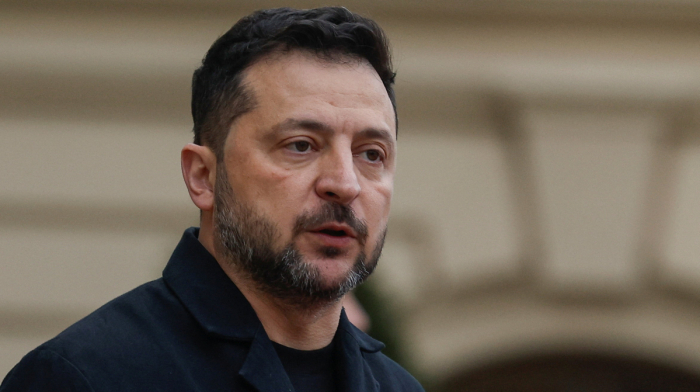
Germany's foreign minister Johann Wadephul has suggested that Berlin's strong backing of Ukraine and its close ties with Israel may have contributed to its failure to secure a seat on the United Nations Security Council.
Start your day informed with the AnewZ Morning Brief. Here are the top stories for the 4 June, covering the latest developments you need to know.
Three people have been killed and seven injured in Ukrainian strikes on Russia-annexed Crimea, according to Kremlin officials in the peninsula, as fighting between Russia and Ukraine continues.
Mass protests by teachers and retired judges, road closures and last-minute construction work caused chaos in Mexico's capital just eight days before the first World Cup match kicks off on 11 June.
You can download the AnewZ application from Play Store and the App Store.
What is your opinion on this topic?
Leave the first comment