live Pezeshkian calls for greater economic cooperation among Muslim countries
Iranian President Masoud Pezeshkian has called for greater economic cooperation among Muslim countries, saying their combined economic weight remai...
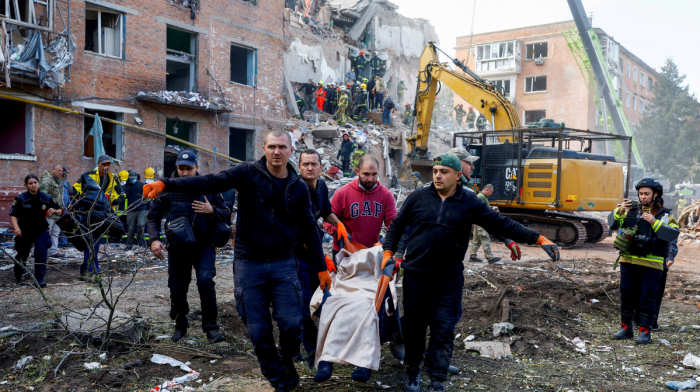
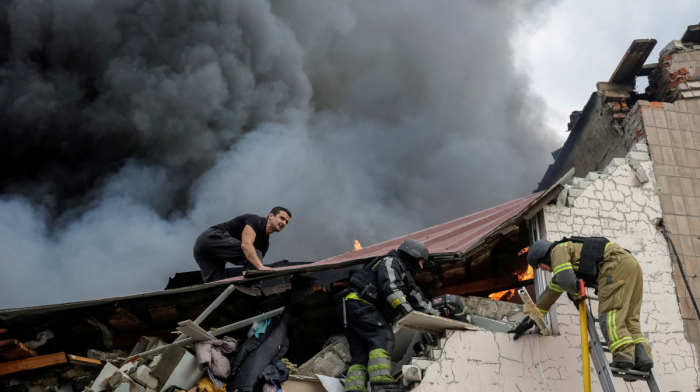
Russia’s latest attacks on Zaporizhia come as European leaders gather in Brussels to discuss the possible use of frozen Russian assets to support Ukraine’s war effort, while Washington explores parallel diplomatic channels with both Kyiv and Moscow.
Speaking to AnewZ, Ukrainian journalist Mariia Ulianovska said the strikes reflect a long-standing and deliberate pattern rather than an escalation linked to diplomacy.
“Russia has used the glided aerial bombs to target civilian apartment buildings in Zaporizhia, injuring 32 people,” she said, stressing that such weapons are designed for precision. “They are developed to hit a precise target, they are not hitting random things.”
Ulianovska described the attacks as part of a systematic campaign against civilians and contrasted Russia’s tactics with Ukraine’s military strategy.
“Ukraine is trying to stop the Russian war machine by targeting its energy infrastructure, when Russia is targeting civilian apartment buildings, trying to hit civilians,” she said.
Turning to the EU debate over frozen Russian assets, Ulianovska described the decision as critical for Ukraine’s survival.
She noted that while Russian central bank assets remain frozen, political resistance within the EU, particularly from Belgium, where most of the assets are held has slowed progress.
“The strategic impact of this decision is really hard to stress more,” Ulianovska said, arguing that releasing the funds would not only keep Ukraine afloat but also reduce the risk of further Russian advances and wider instability in Europe.
The analyst also addressed upcoming U.S.-Russia and U.S.-Ukraine talks, saying negotiations remain tense and volatile.
“Ukraine has made a lot of concessions within these negotiations and showed that it’s ready to have compromise to get to the peace,” she said, while adding that Moscow has rejected ceasefire proposals and continues to harden its demands.
She stressed that additional pressure on Russia is essential, pointing to potential new U.S. sanctions targeting Russian oil revenues.

Oil prices fell after the U.S. expanded economic sanctions on Iran, as Tehran vowed to retaliate and warned it had tools to respond, raising concerns over potential disruption to regional oil supplies.
Rescuers in Nepal used helicopters on Thursday to scour for hundreds still missing after a wall of mud and rock collapsed into a river on the Himalayan border with China's Tibet, sending catastrophic floods through towns and valleys, killing 162 people.
Secretary of State Marco Rubio told allied foreign ministers Washington will focus on sanctions and other pressure on Iran “for the time being”, Axios reports. Meanwhile, Iran and Oman have resumed talks on a temporary shipping route through the Strait of Hormuz.
Kyiv has recently received a small number of U.S.-made Patriot interceptors capable of downing Russian ballistic missiles, Ukrainian President Volodymyr Zelenskyy has said. It comes as Britain and France pledged stronger military support for Ukraine.
Iranian President Masoud Pezeshkian has called for greater economic cooperation among Muslim countries, saying their combined economic weight remains disproportionately small compared with their population, strategic location and resources.
Ratko Mladić, the former Bosnian Serb military commander convicted of genocide for his role in the 1995 Srebrenica massacre, has died, according to a United Nations official.
A glacial collapse that triggered catastrophic flooding along the Nepal-Tibet border on Wednesday has killed at least 270 people, with more than 1,000 still missing. Here are some of the most devastating glacier-related disasters recorded around the world:
The UN Children’s Fund (UNICEF) says 3.7 million children across Afghanistan are suffering from acute wasting, a dangerous form of malnutrition, including around one million with severe acute malnutrition, as hospitals and aid services face rising demand and funding shortages.
Kremlin Spokesperson Dmitry Peskov has dismissed media reports that CIA Director John Ratcliffe visited Moscow earlier this week to warn Russia against attacking NATO, dismissing them as "scare stories," which had nothing to do with reality.
Icelanders will vote on Saturday, 29 August, on whether to resume negotiations with the European Union, in a referendum that could reopen the country’s long-debated membership question.
You can download the AnewZ application from Play Store and the App Store.
What is your opinion on this topic?
Leave the first comment