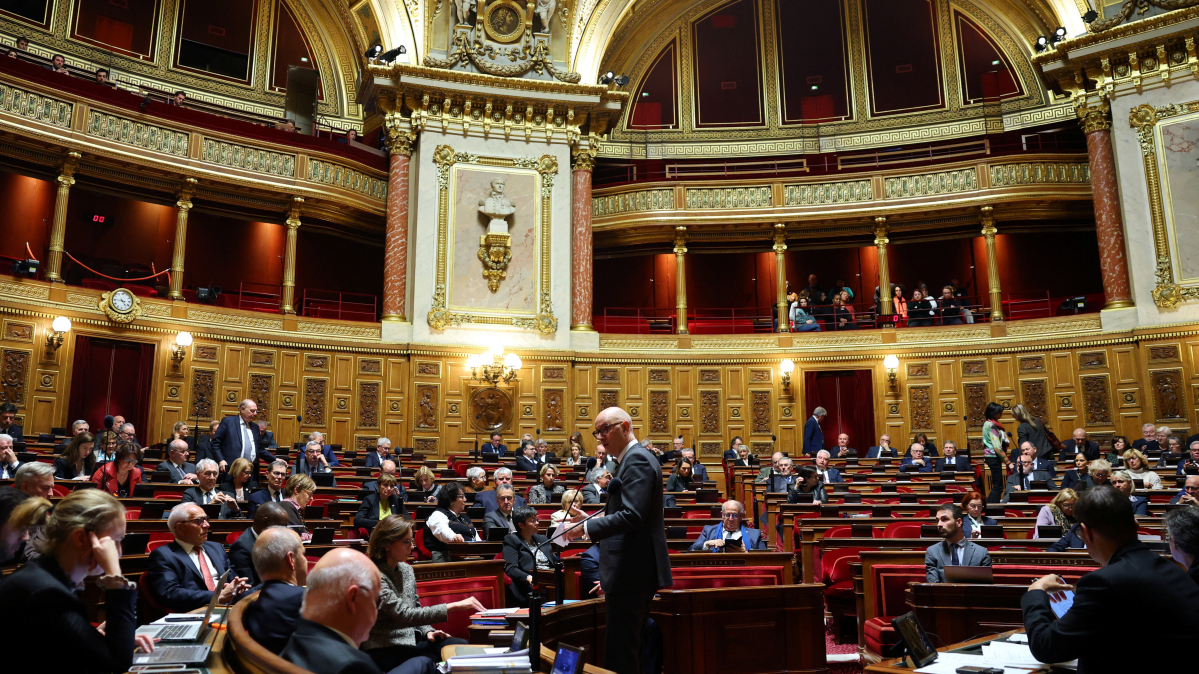
French senators on Monday approved a revised 2026 budget bill that the government warned could worsen the country’s fiscal deficit, setting the stage for tense negotiations between parliament’s two chambers later this week.
The conservative-dominated Senate passed the bill by 187 votes to 109 after amending the government’s original proposal, which failed to clear the lower house last month due to opposition to its tax measures.
A joint committee of seven lawmakers from both chambers is scheduled to meet this week to agree on a compromise text ahead of a final vote in the National Assembly on December 23, which could determine whether the budget is adopted.
Prime Minister Sébastien Lecornu’s government aims to reduce the public sector deficit to below 5% of GDP in 2026, down from an estimated 5.4% this year. Finance Minister Roland Lescure said the Senate’s version would leave the deficit at 5.3% and urged lawmakers to find further savings.
If lawmakers fail to reach agreement, the government may introduce emergency stopgap legislation to ensure continued spending, tax collection, and borrowing at the start of the new year.
Previously, French unions staged strikes against proposed budget cuts, pension reforms, and reductions in public service jobs, demonstrating strong opposition to austerity measures.
About the 2026 Budget?
The 2026 budget outlines France’s planned government spending and revenue for the year. It includes measures to fund public services, social security, and welfare programmes, while aiming to reduce the public sector deficit below 5% of GDP. The draft combines spending adjustments and tax measures, though final figures will depend on parliamentary negotiations. A key component is the Social Security financing bill, which temporarily suspends the controversial 2023 pension reform to secure broader political support. The budget is closely watched as it reflects the government’s priorities on public spending, fiscal discipline, and economic growth amid a fragmented parliament.
Lecornu’s minority government faces limited room for manoeuvre in a deeply divided parliament, where budget disputes have already complicated governance since President Emmanuel Macron lost his majority in a snap 2024 election.
















What is your opinion on this topic?
Leave the first comment