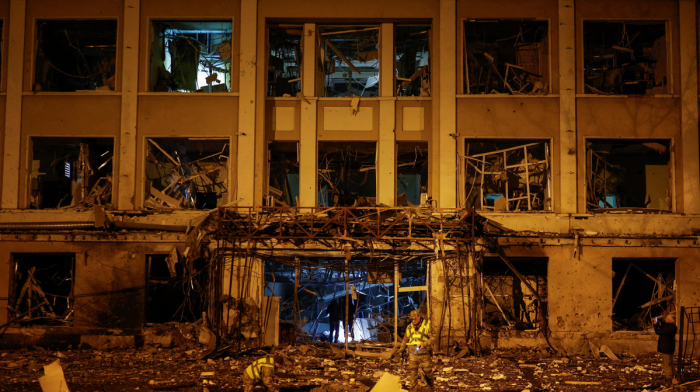
The United Nations Security Council has issued warnings about the rapidly worsening humanitarian crisis in Ukraine, citing a sharp surge in civilian casualties amidst Russia's intensified aerial attacks, marking the deadliest period of the war in more than a year.
Officials at the UN HQ in New York on Tuesday said that civilian casualties between January and November have risen by 24% compared to the same period in 2024.
Kayoko Gotoh, a senior official in the UN’s Department of Political and Peacebuilding Affairs, said, “2025 has been one of the deadliest for the people of Ukraine. These figures continue to increase as the Russian Federation escalates its aerial attacks across Ukraine.”
Ukraine’s Ambassador to the UN, Andriy Melnyk, accused nations continuing to purchase Russian energy of indirectly financing the war. He called for coordinated sanctions on all states sustaining Russia’s revenue streams.
“If we place the numbers of energy imports side by side with Russia’s military budget last year, estimated at around $145 billion, the picture becomes unmistakably clear,” Melnyk said.
“The purchases of Russian energy by just the three biggest consumers exceeded by far the entirety of Russia’s annual defence spending. In other words, due to the absence of UN-mandated sanctions — an absence ensured, of course, by Moscow’s abuse of the veto in this Council — a number of states are effectively sustaining Putin’s war, Putin’s war machine, through the growing imports of Russian oil, gas, and coal,” Melnyk added.
Russia’s Ambassador, Vassily Nebenzia, pushed back, claiming Ukraine is forcibly conscripting civilians and accusing Western governments of prolonging the conflict.
“Ukrainians are now being forced to pay an even higher price. Men who don’t want to fight have been grabbed in the streets. They are being sent to a pointless, fratricidal meat grinder,” Nebenzia said.
“Can any of those who called today’s meeting clarify why Ukrainians are being forced to fight against their will, when what we have on the table are fairly realistic proposals for a long-term, lasting settlement of the Ukrainian conflict — something that our U.S. colleagues are diligently working on?”
The United States representative Jennifer Locetta condemned Russia’s ongoing strikes on populated areas and energy infrastructure, especially as winter conditions worsen.
“The rising humanitarian cost of this war is unacceptable, and it will ripple through for decades across the region," Locetta said.
"Meanwhile, as the winter grows colder and darker, strikes in populated areas and against Ukraine’s energy grid continue, leaving millions without heat and power. The killing must stop. Both sides must choose peace,” she added.
The session, convened at the request of six member states, including Slovenia and the United Kingdom, ended with renewed calls for de-escalation but no consensus on immediate actions.








What is your opinion on this topic?
Leave the first comment