Fighting between Cambodia and Thailand escalated along their contested border on Tuesday, as the Southeast Asian neighbours both said they would not back down in defending their sovereignty.
With each side blaming the other for starting Monday's renewed clashes, it was unclear how or if a fragile ceasefire brokered by U.S. President Donald Trump in July could be salvaged.
Cambodia's influential former leader Hun Sen said his country waited 24 hours to honour the ceasefire and allow for evacuations before launching counterattacks overnight against Thai forces.
"Cambodia needs peace, but Cambodia is compelled to counterattack to defend our territory," he said in a Facebook post, saying strong bunkers and weapons gave Cambodian forces the advantage in defending against an "invading enemy".
Thailand says it carried out air and ground operations along the Cambodian border as hostilities escalated, breaking the U.S. brokered ceasefire that halted five days of clashes in July.
Fighting that began overnight on Monday spread across several locations before dawn, with both Thailand and Cambodia accusing each other of initiating the violence.
Thai authorities confirmed one soldier killed, while Cambodia reported four civilian deaths. Officials on both sides said the clashes were among the most intense since the summer.
A senior Trump administration official said the U.S. expected both countries to honour commitments to end the conflict.
Malaysia’s Prime Minister Anwar Ibrahim, who helped facilitate the earlier truce as ASEAN chair, urged restraint and warned of renewed instability if communication channels collapsed.
U.N. Secretary-General António Guterres called on Thailand and Cambodia to avoid further escalation and said the United Nations was prepared to support efforts to restore stability.
Cambodia’s former leader Hun Sen said the exchanges appeared designed to provoke retaliation but urged Cambodian forces to remain restrained.
Breakdown of the July ceasefire
The July ceasefire, negotiated after five days of rocket and artillery exchanges that killed at least 48 people and displaced 300,000, had reduced hostilities but left underlying tensions unresolved.
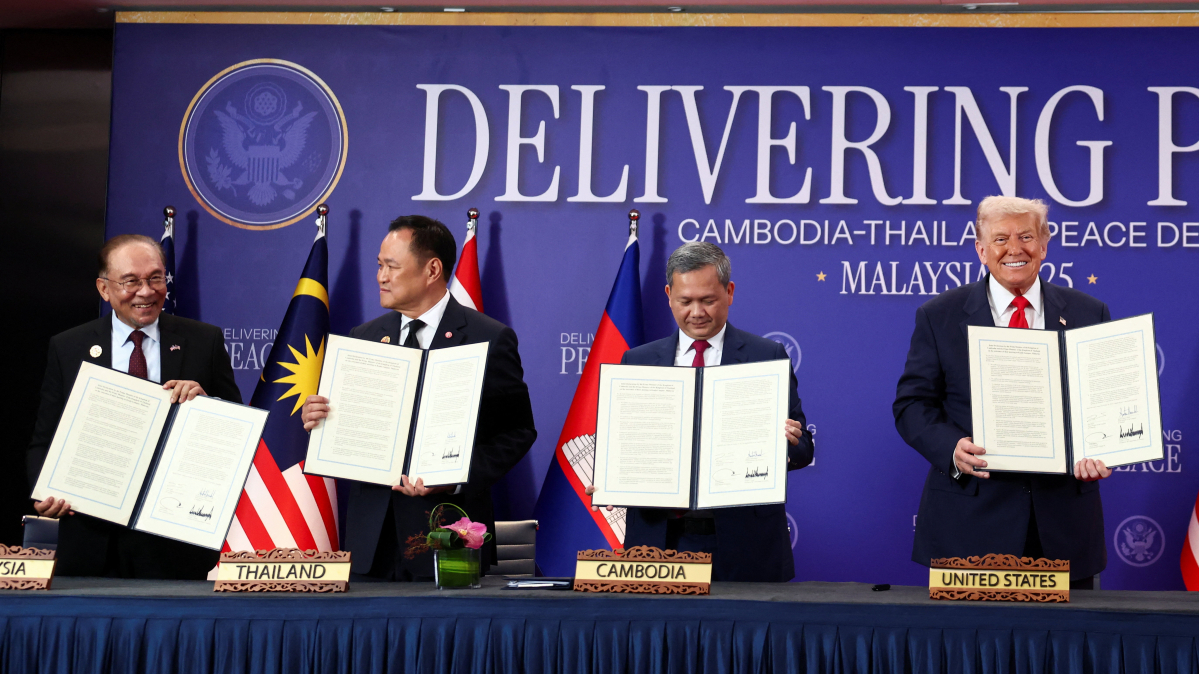
Last month, Thailand suspended de-escalation steps agreed at a summit attended by U.S. President Donald Trump, citing the maiming of a Thai soldier in a landmine blast.
Thai officials said seven soldiers had been wounded by mines since July, and believe some devices were newly planted. Cambodia denied laying new mines and said it remained committed to the ceasefire terms.
Thai Prime Minister Anutin Charnvirakul said there would be no talks unless Cambodia met conditions set by Bangkok. Cambodian Prime Minister Hun Manet said Thailand must stop using military force near civilian areas.
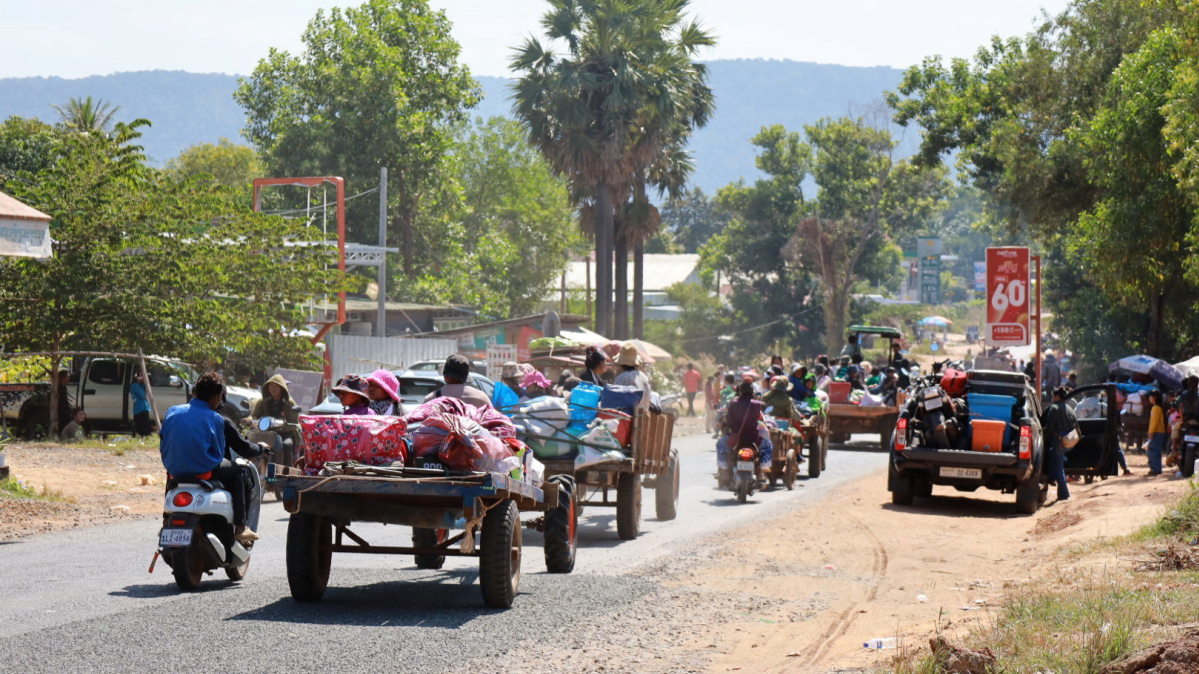
Thailand evacuated 438,000 civilians across five provinces near the border, while Cambodian authorities said hundreds of thousands had been moved inland.
Cambodian television broadcast images of congested rural roads, filled with trucks, motorbikes, and farming vehicles, as people left affected regions.
A verified eyewitness video showed smoke rising after a reported Thai airstrike. Thai broadcasts showed families entering evacuation centres, others taking shelter in bunkers or large concrete pipes. Residents described hearing a mix of small arms fire and heavy artillery throughout the morning.
Thailand and Cambodia share an 817 km border that remains undemarcated at several points, particularly around areas containing historic temples.
These locations have been the focus of nationalist sentiment and periodic military engagements. A week-long artillery exchange in 2011 resulted in casualties on both sides and drew international attention.
Tensions resurfaced in May after a Cambodian soldier was killed during a skirmish, prompting a troop buildup and a breakdown in diplomatic communication. With both sides now accusing each other of violating previous agreements, the path back to negotiation remains uncertain.











What is your opinion on this topic?
Leave the first comment