French President Emmanuel Macron is in China for his fourth state visit, as Europe tries to balance economic dependence on the world’s second-largest economy.
French President Emmanuel Macron is in China for his fourth state visit, as Europe seeks to balance its deep economic ties with the world’s second-largest economy against rising trade and security tensions.
Macron has long sought to project a united European stance on China while avoiding overt confrontation with Beijing, whose growing assertiveness is straining trade, security, and diplomatic relations, analysts say.
“He must make clear to China’s leadership that Europe will respond to growing economic and security threats from Beijing, while preventing an escalation of tensions that leads to a full-blown trade war and diplomatic breakdown,” Noah Barkin, a China analyst with Rhodium Group, told Reuters.
“This is not an easy message to deliver,” he added.
Macron began his visit on Wednesday at Beijing’s Forbidden City before meeting President Xi Jinping in the capital on Thursday and again on Friday in Chengdu, in southwestern Sichuan province.
His trip follows a tense visit in July by European Commission President Ursula von der Leyen, who warned that EU–China relations had reached an “inflection point.” British Prime Minister Keir Starmer and German Chancellor Friedrich Merz are expected to visit China early next year.
Trade tensions have intensified as a surge in cheap Chinese exports — especially steel shut out of the U.S. market — hits European manufacturers. Europe is also increasingly anxious about China’s technological lead in electric vehicles (EVs) and its control over rare earth processing, crucial for key European industries.
With Washington’s tariffs tightening global trade flows, Beijing is positioning itself as a business partner, seeking to ease European concerns over its support for Russia and heavy industrial subsidies.
During the visit, Macron is expected to push to rebalance trade by encouraging stronger Chinese domestic consumption and ensuring that “gains from innovation could be shared” so Europe can access Chinese technology.
The EU is preparing to unveil a new economic security doctrine that could expand the bloc’s use of defensive trade tools against China. France — whose automakers have minimal sales in China but face fierce EV competition at home — has backed the European Commission’s move to raise tariffs on Chinese EVs.
Paris was also locked in a year-long dispute with Beijing over a Chinese investigation into brandy imports, widely seen as retaliation for the EV tariff decision, before receiving a temporary reprieve.
Despite recently opening a new assembly line in China, Airbus is unlikely to secure a long-discussed order of up to 500 jets during Macron’s visit, industry sources said. Such deals give Beijing leverage over Washington, which is pressing for renewed Boeing purchases.
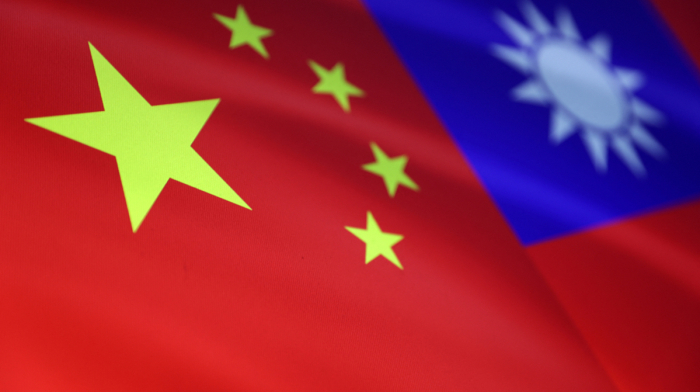
Macron is also determined to avoid a repeat of the controversy sparked during his 2023 trip, when his remarks on Taiwan drew criticism in the United States.
“Macron cannot allow himself to go rogue as in 2023,” Barkin said, noting that his comments — seen as equivocal about choosing between China and the United States — “painted a misleading picture about where French policy towards China really was.”
French officials say Macron will reiterate support for maintaining the status quo on Taiwan and urge China to avoid escalation, following recent Japanese statements on the island that triggered a diplomatic dispute with Beijing.
“I expect him to be more disciplined this time,” Barkin said. “There is much more at stake for France and for Europe.”










What is your opinion on this topic?
Leave the first comment