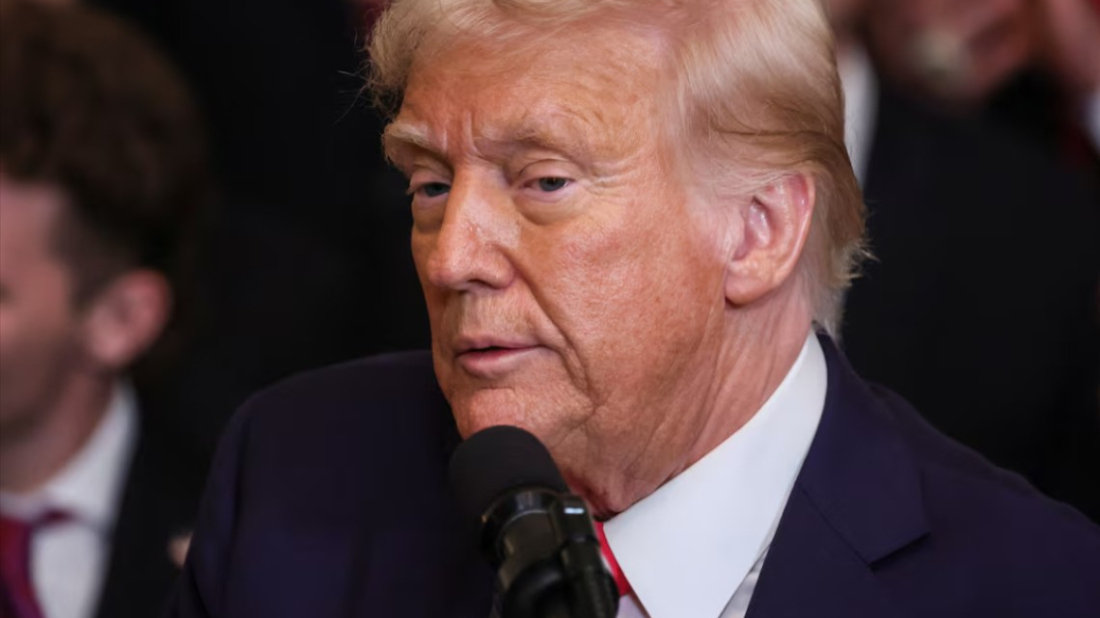
U.S. President Donald Trump has said he ordered the Pentagon to prepare for possible military action in Nigeria and suspended aid, citing alleged killings of Christians in the country.
U.S. President Donald Trump on Saturday said he directed the Department of Defense to prepare for a potential rapid operation in Nigeria if the government fails to act against armed groups accused of targeting Christian communities. In a post on Truth Social, he said the United States would immediately suspend aid to Nigeria, warning that any U.S. response would be “fast” and “decisive.”
Trump criticised Nigeria’s leadership, saying the government must act swiftly to protect its citizens. He did not provide evidence or specify recent incidents. The White House did not issue an immediate comment, and Nigerian officials had yet to respond.
The statement followed the administration’s decision to place Nigeria back on the U.S. “Countries of Particular Concern” list, which identifies nations accused of severe violations of religious freedom. The move reinstates a designation removed in 2021 and allows for possible policy actions, including sanctions or waivers.
Before Trump’s comments, Nigerian President Bola Ahmed Tinubu rejected claims of religious intolerance, saying they did not reflect the country’s reality. “The characterization of Nigeria as religiously intolerant does not reflect our national reality, nor does it take into consideration the consistent and sincere efforts of the government to safeguard freedom of religion and beliefs for all Nigerians,” Tinubu said. Nigeria’s Foreign Ministry, in a separate statement, said the government would continue efforts to combat violent extremism and maintain strong ties with the United States.
Nigeria, Africa’s most populous nation, has a diverse population of Christians, Muslims, and followers of traditional faiths. While some areas have experienced violence involving ethnic and religious communities, analysts often attribute such conflicts to disputes over land, resources, and security rather than religion alone. The Boko Haram insurgency in the northeast has killed tens of thousands of people since 2009, affecting both Muslim and Christian populations.
Trump’s comments have drawn mixed reactions in the United States. Some lawmakers supported the move, citing concerns over attacks on Christian communities. Representative Tom Cole, chair of the House Appropriations Committee, welcomed the re-designation and noted that the 2026 national security budget includes higher funding for international religious freedom programmes.
The scope of any U.S. military action remains uncertain. Washington reduced its presence in West Africa after withdrawing troops from Niger last year. Its largest military facility on the continent remains in Djibouti, hosting over 5,000 personnel. For now, Trump’s remarks have added new tension to U.S.-Nigeria relations, as both governments face pressure to demonstrate their commitment to protecting religious freedom and combating extremism.











What is your opinion on this topic?
Leave the first comment