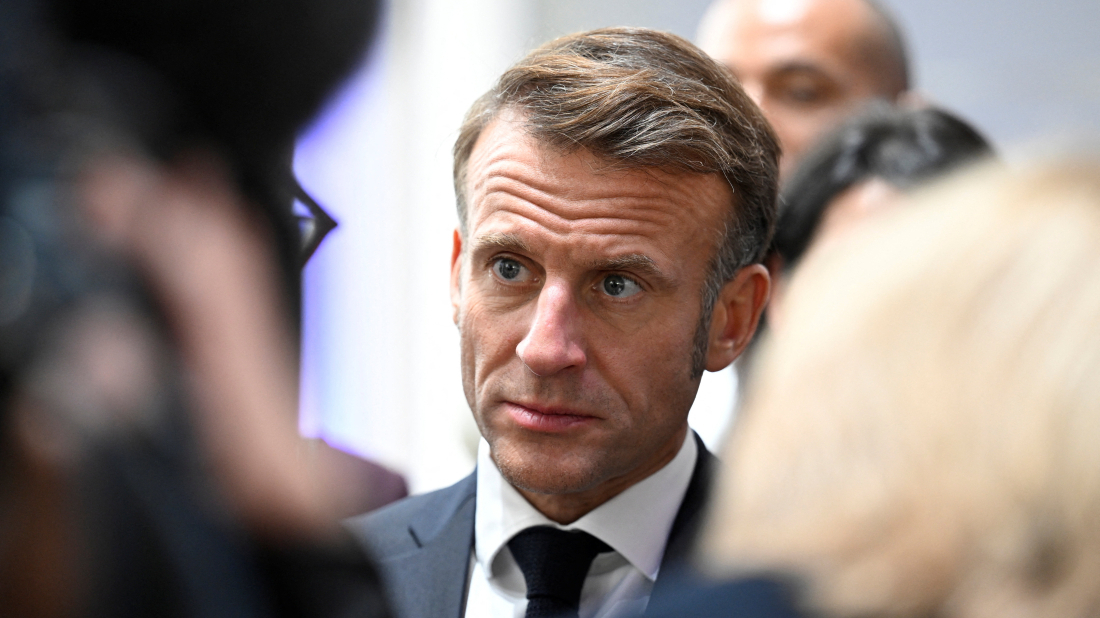
French President Emmanuel Macron faced growing pressure on Tuesday to resign or hold a snap parliamentary election to end political chaos that has forced the resignation of five prime ministers in less than two years.
The 47-year-old centrist president has repeatedly said he will see out his second term, which ends in 2027.
But resignation calls, long confined to the fringes, have entered the mainstream during one of the worst political crises since the 1958 creation of the Fifth Republic, France's current system of government.
On Tuesday, as Macron's outgoing Prime Minister Sebastien Lecornu held last-ditch talks to form a new government, his first premier in 2017, Edouard Philippe, said it was time for a new president to break the deadlock.
Speaking to RTL radio, Philippe said Macron should be "leaving in an orderly manner" to allow a way out of the crisis.
Paris resident: 'It's a mess. It makes you sad'
Political turmoil in the euro zone's second largest economy was front page news across Europe at a time when U.S. President Donald Trump is demanding the continent do more to shore up its own defences and aid Ukraine.
Markets have taken fright, with investors keeping a close eye on France's ability to cut a yawning budget deficit.
French stocks fell 1.4% on Monday and the risk premium on French government bond yields rose to a nine-month high on the crisis.
"It's a mess. It makes you sad," said Brigitte Gries, a 70-year-old pensioner in Paris, summing up public consternation.
"We're becoming a bit of a laughing stock around the world right now," added taxi driver Soufiane Mansour in the southern city of Montpellier.
"We're a bit of a clown around the world and in Europe, unfortunately."
Allies round on Macron
Philippe, whom polls show to be the best-placed candidate to lead the political centre in a succession battle, was the second of Macron's former prime ministers to distance themselves from him in as many days.
Gabriel Attal, another erstwhile Macron loyalist, was blunt in his criticism. He was prime minister for a few months last year before Macron called a snap vote that delivered a hung parliament with three ideologically opposed blocs.
"Like many French people, I no longer understand the president's decisions," he said on TF1 TV, after Macron asked Lecornu, who had just tendered his resignation, to go back to opponents for last-gasp talks.
Lecornu, whose 14-hour-old administration was the shortest in modern French history, was given two days to find consensus.
Attal, however, ruled out calling for Macron to resign, someone who took part in a meeting of his parliamentary group said.
Far-right snubs talks
Meanwhile, Lecornu held talks with leaders of Macron's centrist alliance and conservatives, in which they agreed that finding a deal on next year's budget was a priority.
He will need others, including the Socialists, on board to have the numbers needed to form a majority in the National Assembly - not least to pass a budget for next year.
Lecornu now plans to talk with the opposition in the afternoon and on Wednesday morning, but the far-right National Rally said they saw no point in those talks and would skip them.
Party chiefs Jordan Bardella and Marine Le Pen instead "reiterate their call for the dissolution of the National Assembly," the RN said.
The RN tops opinion polls, but those surveys show a repeat election would likely produce another divided parliament, with no group holding a majority.















What is your opinion on this topic?
Leave the first comment