Global air travel remained in turmoil on Monday after U.S. and Israeli strikes on Iran and retaliatory strikes in the Gulf region prompted widespread airspace closures across the Middle East, disrupting one of the world’s most important aviation corridors.
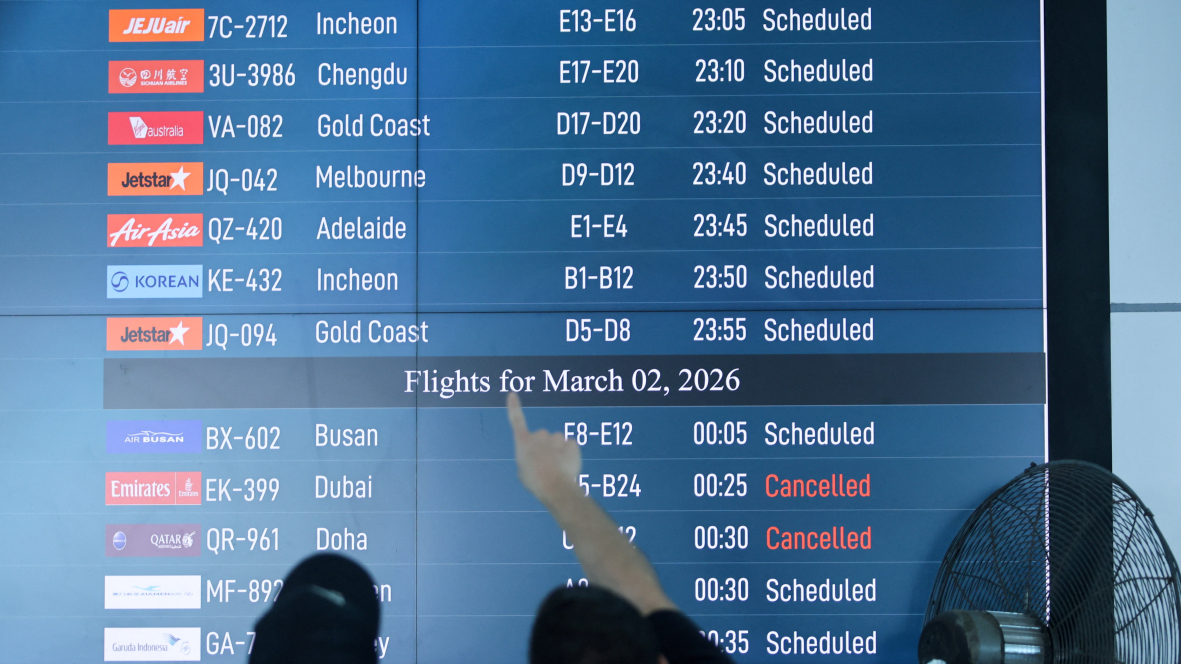
For a third straight day, major Gulf hubs have remained closed or operating under heavy restrictions, leaving tens of thousands of passengers stranded and airlines scrambling to rework schedules.
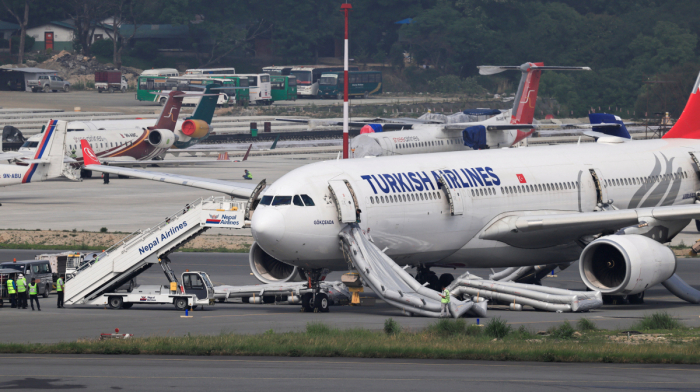
The ripple effects were felt far beyond the Middle East, with stranded as far as Bali, Kathmandu and Frankfurt.
Experts warn the fallout could take weeks to unwind.
The disruption has centred on three of the world’s most significant long-haul transit hubs:
Dubai International Airport
Zayed International Airport in Abu Dhabi
Hamad International Airport in Doha, Qatar
Dubai International, the busiest airport globally for international passenger traffic, has remained largely shut since the strikes and damage. Abu Dhabi and Doha have also suspended or drastically limited operations.
The impact is magnified by the dominance of Gulf carriers in long-haul travel. Emirates, Etihad Airways and Qatar Airways collectively connect Europe, Asia, Africa and Australasia through tightly scheduled hub networks.
Emirates will begin operating a limited number of flights commencing on the evening of Monday, 2nd March. In a statement posted on their Emirates Support 'X' account, they said: "We are accommodating customers with earlier bookings as a priority, and those who have been rebooked to travel on these limited flights will be contacted directly by Emirates. Please do not go to the airport unless you have been notified."
Etihad said it's also suspended departures from Abu Dhabi until 06:00 local time.
The unrest has also affected civilian airport facilities. Since the strikes began, one person has died and 11 others have been injured at airports in Dubai and Abu Dhabi. Four of those hurt were employees working at Dubai International Airport.
Tens of thousands stranded
Officials in the United Arab Emirates estimate that around 20,000 passengers are currently stranded within the country, with many thousands more affected internationally.
Hotels in key transit cities have filled rapidly, while passengers report long waits at airports and overloaded airline helplines. Several governments have advised citizens to remain in place until commercial routes reopen.
In response to the escalating crisis, the UK government is planning one of the largest consular operations in recent memory.
British foreign minister Yvette Cooper said on Monday that her team was looking at all options, including evacuation, to help hundreds of thousands of UK citizens leave Gulf countries.
There are an estimated 300,000 British citizens - residents, families on holidays, and some in transit - in Gulf countries, and 102,000 people in the region have registered their presence with the UK government since the attacks started on Saturday.
When asked whether she was planning an evacuation from those countries, Cooper said officials were setting up "support systems".
"We're working on every possible option," she told Sky News. "We have to recognise the scale of this as well, and also the fact that there are strikes still underway."
The UAE authorities have said they will cover accommodation costs for stranded travellers within their territory.
Traveller Ziying Zhou, had her flight to Dubai from China turned around mid‑journey. Speaking to Reuters from China's Weifang, she said the captain announced that it was unsafe to continue on to Dubai. Her flight returned back to its departure city of Qingdao.
"At first I was just really shocked because I never thought things like this, like war, would be kind of so close to me. I always just thought it's something that is just something you read in the news. But then actually getting on a long-haul flight and almost made it like kind of halfway there and then started to turn around all the way. It was just really shocking."
Airlines worldwide forced to cancel
Airlines across Europe and Asia have either cancelled services to the Middle East or rerouted aircraft to avoid closed airspace, leading to widespread knock-on disruption.
Among those adjusting schedules are:
- British Airways
- Air France and KLM
- Lufthansa
- Singapore Airlines
- Cathay Pacific
- Air India
- Japan Airlines
- Turkish Airlines
- Wizz Air
Some carriers have offered fee-free changes or refunds, but the scale of disruption has stretched customer service operations worldwide.
What happens next
Airlines continue to monitor the security situation closely. Further escalation could widen the airspace closures, adding flight time and fuel costs for services forced to detour around the region.
For passengers, the advice remains straightforward: check directly with airlines before travelling and prepare for continued uncertainty.

















What is your opinion on this topic?
Leave the first comment