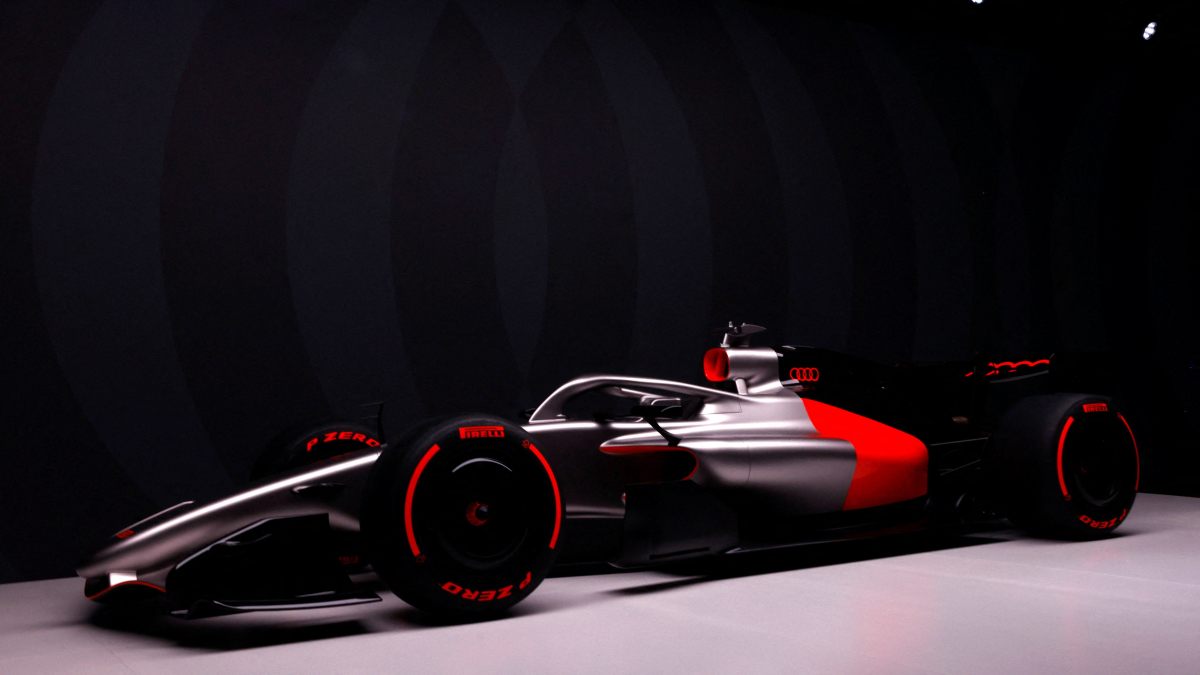
Audi has unveiled the car that marks its first major step into Formula One. It presented the 2026 challenger at a launch event in Munich attended by drivers, team leaders and senior company executives.
Audi has taken its Formula One programme into its public phase with the unveiling of the car that will form the basis of its 2026 entry.
The presentation in Munich featured the full build-up sequence, including the staging, red lighting, musical introduction and the moment the covers were removed to reveal the design. The event gathered the brand’s leadership, technical heads and its first drivers, Nico Hülkenberg and Gabriel Bortoleto, who will form the team’s line-up from 2026.
Guests and media observed the unveiling from the front rows, with both drivers watching as the car emerged. The audience included former Le Mans winners Tom Kristensen and Hans Joachim Stuck, alongside former F1 driver and Le Mans champion Hans Joachim Stuck, who also posed with the car ahead of its introduction. Vehicles arriving before the ceremony and the presence of partners and motorsport figures contributed to the atmosphere around Audi’s transition into the championship.
During his address, Audi CEO Gernot Döllner opened the launch by framing the moment as the beginning of a defined timeline. He said the company is counting down to its debut, adding that on 8 March 2026 Audi will take its place on the Melbourne grid “where precision, ambition and cutting-edge technology rule”. Döllner said Audi enters the series with the intention “not just to compete, but to lead, to innovate and to win”, adding that the move is supported by the financial stability of the cost cap, the global visibility of Formula One and the technological benefits of competing in what he called "the toughest testing lab in the world".
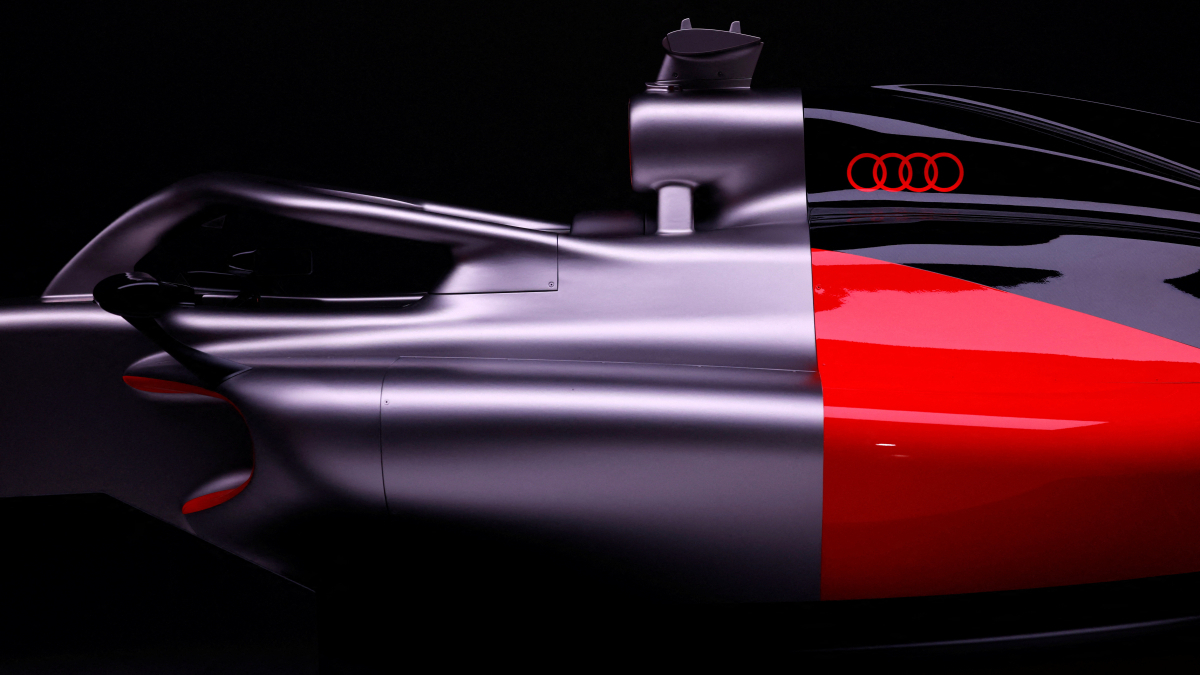
The car’s titanium, carbon black and Audi red palette was presented as the visual identity for the 2026 entry. The newly introduced Audi red will appear selectively, and the four rings will also be displayed in red at specific moments to underline the company’s Formula One presence. Close-up shots showed details of the tail, bodywork and ring placement as the audience took photographs.
Head of the Audi F1 project Mattia Binotto described the car as one milestone in a larger multi-stage build-up involving engineers, designers, mechanics and partners working across several locations. He said the team’s first power-unit fire-up will be another milestone, followed by early track running next year. Binotto highlighted the process as a step-by-step progression in which the passion and ambition of the wider team become visible as the project moves towards 2026.
Audi F1 team head Jonathan Wheatley said the team has learned from setbacks that have strengthened internal processes. He pointed to improvements achieved this season, including championship points, faster pit stops and a podium finish for Hülkenberg at Silverstone, describing them as indicators of momentum. He said the culture being built is founded on belief, resilience and shared purpose, and that these elements are essential to preparing the team for the championship.
Audi’s Formula One operation will be spread across three hubs. Audi Formula Racing GmbH in Neuburg an der Donau is responsible for developing the hybrid power unit. Hinwil in Switzerland will oversee chassis development and race operations, while the UK Technology Office in Bicester serves as a link to Motorsport Valley and a source of specialist engineering personnel.
Throughout the Munich launch, attendees viewed the car closely, with the drivers posing for photographs alongside senior figures including Binotto, Wheatley and Döllner. The presentation concluded with the executives and drivers gathered around the vehicle for a formal photo call. With the unveiling complete, Audi now moves into the next stage of preparation for the 2026 rules reset, transitioning from internal development to visible progress ahead of its debut on the Formula One grid.

















What is your opinion on this topic?
Leave the first comment