live UN halts Strait of Hormuz escort operations after reported attack on cargo ship
The UN's International Maritime Organization has paused escort operations through the Strait of Hormuz after a cargo ship was reportedly attacked near...
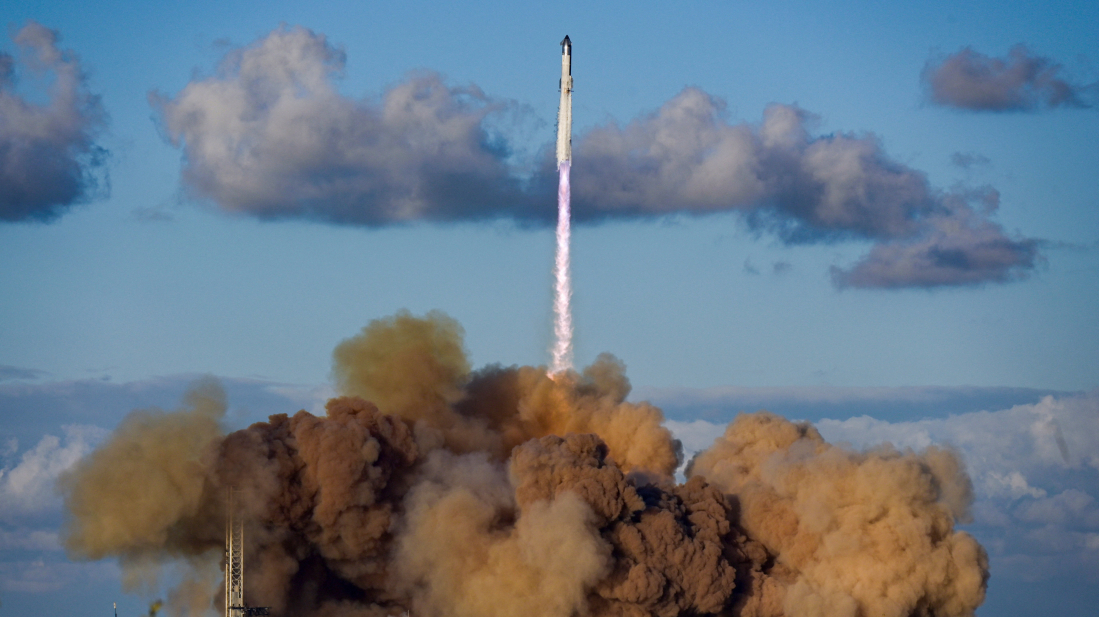
SpaceX launched its 11th Starship from Texas on 13 October, landing in the Indian Ocean ahead of testing an upgraded version for future moon and Mars missions.
Starship, which includes the Starship upper stage stacked atop its Super Heavy booster, launched from SpaceX's Starbase facilities.
After sending the Starship stage to space, Super Heavy returned for a soft water landing in the Gulf of Mexico 7 minutes after liftoff, testing a landing engine configuration before blowing itself up.
Its last mission, in August, ended a streak of testing failures earlier this year.
Monday's flight was similar to the previous one, again deploying a batch of mock Starlink satellites, briefly re-lighting its engines in space and testing new heat shield tiles during its blazing hot return from space before splashing down west of Australia.
Acting NASA Administrator Sean Duffy said on X the mission was "another major step toward landing Americans on the Moon’s south pole."
SpaceX, in future tests, expects to launch a more advanced Starship prototype tailored with upgrades essential for long-duration missions in space, the company said on Monday.
That includes docking adapters and other hardware changes key to orbital refueling, a complex process involving two Starships docking in orbit to transfer hundreds of tons of super-cooled propellant.
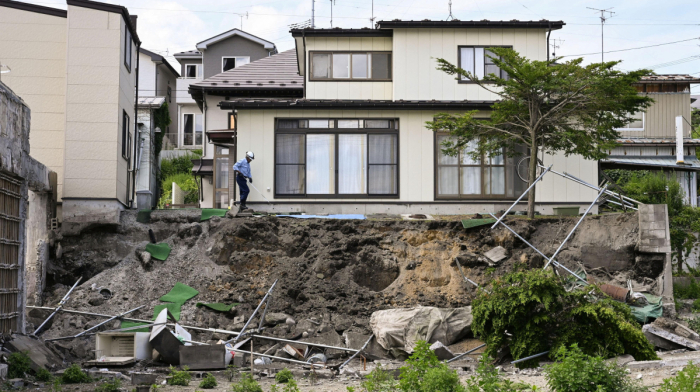
An earthquake of magnitude 6.9 struck Japan's northeast coast on Thursday, but no tsunami warning was issued, no injuries were immediately reported and no irregularities were found at nuclear facilities, the authorities said.
As Western Europe battles a deadly heatwave that has shattered temperature records, disrupted transport and power supplies, and forced the closure of schools and cultural landmarks, attention is turning to whether El Niño is playing a role in the extreme conditions.
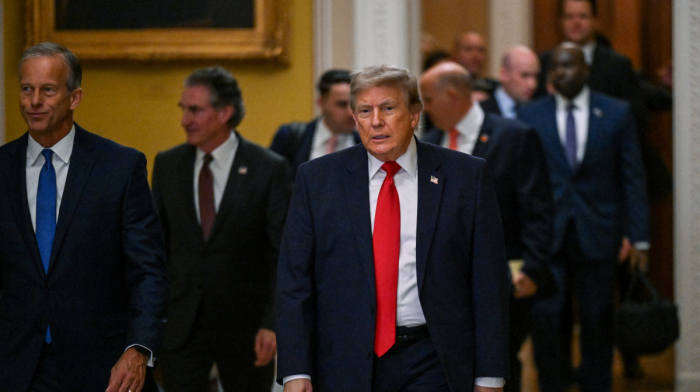
The U.S. Senate rejected a resolution on Wednesday that would have directed President Donald Trump to remove U.S. forces from hostilities against Iran unless Congress formally authorised military action.
The Kremlin has denied a Wall Street Journal report claiming Moscow is pressuring Belarus to support an expanded Russian military campaign in Ukraine.
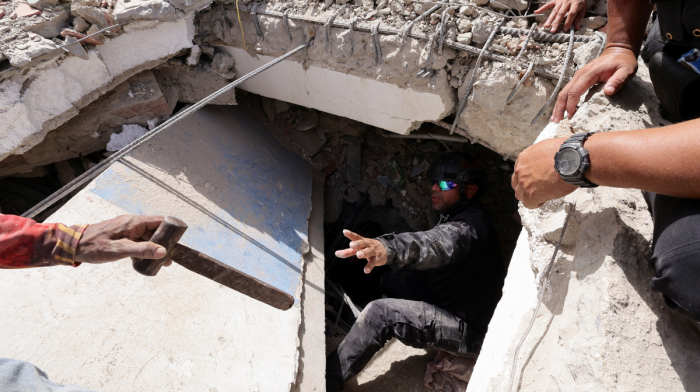
Tens of thousands of people are still unaccounted for after two powerful earthquakes struck Venezuela. At least 589 people have been confirmed dead and hundreds are believed to be trapped under rubble, as emergency crews and international rescue teams race to respond.
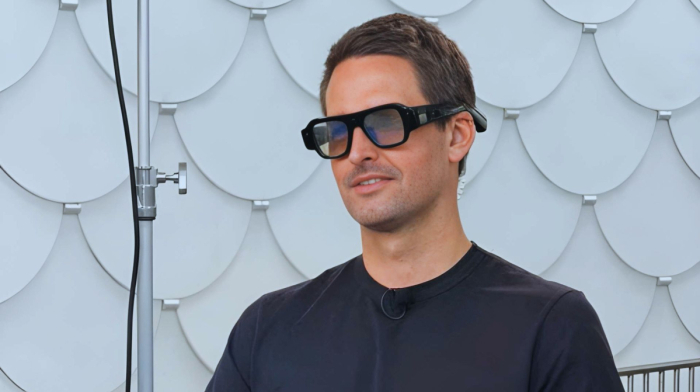
American technology company Snap has launched its first augmented-reality (AR) glasses for consumers, marking a major push into wearable computing as tech firms race to redefine personal devices in the AI era.
The Canadian government has introduced a digital safety bill that would ban children under the age of 16 from using social media, unless platforms meet specific safety standards.
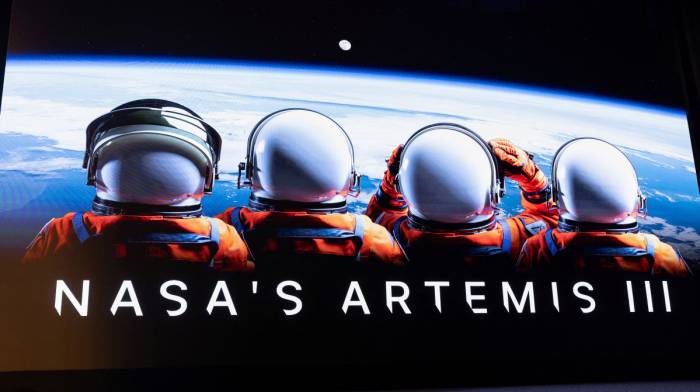
NASA has named three American astronauts and one Italian astronaut to fly on its Artemis III mission, a major orbital test planned for late next year that will evaluate lunar landing vehicles developed by SpaceX and Blue Origin.
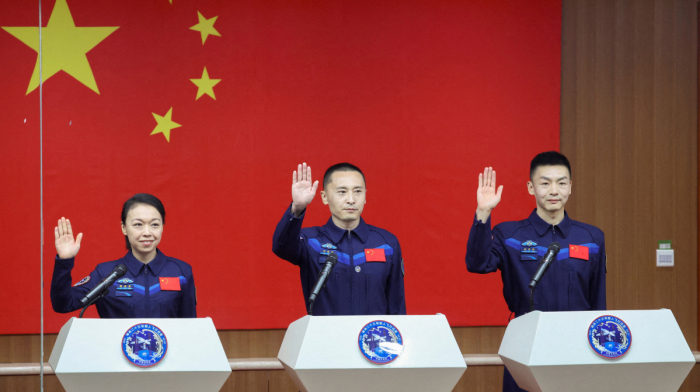
China will send an astronaut to its space station on Sunday for a one-year mission, the longest duration for the country so far. The mission will help study long-duration human physiology in space as China works toward a crewed Moon landing by 2030.
Anxiety over artificial intelligence is hardening among young workers as executives promote faster adoption and companies point to automation in fresh job cuts.
You can download the AnewZ application from Play Store and the App Store.
What is your opinion on this topic?
Leave the first comment