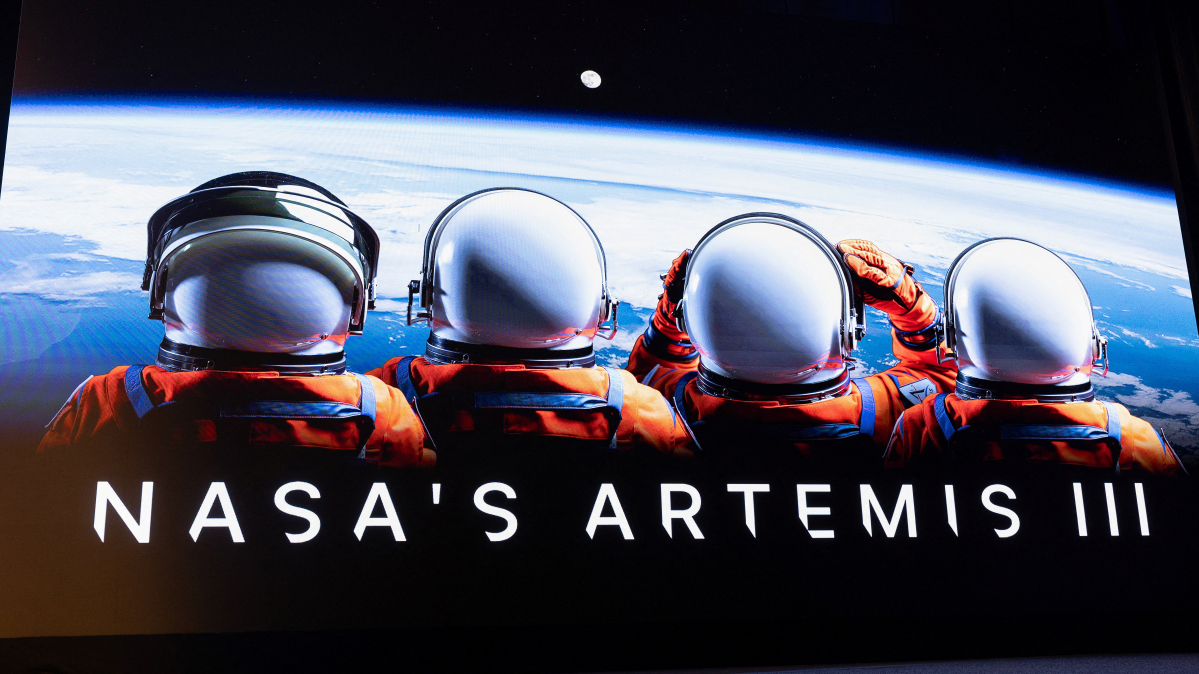
NASA has named three American astronauts and one Italian astronaut to fly on its Artemis III mission, a major orbital test planned for late next year that will evaluate lunar landing vehicles developed by SpaceX and Blue Origin.
NASA Administrator Jared Isaacman announced the crew during a ceremony in Houston on Tuesday. The mission will be commanded by veteran astronaut Randy Bresnik and include Andre Douglas, Frank Rubio and European Space Agency astronaut Luca Parmitano.
The mission will serve as a crucial test of the spacecraft and docking systems that NASA plans to use in future lunar landing missions under its Artemis programme.
"Artemis III is an incredibly exciting, complicated and highly coordinated multi-launch campaign," said Jeremy Parsons, NASA's Artemis programme manager. "It's going to happen in a short period of time with three of the world's most powerful rockets."
Mission to test moon landers in Earth orbit
Although Artemis III will not travel to the Moon, it is regarded as a key stepping stone towards future lunar landings.
The two-week mission will involve NASA's Orion spacecraft docking separately with SpaceX's Starship lunar lander and Blue Origin's Blue Moon vehicle while operating in low-Earth orbit.
According to NASA, Blue Moon will launch first, followed by Orion carrying the four astronauts. The spacecraft will remain docked for approximately two days while the crew conducts tests and technology demonstrations.
After Blue Moon departs, Starship will attempt its own docking manoeuvre with Orion before returning to Earth.
The mission is designed to validate docking systems, operational procedures and spacecraft compatibility before astronauts are sent to the lunar surface later in the decade.
Part of broader Artemis programme
The Artemis programme is NASA's flagship effort to establish a long-term human presence on the Moon and eventually prepare for missions to Mars.
Earlier this year, Artemis II successfully carried a crew around the Moon and back to Earth, becoming the first crewed Artemis flight. It followed the uncrewed Artemis I mission in 2022.
NASA currently plans to attempt its next lunar landing mission in 2028, making Artemis III the final scheduled mission before astronauts return to the Moon's surface.
The programme is also viewed as strategically important as China pursues its own goal of landing astronauts on the Moon by 2030.
Delays continue to challenge lunar lander development
The Artemis III mission depends heavily on the readiness of both SpaceX and Blue Origin, whose lunar lander programmes have experienced years of delays.
NASA restructured parts of the Artemis programme last year after both companies proposed accelerated development schedules, leading to the creation of the Artemis III docking mission.
The revised timeline requires SpaceX's Starship and a prototype version of Blue Moon to be prepared for launch within a relatively narrow window.
SpaceX recently conducted a test flight of an upgraded Starship vehicle designed to support future lunar missions.
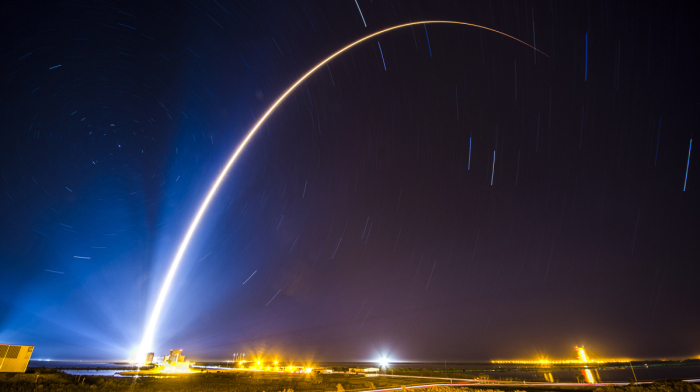
Blue Origin, however, suffered a setback last month when its New Glenn rocket exploded on a launch pad in Florida before a planned satellite mission. The incident damaged the company's only launch facility for the rocket and temporarily halted operations.
Despite the setback, Blue Origin lunar programme chief John Couluris said the company had made strong progress in identifying the cause of the explosion, while NASA expressed confidence that New Glenn would be ready in time to support Artemis III.
Italian astronaut marks milestone for Europe
The selection of Luca Parmitano represents a significant achievement for both Italy and the European Space Agency.
Parmitano, a veteran astronaut who has flown to space twice since joining ESA in 2009, becomes the first European astronaut assigned to an Artemis mission and only the second non-American participant after Canadian astronaut Jeremy Hansen, who flew on Artemis II.
His appointment comes at a sensitive moment for several international Artemis partners.
Earlier this year, NASA cancelled plans for the Gateway lunar space station, redirecting resources towards the development of a permanent lunar surface base. The decision surprised partners including Europe, Canada and Japan, which had invested heavily in Gateway-related hardware.
NASA subsequently signed a cooperation agreement with Italy to support construction of future lunar infrastructure.
Italian Space Agency President Teodoro Valente welcomed Parmitano's selection, saying it highlighted the growing role of Italy and Europe in human space exploration and future lunar missions.





















What is your opinion on this topic?
Leave the first comment